Where To Pump Bicycle Tires Singapore: Local Guide

Find where to pump bicycle tires singapore, compare local pump options, and get easy inflation tips. Keep your next ride smooth—read the guide.
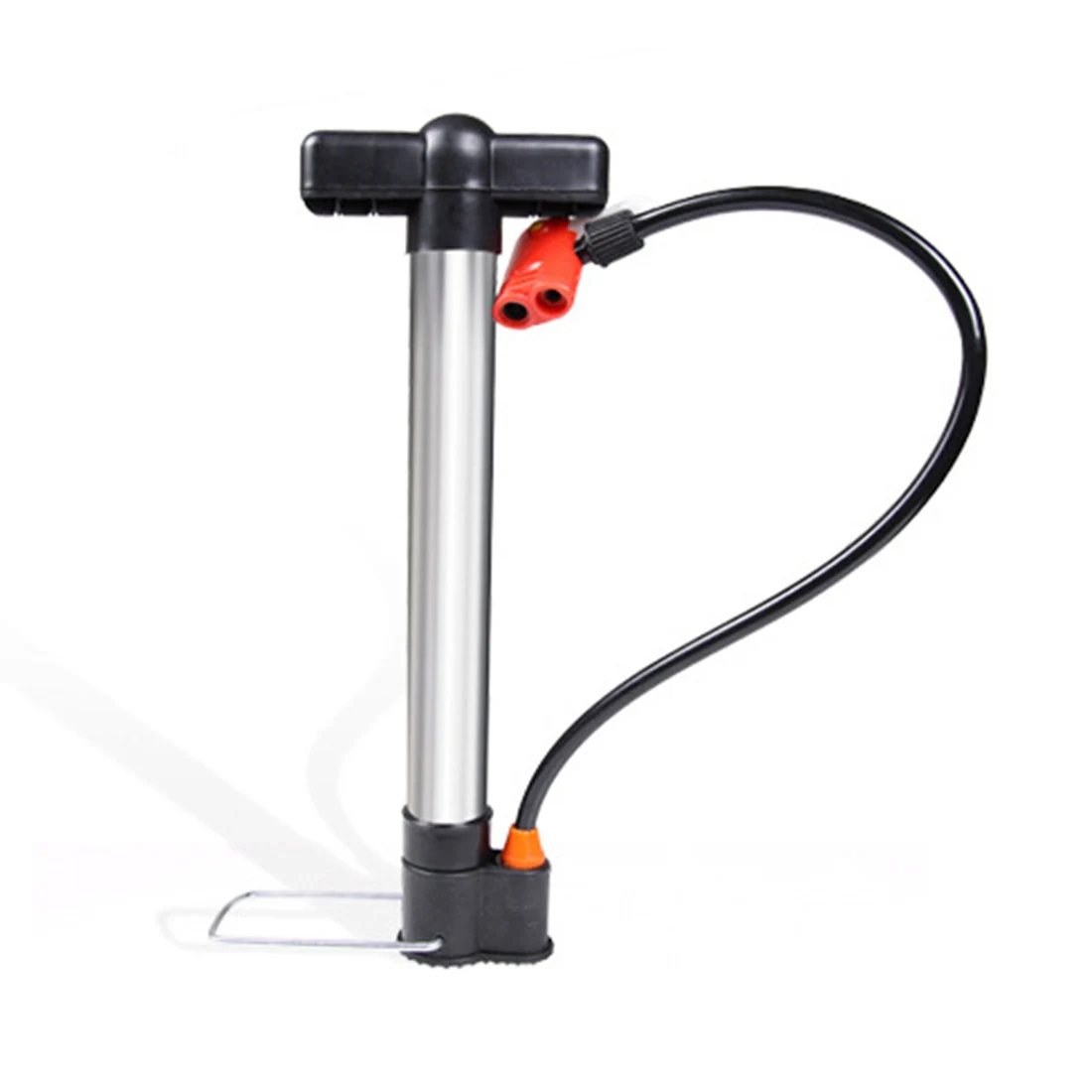
For U.S. cyclists planning a ride in Singapore, the most practical places to ask for tire inflation are bicycle shops and staffed bike-rental outlets. Public repair stations may also help, but confirm that a working pump is available before relying on one. Before leaving the United States, pack a small bike pump and check which valve your tires use.
Where Can You Pump Bicycle Tires in Singapore?
Start with a nearby bicycle shop. A shop is more likely than an unattended pump station to offer the right pump, a pressure gauge, and help if your tire will not hold air. Staffed rental outlets are another useful place to ask, especially near popular cycling routes.
The table below lists practical starting points. These are places to check, not a verified directory of working pumps. Live availability, charges, opening hours, and access have not been confirmed for this guide.
| Option | Where to start your search | What to confirm |
|---|---|---|
| Bicycle repair shops | Search near your current location or next safe stopping point | Whether staff can inflate your valve type and check for a leak |
| Sporting-goods stores with bicycle services | Check Decathlon Singapore’s store and service information | Whether that branch offers inflation or workshop help |
| Bicycle retailers | Check retailers such as Rodalink Singapore | Whether the branch can help walk-in riders |
| Staffed bike-rental outlets | Look around East Coast Park, Pasir Ris Park, or Changi Village | Whether staff will assist with a privately owned bicycle |
| Public bicycle repair stations | Check official route information and signs along your ride | Whether a station exists at that spot and its pump works |
| Gas-station air machines | Consider only after checking equipment compatibility | Whether the machine permits safe bicycle inflation |
Bicycle shops: the first choice for a flat tire
Choose a bike shop if the tire is fully flat, loses air soon after pumping, or has a damaged valve. Adding air alone will not fix a puncture, loose valve core, or torn tube.
Search for “bicycle repair near me” or “bike shop near me” rather than only “bicycle pump.” That can help you find staffed repair businesses instead of listings that merely sell pumps.
Rental outlets: useful near cycling routes
A staffed rental kiosk may have a pump for its own fleet. Ask before using it or assuming staff will inflate a private bike.
East Coast Park, Pasir Ris Park, and Changi Village are useful areas to search for cycling businesses. However, the presence of a rental outlet does not establish that public pumping is available or free.
Public pumps: useful when confirmed, not a safe assumption
An unattended repair stand can save a trip to a shop, but its pump may be damaged, missing, or unsuitable for your valve. A map pin alone does not prove that the equipment still works.
Use official park or route information to check facilities, then look for recent reports or contact the site operator. If your tire is already flat, avoid a long detour to an unconfirmed station.
How to Find a Working Bicycle Pump Near You
Confirm the service before walking or riding to it. The nearest search result is not always the nearest usable pump.
- Stop somewhere safe. Move clear of roads, shared paths, and busy entrances.
- Check the tire. If it is fully flat, do not ride on it. Walk the bike or arrange transport.
- Search from your current location. Try “bicycle repair near me,” “bike rental near me,” or “bicycle pump near me.”
- Check business details. Read opening hours and recent updates, but treat reviews as reports rather than proof.
- Call or message the location. Confirm the service, valve type, fee, and access.
- Choose the nearest confirmed option. Do not pass a suitable shop to chase an unverified free pump.
A short message is enough:
“Hi, I’m nearby with my own bicycle. Can you help inflate the tires today? They have Presta valves. Is there a charge?”
If you do not know the valve type, send a clear photo.
What to check before making a detour
Ask whether the pump is available to the public and whether you need to bring an adapter. For a public station, check whether access depends on a building, park entrance, or staffed facility being open.
A successful search ends with a confirmed service—not just an address.

Check Your Valve Before Choosing a Pump
The pump head must match the tire valve. Many bicycle pumps support more than one type, but some need the head changed or an adapter fitted.
| Valve | How to recognize it | What you need |
|---|---|---|
| Presta | Narrow stem with a small threaded tip | A Presta-compatible pump head or suitable adapter |
| Schrader | Wider stem, similar to a car tire valve | A Schrader-compatible pump head |
| Dunlop, also called Woods | Wider valve body with a retaining collar; designs vary | A pump head or adapter confirmed to fit |
Presta valves need one extra step
Remove the cap, then loosen the small nut at the tip. Briefly press the tip to check that it moves before attaching the pump.
Do not unscrew the whole valve core. On some valves, a screw-on pump head can loosen a removable core when detached.
An adapter does not make every compressor suitable
A Presta-to-Schrader adapter can solve a fitting problem. It does not control air flow or make an unsuitable gas-station compressor safe for a bicycle tire.
The pump still needs to deliver air in a controlled way and show a useful pressure reading.

How to Pump Your Bicycle Tires Safely
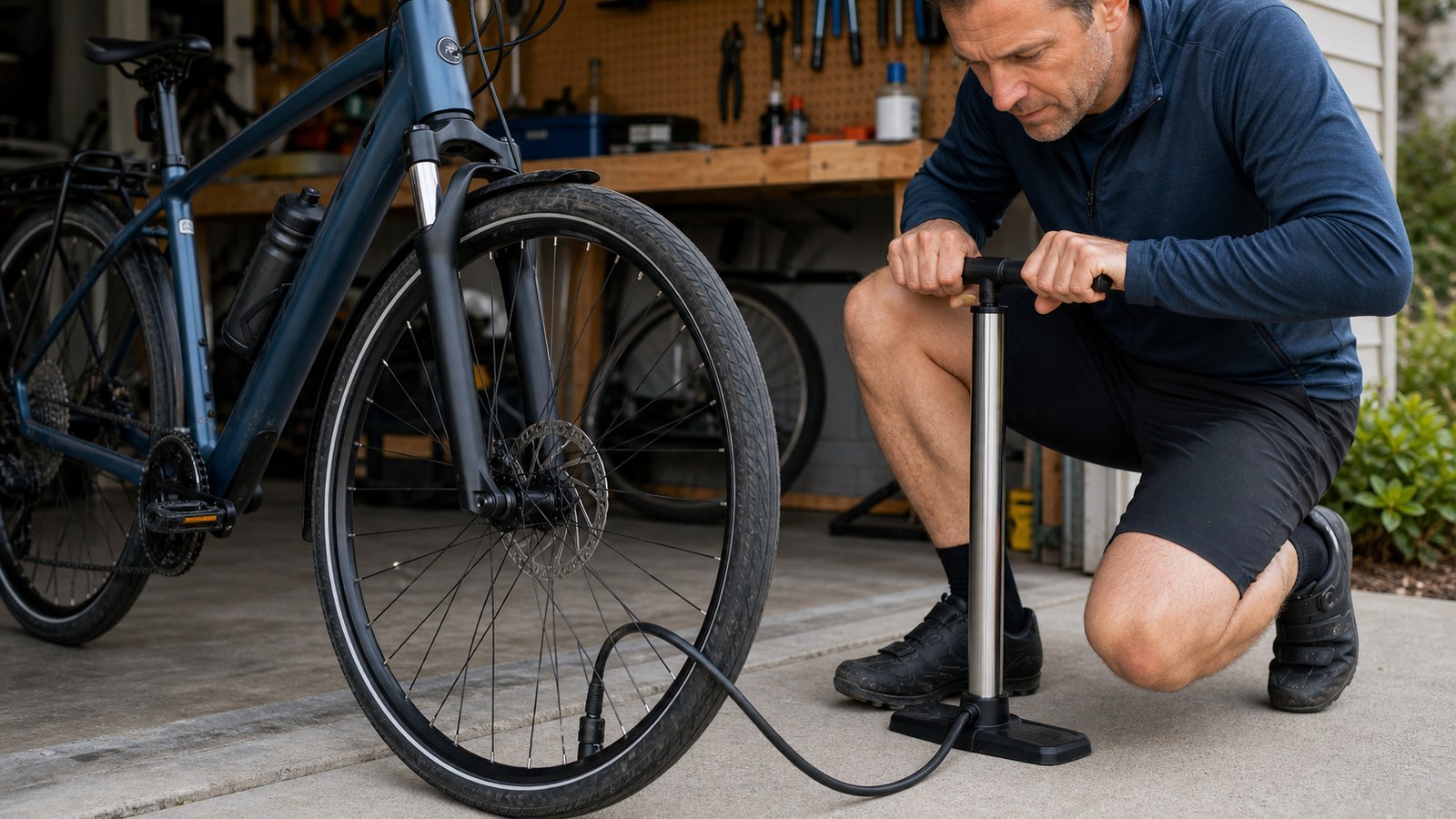
Use a bicycle pump with a gauge and a pressure suited to your tire, rim, and load. A floor pump is usually easier to use than a small hand pump when both are available.
Before you start, inspect the tire for cuts, bulges, exposed casing, or a bead that is not seated evenly. Do not inflate a visibly damaged tire to normal riding pressure.
Step-by-step inflation
- Check the permitted pressure. Read the tire markings and the wheel or rim maker’s guidance. Follow the most restrictive applicable limit.
- Choose a riding pressure. Account for tire width, rider and luggage weight, road surface, and whether the setup uses tubes or is tubeless.
- Prepare the valve. Remove the cap. Open the tip nut if it is a Presta valve.
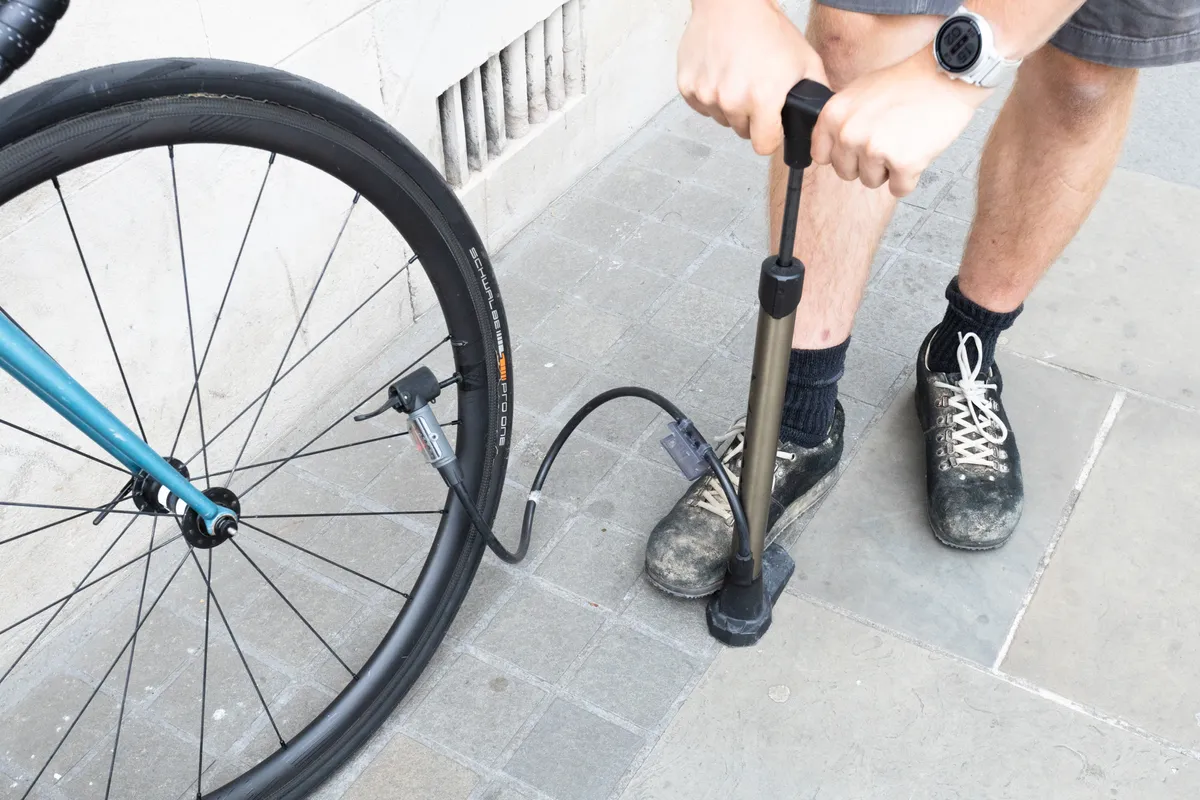
- Attach the pump head straight. Secure it as the pump maker directs. Avoid bending the valve.
- Add air in small stages. Watch the gauge and check that the tire seats evenly.
- Remove the pump head. Close the Presta tip nut gently, if applicable, and replace the cap.
- Check that the tire holds air. Listen for a leak and recheck if it softens.
If the pump handle becomes hard to move but the tire stays soft, stop. The head may not be seated, the valve may be closed, or the pump may be set for the wrong valve.
How much pressure should you use?
The maximum pressure printed on a tire is not automatically the right riding pressure. A tire’s safe range also does not override a lower rim limit.
Some wheel systems, especially hookless rims, have specific tire-compatibility and pressure rules. Check the exact wheel and tire instructions rather than relying on a generic chart.
For unit conversion:
1 bar ≈ 14.5 psi
For example, 40 psi is about 2.76 bar. This is a conversion example, not a recommended pressure for every bicycle.

Can You Pump Bicycle Tires at a Gas Station in Singapore?
Do not assume a gas-station air machine is suitable for your bicycle. A fitting that connects to your valve is only one part of safe inflation.
Some machines are designed for car tires and can add air too quickly for a small bicycle tire. Others may not offer the control or pressure range your bike needs. Site rules may also restrict use.
Only consider a machine if:
- The operator permits bicycle inflation.
- The fitting suits your valve.
- The controls allow small, measured additions of air.
- The gauge covers your required pressure.
- Your tire is correctly seated and undamaged.
If you cannot confirm those points, use a bicycle pump instead. This is especially important for small tires, where a small amount of added air can change pressure quickly.

What If the Tire Will Not Hold Air?
Repeated pressure loss calls for a leak check, not endless pumping. Stop and inspect the bike before continuing your ride.
| Symptom | Possible cause | Useful next check |
|---|---|---|
| Air hisses around the pump head | Poor connection or wrong head setting | Remove and refit the head correctly |
| Pump pressure rises, but the tire stays soft | Closed valve or blocked connection | Check the Presta tip and pump setup |
| Tire goes flat soon after inflation | Puncture, valve leak, or damaged tube | Visit a repair shop or inspect and repair the tube |
| Tubeless tire leaks at the rim edge | Poor bead seal or another setup issue | Seek help if normal inflation does not restore the seal |
| Tire bulges or lifts off the rim | Damaged tire or incorrect seating | Stop adding air and deflate carefully |
Do not ride a fully flat tire to reach a pump. The rim can damage the tire or tube, and steering may become less predictable.
A tire that loses pressure slowly over time may simply need routine topping up. A sudden change from its normal pattern deserves closer inspection.
Are Bicycle Tire Pumps Free in Singapore?
There is no universal free-inflation policy across Singapore. A shop may offer a quick top-up at no charge, charge for assistance, or provide it only as part of a service.
Rental outlets may reserve pumps for customers. Public stations may be free to use but still unavailable because of damage or access limits.
Ask before staff begin work. Also distinguish between a simple inflation request and diagnosis or repair, which can involve separate labor and parts charges.
For future rides, carry a compact pump that fits your valves. It will not repair a puncture by itself, so pair it with the repair supplies suited to your tires.
FAQs
Can I borrow a pump if I did not buy my bike from the shop?
You can ask, but the shop decides whether it offers that service. State that you have your own bicycle and confirm any fee before visiting.
Should I let air out before flying from the United States?
Follow your airline’s current bicycle-packing rules and the wheel or tire maker’s instructions. Do not rely on a blanket rule that all bicycle tires must be fully deflated. Check restrictions on CO₂ cartridges separately.
Can a rental outlet help with a folding bike?
Possibly. The valve and required pressure matter more than whether the frame folds. Confirm both before heading over.
Is squeezing the tire enough to check pressure?
No. A squeeze may reveal a very soft tire, but it does not provide a dependable pressure reading. Use a suitable gauge.
Do electric bicycles need a special pump?
Not simply because they have a motor. Choose the pump by valve type and required pressure. Tire pressure still needs to account for the bike, rider, cargo, and manufacturer’s guidance.
Sources, Verification Limits, and Next Questions
Use official information to confirm services and equipment instructions. No live competitor pages, store listings, or station conditions were inspected for this guide, so it does not claim a currently verified free-pump directory.
Useful official starting points include:
- Decathlon Singapore for current store and bicycle-service information.
- Rodalink Singapore for retailer and branch information.
- NParks Park Connector Network for official route information.
- Park Tool’s tire and tube guide for bicycle tire-service instructions.
- Your tire, wheel, and pump manufacturers’ manuals for exact compatibility and pressure limits.
The next-question map below records practical needs inferred from the task. It does not represent verified search demand or gaps found across inspected competitors.
| Next question | Reader stage and basis | Competitor coverage | Reader benefit and evidence needed | Priority and placement |
|---|---|---|---|---|
| Is the nearest pump working today? | Before travel; inferred need | Not checked | Avoids a wasted trip; requires current operator confirmation | High; location search |
| Will the pump fit my valve? | Before inflation; inferred need | Not checked | Prevents a failed connection; check pump and valve instructions | High; valve guide |
| Why does the tire keep going flat? | After inflation; inferred need | Not checked | Helps identify when repair is needed; requires inspection | High; troubleshooting |
| Is pumping free? | Before service; inferred need | Not checked | Avoids fee surprises; requires the outlet’s current policy | Medium; cost section |

Conclusion
To pump bicycle tires in Singapore, start with a confirmed bicycle shop or staffed rental outlet. Treat public pumps as an option to verify, not a guaranteed stop.
Check your valve, confirm the service, and use a gauge. If the tire will not hold air, seek a repair rather than another top-up.