Can You Fix A Flat Tire With Duct Tape: The Truth

Can you fix a flat tire with duct tape? Learn why tape isn’t a safe repair and explore safer options before getting back on the road.
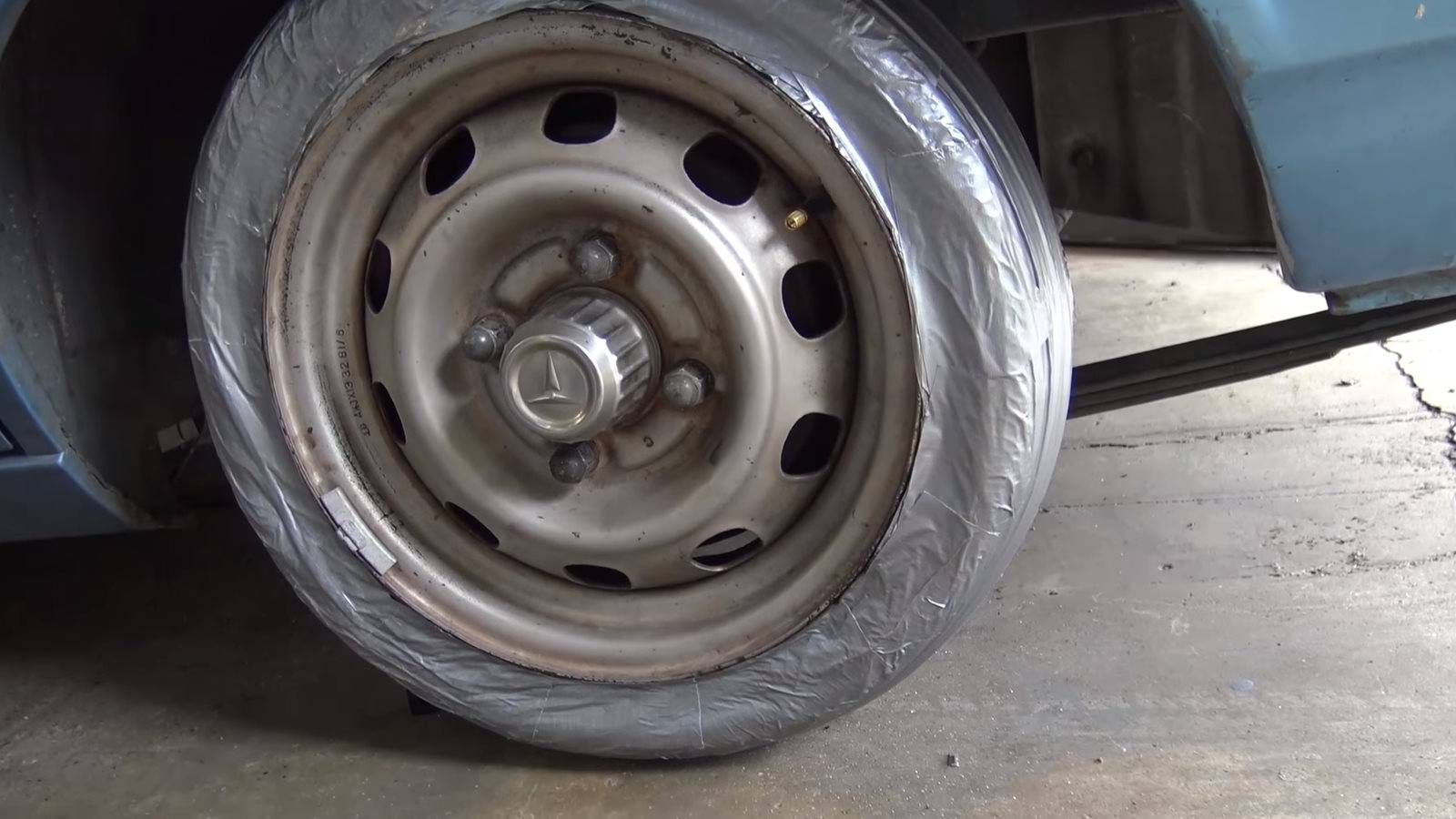
No. Duct tape is not a safe way to fix a flat car tire, even for a short drive. On U.S. roads, the right next step is to stop in a safe place, use a suitable spare if you can install it safely, or call roadside assistance. A punctured tire needs an internal inspection before a shop can decide whether to repair it.
Duct tape may cover a hole, but it does not restore the tire’s air seal or strength. The same warning applies to packing tape, electrical tape, and heavy-duty repair tape. A bicycle tire has a few different repair options, but tape still does not replace a proper tube patch or tire repair.

Why Duct Tape Cannot Fix a Flat Car Tire
A tire repair must address both the air leak and the damage—not just cover the surface. Duct tape does neither in a way that makes a car tire safe to drive on.
Most passenger vehicles use tubeless tires. These tires hold air with an inner liner, a sound wheel, and a tight seal where the tire meets the wheel. A puncture can pass through the tread and into that liner.
Tape placed on the outside does not reach the inner liner. It also cannot reveal damage hidden inside the tire.
Pressure, flex, and road contact work against the tape
A rolling tire changes shape each time it meets the road. Its surface also faces water, grit, heat, and repeated wear. Those conditions can lift, shift, or wear through a taped cover.
Even if tape appears to slow a leak while the car is parked, that does not prove it will hold on the road. An air leak is only part of the problem: driving with low pressure can also damage the tire’s internal structure.
Tape cannot restore damaged cords
A tire contains reinforcing cords that help it carry the vehicle’s load. Tape cannot restore cut cords, fix a bulge, or repair damage from driving on a flat.
Think of tape as a cover, not a structural repair. Hiding the hole does not make the tire sound.

What to Do Instead When You Get a Flat Tire
Get out of traffic, then choose a spare, an approved mobility kit, or roadside help. Do not spend time taping a tire beside a busy road.
Before you act, check your surroundings. A narrow highway shoulder, soft ground, a slope, or fast-moving traffic can make a tire change unsafe.
1. Slow down and stop in a safe place
If a tire suddenly loses air, hold the steering wheel firmly. Avoid sharp steering and hard braking. Ease off the accelerator, then pull over as conditions allow.
Use your hazard lights. Aim for a firm, level spot well away from moving traffic. If you cannot reach one, call for help rather than attempt a roadside repair in an exposed area.
Whether to stay in the vehicle or exit depends on the hazard. If you can safely get out on the side away from traffic and reach a protected area, do so. Do not stand beside the vehicle in the path of traffic.
2. Check the tire without putting yourself at risk
From a safe position, look for:
- A tire that has come off the wheel.
- A torn sidewall or a visible bulge.
- A bent or cracked wheel.
- A nail, screw, or other object in the tread.
- Signs that the tire has been driven while flat.
Do not crawl under the vehicle. Do not pull out an embedded object just to inspect the hole; removal may make the leak worse.
3. Use the option that fits the damage
This table separates a safe next step from an attempted repair that may not address the problem.
| What you find | Suitable next step | Key limit |
|---|---|---|
| Flat tire, usable spare, safe work area | Install the spare using the owner’s manual | Follow the spare’s pressure, speed, and distance limits |
| Small tread puncture, vehicle has a mobility kit | Check the kit’s instructions and damage limits | Sealant is temporary and does not suit every puncture |
| Sidewall cut, bulge, large hole, or damaged wheel | Call roadside assistance or arrange a tow | Tape and sealant cannot resolve structural damage |
| Tire driven while flat | Have it removed and inspected | Hidden damage may make repair unsafe |
| No safe place to work | Call roadside assistance | Do not change a tire next to moving traffic |
4. Check the spare before driving
A spare can lose pressure while stored. Use a gauge and follow the pressure listed for that spare, rather than assuming it matches the road tires.
If you change the wheel, use the vehicle’s specified jack points and wheel-fastener procedure. Never place any part of your body under a vehicle supported only by a jack.
Success means a sound wheel and tire are installed correctly—not merely that the flat tire holds air for a few minutes. If the spare is flat, the tools are missing, or the vehicle feels unstable, stop and get help.

When Can a Punctured Car Tire Be Repaired?
Some small tread punctures can be repaired, but a tire professional must inspect the tire from the inside. Tape on the outside cannot establish whether a tire is repairable.
The U.S. Tire Manufacturers Association’s tire repair guidance describes repairs for qualifying punctures in the tread area. Its guidance limits puncture injuries to no more than 1/4 inch, or about 6 millimeters, and excludes damage that extends into the shoulder or sidewall.
A proper repair fills the puncture path and seals the inner liner. A combination patch-and-stem repair can perform both tasks. An outside plug alone or an inside patch alone does not meet that repair approach.
| Repair factor | May qualify for repair | Generally rules out a routine puncture repair |
|---|---|---|
| Location | Within the permitted tread area | Shoulder or sidewall injury |
| Hole size | No more than 1/4 inch, subject to inspection | Larger puncture |
| Internal condition | No disqualifying internal damage | Damage from running flat or underinflated |
| Tire condition | Otherwise serviceable | Bulges, exposed cords, or other serious damage |
The hole’s size is not the only test. A small nail hole can still leave an unrepairable tire if the vehicle was driven with too little air.
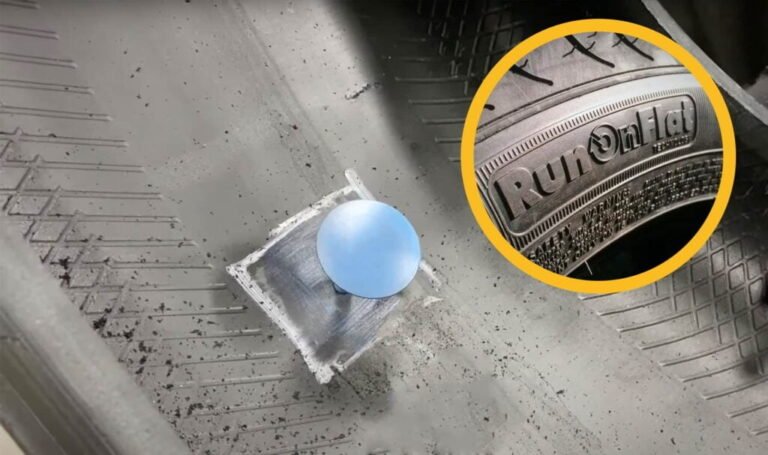
Manufacturer restrictions also matter, especially for run-flat tires and certain specialty tires. Ask the shop to apply the tire maker’s requirements as well as industry repair guidance.

Do Tire Sealant or Plug Kits Work Better Than Tape?
Purpose-made tire products can help in limited cases, but they are not interchangeable with a full repair. Use only a kit suitable for your vehicle and the damage.
Tire sealant and inflator kits
Some vehicles come with a sealant bottle and a compressor instead of a spare. These kits may temporarily seal certain small tread punctures.
They generally cannot solve sidewall damage, a tire displaced from the wheel, or a damaged wheel. The kit may also fail if the opening is too large.
Follow the exact instructions for inflation, pressure checks, driving limits, and service afterward. If the tire will not reach or retain the specified pressure, do not drive on it. Tell the tire shop that sealant was used.
External plug kits
An external plug may stop air escaping, but installing one from outside does not expose hidden internal damage. It is not equivalent to removing the tire and completing a qualifying internal repair.
Do not treat “it holds air” as proof that the tire is safe. Arrange a professional inspection, and disclose any plug or other repair already attempted.
Duct tape
Duct tape has no comparable role in a passenger-car tire repair. Do not wrap it around the tread, layer it over a puncture, or apply it to a sidewall and then drive.
There is no established safe speed or distance for driving on a duct-taped flat tire. Claims such as “just a mile” or “only at low speed” do not resolve the risk.

Can You Use Duct Tape on a Bicycle Tire?
Duct tape is not a dependable patch for a bicycle inner tube or tubeless air leak. The key is to identify which part has failed.
On a bicycle with an inner tube, the tube holds the air. The outer tire supports and protects it. Covering a hole in the outer tire does not patch a punctured tube.
For a typical tube puncture:
- Remove the wheel and tube using the bicycle’s repair procedure.
- Find the leak and inspect the tire for the cause.
- Remove any embedded debris.
- Use a compatible tube patch kit or replace the tube.
- Refit the tire carefully and inflate within the applicable tire and rim limits.
A tire boot is different from a tube patch. It reinforces a damaged spot inside the outer tire to help keep the tube from pushing through. It does not seal the tube.
Improvised tape boots are sometimes discussed as emergency fixes, but that does not establish their safety or durability. A purpose-made boot has a defined purpose and instructions; a damaged tire may still need replacement. If you cannot keep the tube contained and the tire seated, walk the bike or arrange a ride.
For tubeless bicycle tires, use compatible sealant, a suitable plug, or an approved internal repair as the tire maker directs. Duct tape is not a substitute for any of those methods.

Common Mistakes That Can Make a Flat Tire Worse
The biggest mistake is driving because the tire looks temporarily sealed. Pressure retention alone does not prove that the tire can carry a load safely.
Avoid these errors:
- Driving on a visibly low tire. Underinflation can cause further damage and reduce vehicle control.
- Removing a nail on the roadside. It may turn a slow leak into a fast one.
- Using the sidewall’s maximum pressure as the vehicle’s target. For road tires, use the vehicle’s tire-information placard or owner’s manual.
- Assuming all leaks come from punctures. A valve, wheel, or tire-to-wheel seal can also leak.
- Ignoring a bulge. A bulge can signal structural damage; it is not a spot to tape or plug.
- Trusting a normal appearance. A tire can be underinflated without looking fully flat.
The National Highway Traffic Safety Administration’s tire safety guidance explains pressure checks, tire care, and the role of the vehicle placard. Use a gauge rather than judging pressure by sight.
FAQs
Can you tape a leaking tire valve stem?
No. Tape does not repair a leaking valve core, cracked valve stem, or faulty seal at the wheel. A tire shop can identify the leak and replace or service the affected part.
A standard valve cap mainly helps keep out dirt and moisture. Do not rely on it to correct an active valve leak.
What if the tire loses air but no nail is visible?
The leak may come from a small puncture, the valve, the wheel, or the seal where the tire meets the wheel. If the tire is otherwise safe to inspect, soapy water may reveal bubbles at an accessible leak.
Finding bubbles does not establish repairability. If the tire loses pressure again after inflation, have it inspected.
Can you drive a run-flat tire after it loses pressure?
Possibly, but only within the vehicle and tire manufacturer’s limits. Those limits depend on the exact tire, load, and operating conditions.
A run-flat tire is not a tire that can be repaired with tape. Stop if you notice severe vibration, handling trouble, or signs of tire breakup.
What should you do if the spare is also flat?
Do not install it and drive on it flat. Inflate it only if it is suitable for use and you have the right equipment.
If it will not hold its required pressure, call roadside assistance. A flat spare does not make a taped road tire an acceptable fallback.
Evidence and Coverage Notes
This guide uses established U.S. tire-safety and repair principles from NHTSA and USTMA. Live browsing and competitor-page inspection were not available, so current page revisions and search-result coverage were not verified. No hands-on duct-tape testing was performed.
The next-question map below identifies useful follow-up needs without presenting them as observed search demand.
| Next question | Reader stage and basis | Competitor coverage | Reader benefit and evidence | Priority and placement |
|---|---|---|---|---|
| Does holding air prove the tire is safe? | During repair; inferred from the task | Not checked | Separates leak control from internal condition using USTMA repair guidance | High; repair and kit sections |
| What if there is no usable spare? | Roadside; inferred from the task | Not checked | Helps choose between a compatible mobility kit and roadside help | High; roadside steps and FAQs |
| Is a bicycle tire boot the same as a tube patch? | Before repair; inferred from the ambiguous word “tire” | Not checked | Prevents confusing structural support with sealing an air leak | Medium; bicycle section |

Conclusion
Do not use duct tape to fix a flat car tire or to justify driving on one. Get to a safe place, use a serviceable spare or an approved mobility kit within its limits, and have the damaged tire inspected.
If the tire has sidewall damage, a bulge, a damaged wheel, or has been driven flat, get professional help. A tow is a better choice than trusting a cover over a hole.