
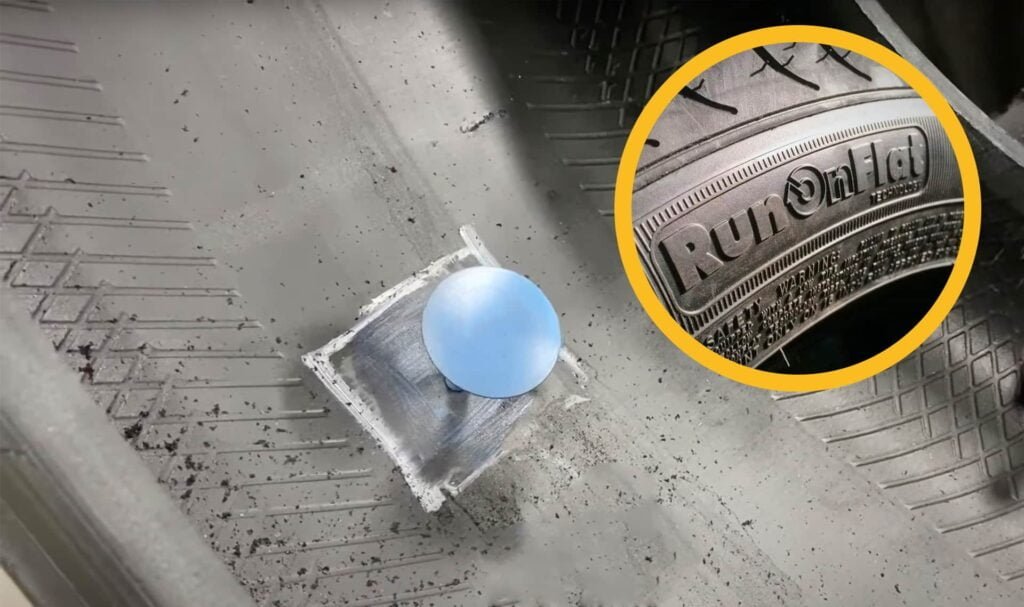
How Much Does Run Flat Tires Cost: Full Price Guide

Wondering how much does run flat tires cost? Compare prices, installation fees, and replacement costs to budget confidently before you buy.
Run-flat tires generally cost about $150 to $500 or more per tire in the United States, before installation and tax. For a set of four, a practical budget is roughly $750 to $2,400 or more installed. Large SUV sizes and high-performance tires can exceed that range.
Your cost depends on the tire size, vehicle, tire model, and local labor rates. A low advertised price may not include mounting, balancing, disposal, or tax.
These figures are broad U.S. budgeting estimates, not verified live quotes or a national price survey. Use them to plan, then get an itemized quote for your exact tire size.
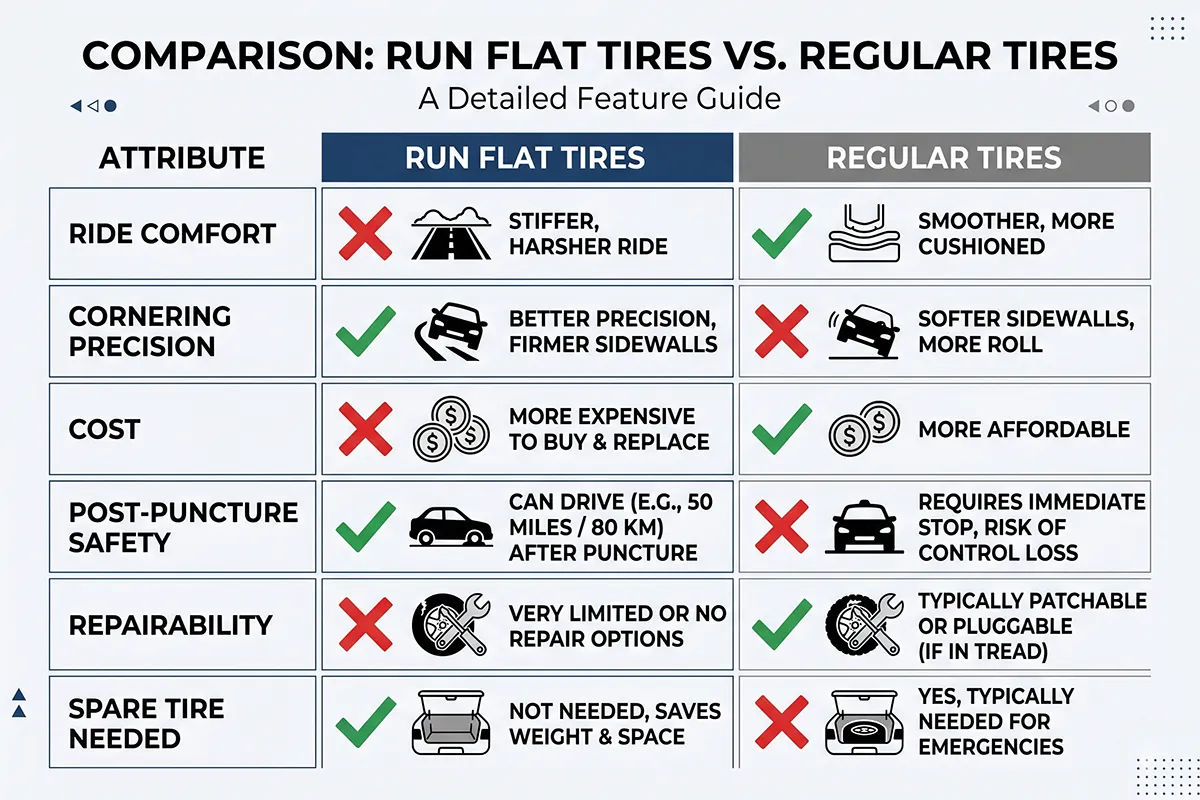
Run-Flat Tire Prices: What Should You Budget?
For most buyers, the main cost is the tire itself. Size and tire type can change the bill more than the run-flat label alone.
The table below gives rough planning ranges. The categories overlap because a tire can be both a premium touring model and an SUV fitment.
| Tire type or fitment | Estimated cost per tire, before installation and tax | Estimated cost for four tires only |
|---|---|---|
| Common passenger-car sizes | $150–$300 | $600–$1,200 |
| Premium touring fitments | $200–$400 | $800–$1,600 |
| Performance or low-profile fitments | $250–$500+ | $1,000–$2,000+ |
| Large SUV or specialty fitments | $250–$600+ | $1,000–$2,400+ |
These are planning estimates, not price claims for a specific product. A sale, limited stock, or an uncommon size can put a quote outside these ranges.
What Does Installation Add?
Allow roughly $25 to $60 per tire for mounting and balancing as a starting estimate. Some shops charge more for run-flat tires, large wheels, or low-profile fitments. Other shops bundle the work into the tire price.
Ask whether the quote includes:
- Mounting and balancing.
- Tire disposal and any state tire fee.
- Valve or tire pressure monitoring system service parts.
- Sales tax.
- Road-hazard coverage, if you choose it.
An alignment and replacement pressure sensors are separate services. Neither is automatically needed each time you buy tires.
Compare the out-the-door total, not just the price on the tire listing. That is the number that shows what you will pay.
What Are Run-Flat Tires, and Why Do They Cost More?
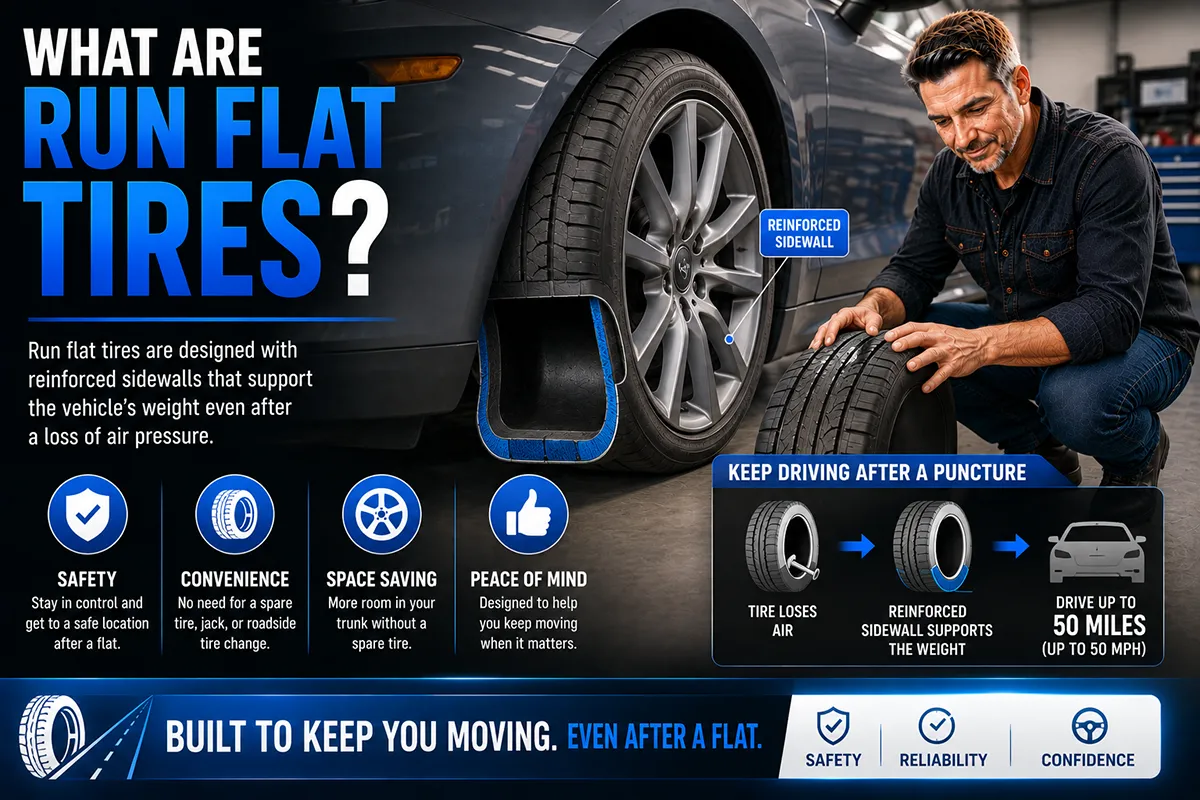
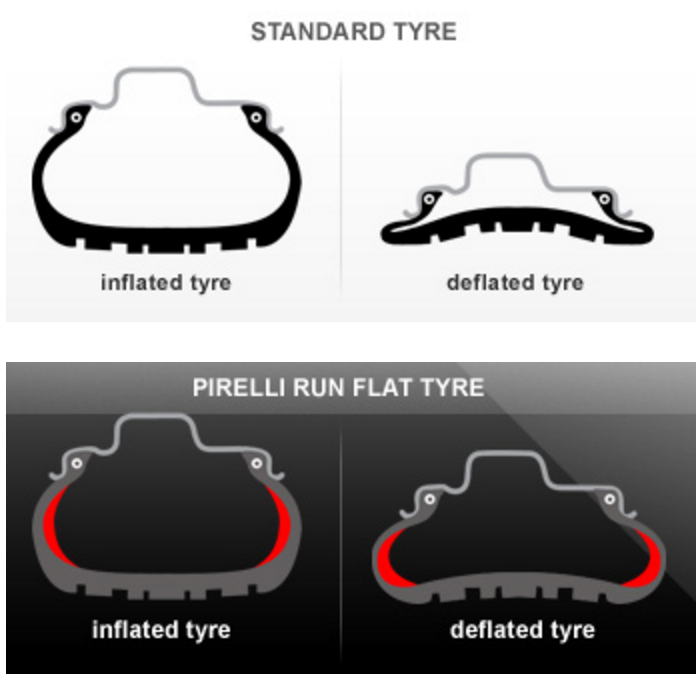
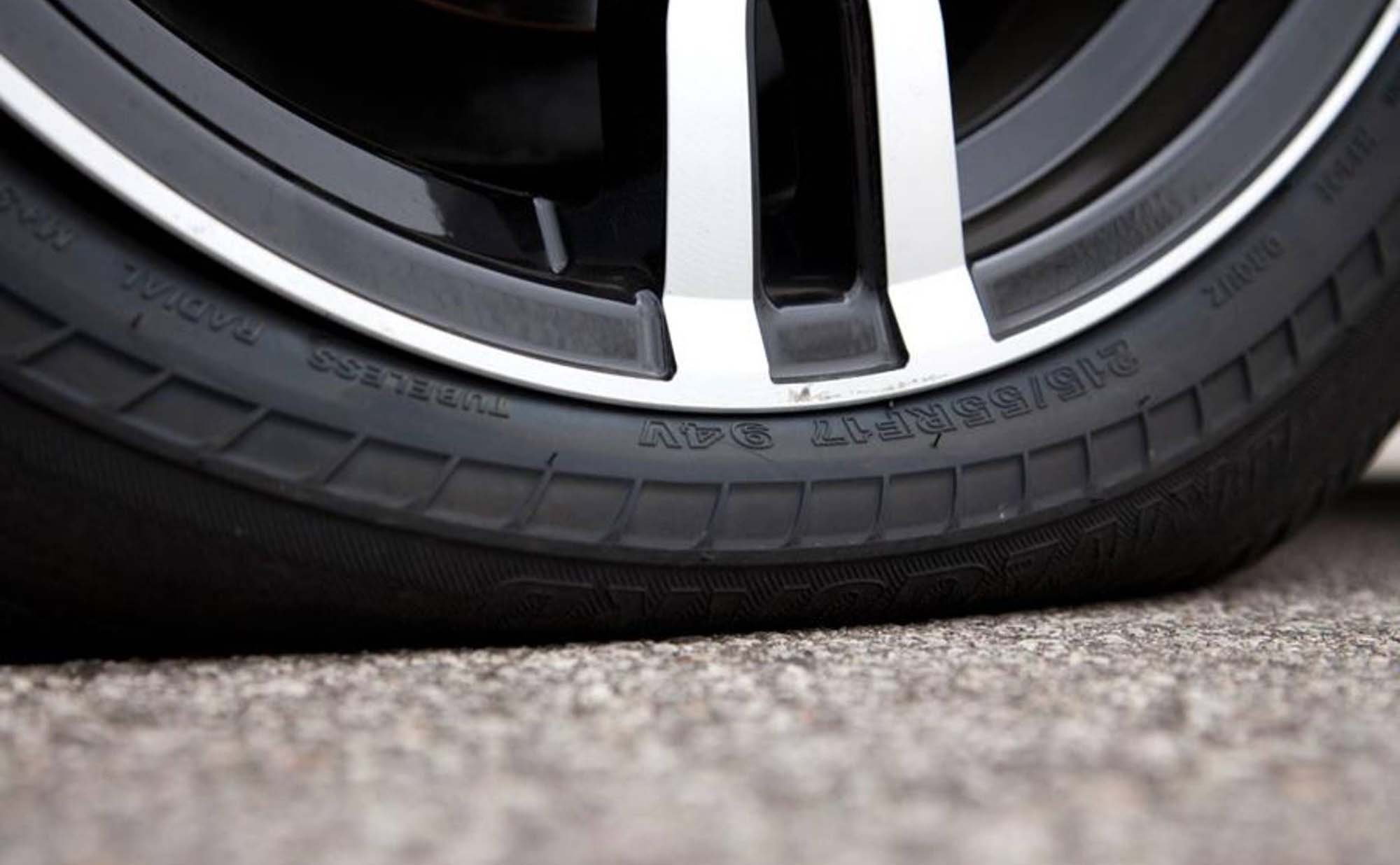
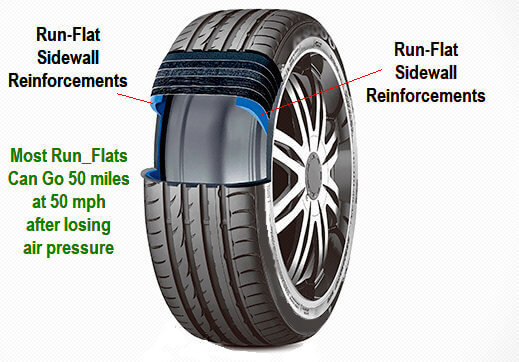
Run-flat tires are built to support limited travel after a loss of air pressure. Most passenger-car versions use reinforced sidewalls that can bear the vehicle’s load for a short distance.
A run-flat tire is a bridge to a safe repair stop, not a tire that can run without air for normal use. It can still suffer punctures, sidewall damage, and damage from potholes.
Bridgestone’s run-flat tire guidance describes the reinforced construction and limited mobility these tires provide. That added structure, along with fitment-specific designs and product availability, helps explain the higher purchase cost.
How Far Can You Drive on a Flat Run-Flat Tire?
Many run-flat tires carry a limit of up to 50 miles at no more than 50 mph after pressure loss. This is not a promise that every damaged tire can cover that distance.
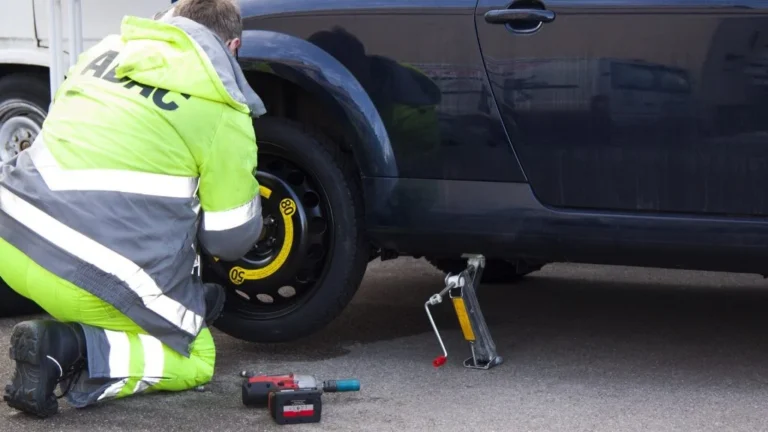
Follow the limits for the exact tire and vehicle. Load, road conditions, heat, and the type of damage can reduce the safe travel distance. A torn sidewall, damaged wheel, or loss of vehicle control calls for a safe stop and roadside help.
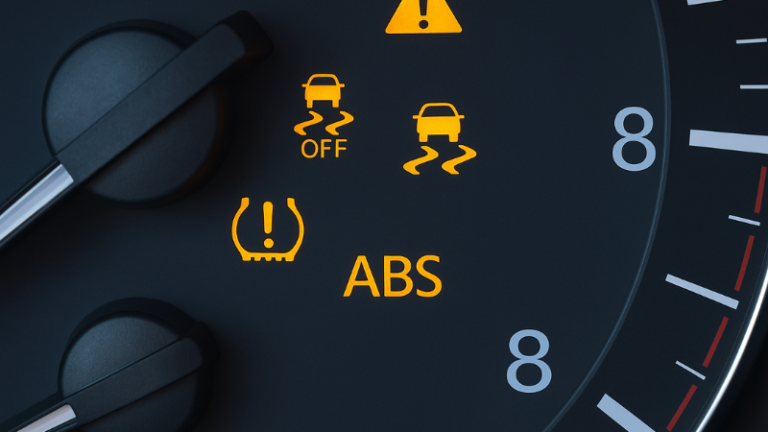
A working tire pressure monitoring system, or TPMS, is also vital. A run-flat tire may not feel flat right away, so the warning light may be your first sign of a problem.
What Changes the Cost of Run-Flat Tires?
The exact tire size and required specification are the first things to check. Two cars from the same brand can need tires with very different prices.
Tire Size and Wheel Diameter
Larger wheels and wide, low-profile tires often cost more. Less common sizes may also give you fewer choices.
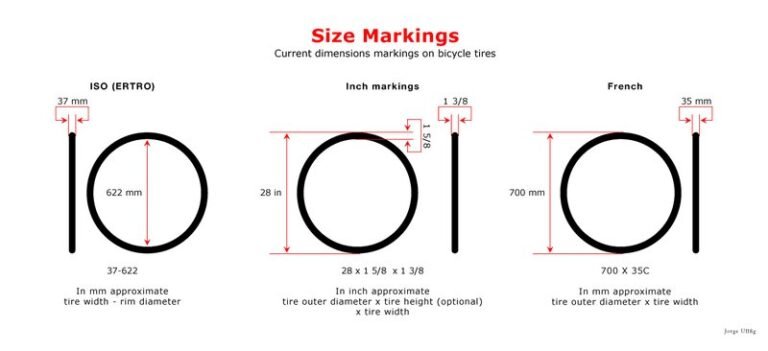
Read the full tire size, such as 225/45R18, rather than shopping by wheel diameter alone. Also confirm the required load rating and speed rating. These details affect whether a tire is suitable for your car.
Tire Type and Vehicle Requirements
Summer, all-season, winter, and performance tires serve different needs. Compare like with like when you judge cost.
Some vehicles also specify an original-equipment tire marking or a particular fitment. Ask whether that specification is required or recommended for your vehicle. Do not assume that every tire with the right size is an equal substitute.
Front and Rear Tire Sizes
Some cars use wider rear tires than front tires. This is called a staggered setup.
A staggered set may cost more than four identical tires. It can also limit rotation options, which may affect how evenly the tires wear.
Local Stock and Service Costs
An uncommon tire may need to be ordered. Shipping, local labor, dealer pricing, and available discounts can all affect the final bill.
If you need a tire the same day, stock can matter as much as price. Confirm availability before you drive to a shop, especially after a pressure-loss warning.

How to Calculate Your Total Replacement Cost
Use this formula to compare quotes:
Tire cost + mounting and balancing + required fees and parts + tax + optional services = total cost
Keep optional work separate. That makes it easier to see whether a higher quote reflects a higher tire price or extra services.
Example: A Hypothetical Four-Tire Purchase
Suppose a shop quotes $250 per tire and $40 per tire for mounting and balancing.
| Item | Calculation | Example cost |
|---|---|---|
| Four run-flat tires | 4 × $250 | $1,000 |
| Mounting and balancing | 4 × $40 | $160 |
| Disposal and other stated fees | Assumed total | $20 |
| Subtotal | $1,000 + $160 + $20 | $1,180 |
| Sales tax | Assumed 7% on the full subtotal | $82.60 |
| Total | $1,180 + $82.60 | $1,262.60 |
This is a calculation example, not a market quote. Actual tax rates and taxable charges vary by location. The example excludes alignment, new TPMS sensors, and optional road-hazard coverage.
What If You Need Only One Tire?
One tire may be enough if the other tires are compatible, have suitable tread depth, and meet the vehicle maker’s matching rules.
All-wheel-drive vehicles need special care. Some have tight limits on differences in tire circumference or tread depth. A single new tire may fall outside those limits.
Ask the shop to check the owner’s manual and measure the remaining tread. Replacing all four tires is not always required, but neither is replacing just one always acceptable.

Do Run-Flat Tires Cost More Than Regular Tires?
Run-flat tires often cost more than comparable conventional tires, but there is no fixed price premium. The fair comparison uses the same size, season category, load rating, speed rating, and similar performance level.
Comparing a premium run-flat tire with a basic conventional tire can overstate the cost of run-flat construction alone.
For example, if a suitable conventional tire costs $200 and a comparable run-flat costs $275, the difference is:
- $75 per tire.
- $300 for four tires, before any difference in fees or tax.
Those prices are hypothetical. They show how to calculate the premium, not what every buyer should expect.
Can You Switch to Conventional Tires to Save Money?
A switch may be possible, but it should follow the vehicle maker’s guidance and a qualified tire professional’s fitment check.
Before switching, confirm:
- The tires meet the vehicle’s size, load, and speed requirements.
- The wheels and vehicle are suitable for the proposed tires.
- The change will not create an unsuitable mix of tire types.
- You have a workable plan for a flat tire.
Many vehicles sold with run-flats lack a spare. A lower tire bill may leave you needing a compatible spare kit, roadside assistance, or a repair kit with clear limits. Sealant and an inflator will not fix every puncture, sidewall cut, or damaged wheel.
Do not mix run-flat and conventional tires unless the vehicle manufacturer permits the specific combination.

Can a Run-Flat Tire Be Repaired Instead of Replaced?
Some run-flat tires can be repaired, but not every puncture qualifies. The tire maker’s policy, the puncture location, and any damage from driving with low or no pressure all matter.
A small tread puncture does not prove the tire is safe to repair. Driving after pressure loss can harm the tire’s internal structure even when the outside looks normal.
The U.S. Tire Manufacturers Association’s repair guidance calls for removing a tire from the wheel so its inside can be inspected. Its passenger and light-truck repair guidance limits repairable punctures to the tread area and to injuries no larger than 1/4 inch, subject to the other repair criteria.
For a run-flat tire, the shop must also follow that tire manufacturer’s rules. A general puncture-repair standard does not override a stricter product policy.
What Should You Do After a Pressure Warning?
- Slow down and avoid abrupt steering or braking.
- Find a safe place to assess the situation.
- Follow the tire and vehicle limits for speed and distance.
- Stop and call for help if handling is poor or damage is severe.
- Tell the tire shop how far and how fast you drove after the warning.
Do not treat an outside plug as a complete permanent repair. The tire needs an internal inspection before a shop can judge whether it is repairable.
For general pressure and maintenance guidance, see NHTSA’s tire safety information. Use the vehicle’s specified cold pressure, usually shown on the driver’s door-jamb placard—not the maximum pressure molded on the tire.

How to Get an Accurate Run-Flat Tire Quote
Get itemized quotes for the same exact tire and the same services. A dealer quote and an independent shop quote may look far apart until you compare what each includes.
Have these details ready:
- Vehicle year, make, model, and trim.
- Full front and rear tire sizes.
- Required load and speed ratings.
- Current tire model and run-flat marking.
- Number of tires needed.
- Remaining tread depth if you plan to replace fewer than four.
Ask the shop these questions:
| Question | Why it matters |
|---|---|
| What is the exact tire model? | Similar names can refer to different versions. |
| Is the price for the correct run-flat version? | Some tire lines include both run-flat and conventional options. |
| What is the out-the-door total? | This exposes taxes, labor, and fees. |
| Are TPMS service parts included? | Service parts and complete sensors are different costs. |
| Why is an alignment or sensor replacement needed? | Added work should have a clear basis. |
| What does the road-hazard plan cover? | Coverage, exclusions, and replacement terms vary. |
| Is the tire in stock, and when can it be installed? | An order delay may change your travel plan. |
A useful quote names the product, confirms fitment, lists charges, and states availability. If a shop cannot explain a charge, ask for clarification before you approve the work.
FAQs About Run-Flat Tire Costs
Do Run-Flat Tires Last Longer Than Regular Tires?
Not necessarily. Run-flat construction provides limited mobility after pressure loss; it does not guarantee longer tread life.
Tread life depends on the tire model, alignment, pressure, driving habits, road conditions, and rotation options. Compare model-specific warranty terms rather than assuming all run-flats wear at the same rate.
Does Car Insurance Cover Run-Flat Tire Replacement?
It depends on the policy and cause of damage. Routine wear is generally not covered by standard auto insurance. Some covered events may include tire damage, subject to exclusions and a deductible.
A road-hazard plan is separate coverage. Read its terms before assuming that it will pay for a full replacement.
Are Self-Sealing Tires the Same as Run-Flat Tires?
No. Self-sealing tires use an inner sealant layer to help seal certain tread punctures. Run-flat tires are designed to support limited travel after pressure loss.
Neither feature makes a tire immune to damage. Check the exact product’s limits.
Is Buying Used Run-Flat Tires a Good Way to Save?
A lower purchase price can come with hard-to-see risk. A used run-flat may have been driven without air, and its service history may be unknown.
An external inspection alone cannot rule out internal damage. If you consider a used tire, have a qualified tire professional inspect it off the wheel and assess its age, condition, repair history, and fitment.
Research Scope and Next-Question Gap Map
The price ranges in this guide are budgeting estimates. Live retailer prices, local quotes, and competing pages were not available for inspection, so no current lowest-price claim or competitor ranking is made.
The safety discussion draws on the linked manufacturer, industry, and federal guidance. Those sources support tire-use and repair guidance; they do not establish current retail prices.
The follow-up needs below are inferred from the buying task, not verified search-demand data.
| Next question | Reader stage and basis | Competitor coverage | Reader benefit and evidence | Priority and placement |
|---|---|---|---|---|
| What will I pay after fees? | Before purchase; inferred from quote comparison | Not checked | Prevents underbudgeting; itemized cost method and labeled example | High; total-cost section |
| Can I replace just one tire? | During replacement; inferred from fitment needs | Not checked | Avoids a poor tire match; exact vehicle manual and tread measurements are needed | High; replacement-cost section |
| Can the damaged tire be repaired? | After a puncture; inferred from repair-or-replace choice | Not checked | Avoids unsafe repair assumptions; USTMA guidance plus tire-maker policy | High; repair section |
| What changes if I stop using run-flats? | Before switching; inferred from cost comparison | Not checked | Exposes fitment and roadside-planning costs; vehicle-specific guidance is needed | High; conventional-tire comparison |
Conclusion
Budget roughly $150 to $500 or more per run-flat tire, or about $750 to $2,400 or more for four installed in the U.S. Treat those figures as a starting point, not a firm quote.
Next, confirm your exact tire specification and request two or three itemized, out-the-door quotes. If only one tire is damaged, ask about repair eligibility and tire-matching limits before you pay for a full set.



2 Comments
Comments are closed.