
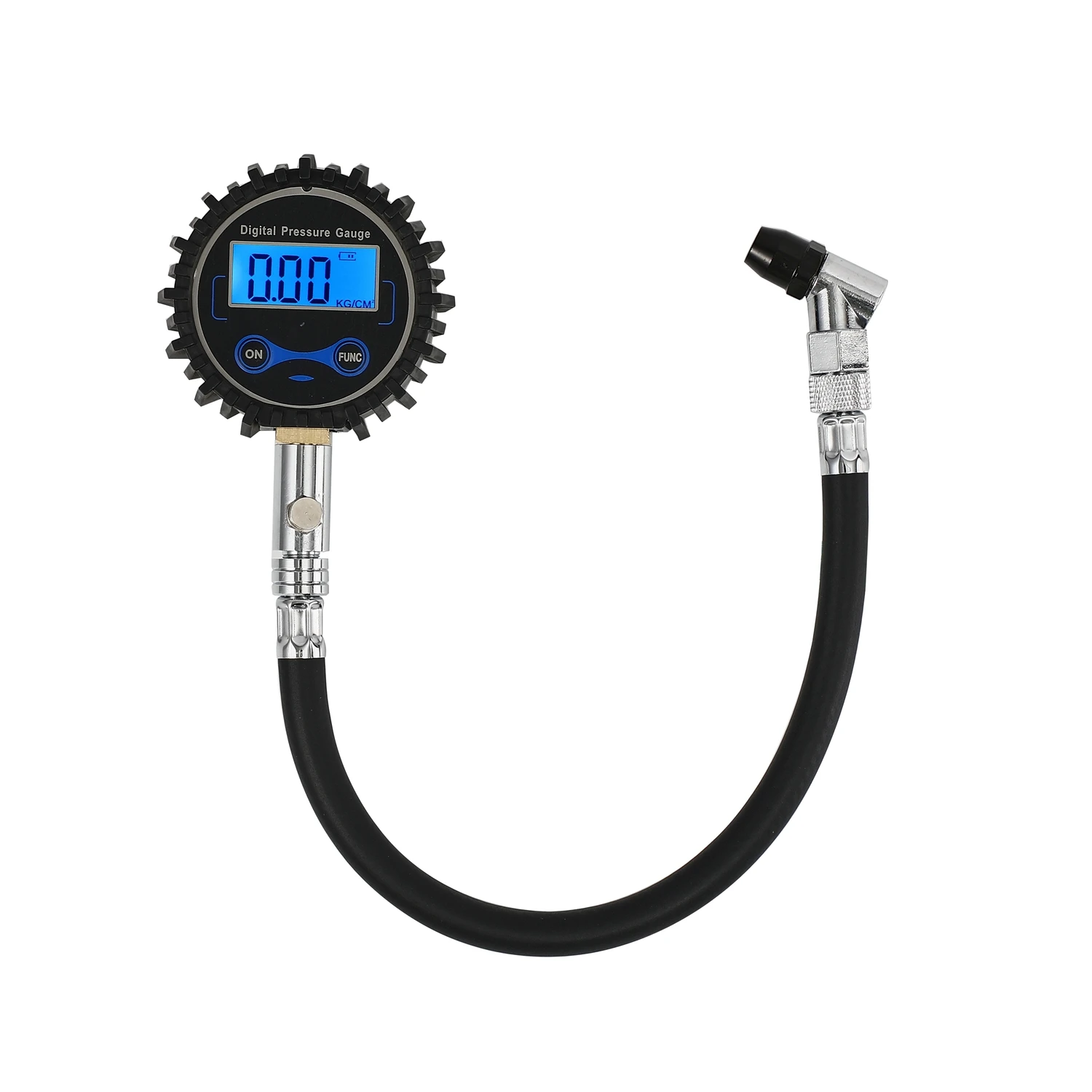
Car Tire Pressure Gauge: Choose The Right One

Choose a car tire pressure gauge for accurate readings and safer driving. Compare key features and learn how to check your tire PSI with confidence.
For drivers in the United States, a car tire pressure gauge measures tire air pressure in pounds per square inch, or PSI. Use it to match each tire to the cold-pressure setting on your vehicle’s driver-side door placard or in the owner’s manual—not the maximum pressure molded into the tire’s sidewall.
A useful gauge should seal well on the valve, give repeatable readings, and be easy to read. Digital, dial, and pencil gauges can all work. The right choice depends more on documented accuracy and ease of use than on the display type.
Check tire pressure at least once a month and before long trips. For a cold reading, the National Highway Traffic Safety Administration, or NHTSA, advises checking tires when the vehicle has not been driven for at least three hours.

What Does a Car Tire Pressure Gauge Measure?
A tire pressure gauge measures the air pressure inside a tire relative to the air outside it. That pressure helps the tire carry the vehicle’s load and hold its intended shape.
Too little air can cause excess flex and heat. Too much air can affect ride quality and how the tire responds to the road. A gauge helps you set pressure to the vehicle maker’s target rather than guess from how the tire looks.
Most US passenger vehicles use Schrader valves. These are the short valve stems with threaded caps found on most car wheels. A standard automotive tire gauge fits this valve type.
Where to find the correct tire pressure
Look for the tire and loading information label on the driver-side door edge or door pillar. The owner’s manual is another source.
Check the front and rear values separately. They may differ, and the spare may have its own pressure requirement.
The pressure on the tire sidewall is not your car’s routine inflation target. It describes a tire limit or load-related rating, not the vehicle maker’s recommended setting.
If your car has nonstandard tire sizes, replacement wheels, or special load requirements, ask the vehicle maker or a qualified tire professional which pressure applies.

Which Type of Tire Pressure Gauge Should You Choose?
Choose a gauge you can use and read without doubt. No gauge type is automatically the most accurate; the exact model, its stated accuracy, and its condition matter.
This table compares the main types for routine car use.
| Gauge type | How it works | Useful features | Limits to check |
|---|---|---|---|
| Digital | Shows pressure on an electronic display | Clear digits; some have a light or selectable units | Needs a battery; may have storage and temperature limits |
| Dial, or analog | Shows pressure with a needle | Large display; some have a hose and bleed valve | Can be bulky; impact may damage the mechanism |
| Pencil, or stick | Pushes out a marked measuring bar | Small; no battery; easy to store | Fine marks may be hard to read; moving parts can stick |
A lighted digital display may help in a dark garage. A hose-style dial gauge may be easier to use where wheel spokes limit access. A pencil gauge can suit a glove box if you can read its scale clearly.
Check accuracy, not just display resolution
A display that reads to 0.1 PSI is not necessarily accurate to 0.1 PSI. Resolution is the smallest step shown; accuracy is how close the reading is to the true pressure.
For routine passenger-car use, a stated accuracy around ±1 PSI across the pressure range you need is a useful buying criterion. That is a practical selection target, not a universal legal standard or proof of tested performance.
Read the wording carefully. An accuracy claim expressed as a percentage of the gauge’s full scale may allow more error than the same percentage of the reading.
For example:
- A hypothetical 100-PSI gauge rated at ±2% of full scale allows ±2 PSI.
- A gauge rated at ±2% of the reading allows about ±0.7 PSI at 35 PSI.
Those figures explain the specifications only. They do not establish how any particular gauge performs.
Match the gauge to your tires
Before buying, check these details:
- Range: It must cover the highest pressure you need, including the spare.
- Scale: The markings should be easy to read near your usual tire pressure.
- Chuck fit: The head must reach the valve and form a sound seal.
- Units: PSI should be available for most US vehicle placards.
- Instructions: Look for stated accuracy, operating limits, and battery guidance.
A gauge that reaches your road tires may not reach a spare’s valve when the spare is mounted under the vehicle. Check access before you need it on the roadside.

How to Use a Car Tire Pressure Gauge
Check cold tires, press the gauge straight onto each valve, and adjust pressure to the vehicle’s placard. Then measure again.
You will need a tire pressure gauge, access to an air source, and the correct pressure values. Park on level ground in a safe place, set the parking brake, and switch off the vehicle.
1. Find the cold-pressure targets
Read the placard before you begin. Note separate front, rear, and spare values where listed.
Do not assume every car needs 32 PSI or 35 PSI. Common values are not a substitute for your vehicle’s instructions.
2. Check before driving
For the clearest baseline, let the vehicle sit for at least three hours. Driving warms the tires and raises the pressure.
If you have already driven, treat the reading as a warm check. Do not bleed air from a warm tire just to bring it down to the cold-pressure target.
3. Remove the valve cap
Put the cap somewhere clean so it will not roll away. Check the valve for dirt, obvious damage, or an awkward bend.
Do not force a gauge onto a damaged stem. A tire shop can inspect it.
4. Press the gauge squarely onto the valve
Push the gauge head straight onto the valve until it seals. A brief hiss during attachment is normal; a steady hiss means air is escaping.
If it keeps hissing, remove the gauge and try again at a better angle. With a pencil gauge, read the extended bar. With a dial or digital gauge, follow the model’s instructions for reading or holding the result.
5. Confirm the reading
Take a second reading if the first looks wrong or the seal was poor. A consistent result with no sustained hiss is a useful sign that you have made a sound connection.
Repeated checks can release small amounts of air. Avoid making many attempts without checking your technique.
6. Add or release air in small amounts
If the cold pressure is low, add air in short bursts and measure again. If it is high, release a little air with the gauge’s bleed feature or a suitable valve tool, then recheck.
Air-pump displays can disagree with handheld gauges. Use a gauge whose performance you trust for the final check rather than assume the pump is correct.
7. Replace the caps and check all tires
Fit each valve cap snugly by hand. Check all road tires, plus the spare if your vehicle has one.
Success means each cold tire matches its specified pressure, the readings are consistent, and there is no continuing air leak. If a tire will not hold pressure, have the leak found rather than keep topping it up.

What Changes a Tire Pressure Reading?
Temperature, recent driving, the gauge’s condition, and the seal at the valve can all change the result. Compare readings taken under similar conditions before deciding that a tire is leaking.
Cold weather can lower the pressure
As tire air cools, its pressure drops. A common rough estimate is about 1 PSI for each 10°F change in temperature, though the exact change varies with the tire’s starting pressure and conditions.
For example, a large overnight temperature drop can lower the pressure in all four tires. That does not prove there are four leaks.
Check the tires cold and restore the placard pressure. Do not add an arbitrary “winter bonus” above the specified value.
Driving raises tire pressure
Tires warm as they flex on the road. Sun exposure can also affect a reading.
If you must add air after driving, NHTSA advises bringing a low tire to at least the recommended cold pressure as a temporary measure. Recheck and set it correctly when the tires are cold. Warm readings are not a precise substitute for a cold check.
Tire pressure monitoring systems have limits
A tire pressure monitoring system, or TPMS, warns about significant underinflation. It is not a replacement for a monthly gauge check.
Some systems display individual pressures. Others infer a problem from wheel-speed behavior and do not measure pressure directly. A tire can be below its recommended pressure before a warning appears.
Different tires can require different settings
Do not make all four readings equal unless the placard calls for equal pressure. Front-to-rear differences may be intentional.
Some vehicles also have instructions for heavy loads or specific operating conditions. Follow the manual rather than add pressure based only on how much cargo you plan to carry.

Troubleshooting Odd Readings and Air Loss
First check the gauge connection, then compare under consistent conditions. Treat ongoing pressure loss as a tire or valve problem until it has been inspected.
| Symptom | Possible cause | Best first check |
|---|---|---|
| Reading changes with each attempt | Poor seal, angled gauge head, weak battery, or gauge fault | Reseat the gauge; check its instructions and battery |
| Two gauges disagree | Different accuracy, damage, or connection quality | Compare on the same tire within a short period |
| One tire keeps losing pressure | Puncture, valve leak, wheel damage, or bead leak | Arrange a tire-shop leak inspection |
| All tires read lower after a cold night | Temperature change | Check cold and adjust to the placard |
| Gauge gives no reading | Failed seal, dead battery, blocked chuck, or wrong setting | Check units, power, and valve contact |
| TPMS light stays on after inflation | Wrong pressure, reset requirement, sensor fault, or another issue | Recheck all tires and follow the manual |
What if two gauges disagree?
Do not average the readings and assume the result is correct. If one gauge is wrong, averaging does not solve the problem.
Check the same tire with both gauges under the same conditions. Make sure both are set to PSI and that neither leaks at the connection. If the difference could change your inflation decision, ask a tire shop to compare them with a gauge that has a documented accuracy check.
Repeatability is useful, but it is not proof of accuracy. A damaged gauge can give the same wrong reading each time.
When should you stop driving?
If a tire is visibly flat, loses air quickly, has a bulge, or shows sidewall damage, do not treat inflation as a repair. Stop in a safe place and seek roadside or tire-service help.
A tire driven while badly underinflated may have internal damage even if it later holds air. Tell the tire professional if that happened.
If a TPMS warning appears while driving, ease off the accelerator and stop somewhere safe to inspect the tires. Avoid abrupt steering or braking.

How to Care for a Tire Pressure Gauge
Keep the gauge clean, dry, and protected from impact. Follow its storage limits, especially if you plan to leave a digital model in a vehicle through hot summers or freezing winters.
Protect the gauge head from grit. Do not use a pencil gauge’s measuring bar as a lever or force a chuck onto a valve.
For digital gauges, replace the battery when the display dims or the device reports low power. Check the selected units after a reset or battery change.
Replace or professionally check a gauge if it:
- Gives inconsistent readings despite a good seal.
- Leaks at the head or hose.
- Has a cracked case or damaged measuring parts.
- Fails to return to zero where its design requires it.
- Disagrees with a reliably checked reference gauge.
There is no single replacement schedule for every consumer gauge. Its condition and documented performance matter more than age alone.

Frequently Asked Questions
Can I use a tire pressure gauge on nitrogen-filled tires?
Yes. A standard car tire gauge measures pressure whether the tire contains compressed air or nitrogen. Nitrogen-filled tires still need regular pressure checks.
Does a compact spare need a different gauge?
Not always, but the gauge must cover the spare’s required pressure. Compact spares can need substantially more pressure than the road tires. Read the spare’s instructions and vehicle manual; do not assume the road-tire setting applies.
Will a tire pressure gauge reset the TPMS warning?
A basic handheld gauge does not reset TPMS. Correcting pressure may clear the warning after the vehicle completes its specified drive or reset process. Follow the owner’s manual, and seek service if the light flashes or stays on despite correct pressure.
What if my gauge shows kPa or bar instead of PSI?
Change the units to match the vehicle placard if possible. For conversion, 1 PSI is about 6.895 kPa, and 1 bar is about 14.504 PSI. For example, 35 PSI is about 241 kPa or 2.41 bar.
Does a missing valve cap cause a flat tire?
The valve core normally holds the air, so a missing cap does not automatically cause a flat. The cap helps protect the valve from dirt and moisture, and some caps provide an added seal. Replace a missing cap with the correct type, but have actual air loss inspected.
Evidence and Research Scope
The core safety guidance comes from NHTSA’s tire safety guidance: use the vehicle’s recommended cold pressure, check monthly, and do not rely on TPMS alone. Your vehicle’s placard and owner’s manual remain the model-specific sources for pressure settings and reset steps.
Live browsing and hands-on testing were not available for this article. No current competitor positions, product prices, model-specific accuracy claims, or independent gauge test results were verified. The gauge comparison is a feature-based guide, not a tested product ranking.
The following next-question map identifies practical needs inferred from the task. It does not claim verified search demand or gaps across the wider internet.
| Next question | Reader stage and basis | Competitor coverage | Reader benefit and evidence basis | Priority and placement |
|---|---|---|---|---|
| What if I already drove to the air pump? | During use; inferred from needing an air source | Not checked | Avoids unsafe warm-pressure adjustment; NHTSA guidance | High; temperature section |
| What if two gauges disagree? | During use; inferred from measurement uncertainty | Not checked | Prevents false confidence from averaging; measurement principles and model instructions | High; troubleshooting |
| Can one gauge cover the spare too? | Before purchase; inferred from different pressure needs | Not checked | Helps select adequate range; vehicle and spare instructions | Medium; selection and FAQ |
| Why does one tire keep losing air? | After inflation; inferred from recurring pressure loss | Not checked | Separates measurement problems from leaks; professional inspection needed | High; troubleshooting |

Conclusion
Choose a car tire pressure gauge with a clear scale, a suitable range, and a stated accuracy you can evaluate. Digital, dial, and pencil designs can all serve the task; a higher price or finer display alone does not prove better accuracy.
Your next step is simple: find the pressure placard on your US vehicle, check all tires cold, and adjust each to its listed setting. If a tire keeps losing air or a gauge gives doubtful readings, resolve that problem before relying on the result.


One Comment
Comments are closed.