Can A Spare Tire Cause ABS Light: Causes And Fixes
Yes, a spare tire can cause the ABS light to come on in some vehicles, but it is not the only likely cause. A compact spare may have a different rolling size from the other tires, which can affect wheel-speed readings. A wheel-speed sensor or its wiring may also be disturbed or damaged during a tire change.
On U.S. roads, the safest next step is to check the vehicle owner’s manual and the spare tire’s label. Then note whether the ABS light is on by itself or with another brake warning light. That difference can change how soon you should stop driving.

How can a spare tire affect the ABS?
The ABS, or anti-lock braking system, uses sensors to track how fast each wheel turns. If one wheel’s speed reading differs from the others, the system may detect a fault or respond by limiting ABS or traction-control functions.
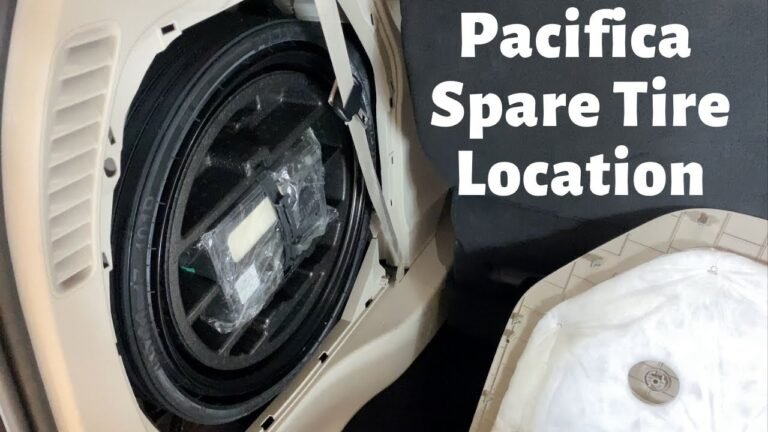
A compact spare is often smaller or built differently from a regular tire. Because it can turn at a different rate, some vehicles may show an ABS or traction-control warning while it is fitted. Other vehicles may allow the spare without turning on the ABS light. The result depends on the vehicle and its control system.
A tire change can also expose a separate problem. For example, a sensor wire near the wheel may get pulled, pinched, or damaged while the wheel is removed or installed. A fault in the sensor, wheel hub, or related wiring can also appear around the same time as the spare tire change.
The ABS light may be unrelated to the spare. It can come on because of a failing wheel-speed sensor, a wiring fault, or another issue in the braking system. A warning light alone cannot confirm which cause applies.

What should you check first?
Start with the safest, simplest checks. Do not assume the spare is the cause just because the light appeared after a tire change.
- Read the spare tire label and owner’s manual. Check the listed speed and distance limits, tire pressure, and any instructions about ABS, traction control, or all-wheel drive. Follow the limits for your specific vehicle and spare.
- Check the spare’s pressure. Use the pressure listed for the spare in the manual or on the tire label—not the pressure for a regular tire. NHTSA advises drivers to follow the vehicle maker’s guidance for tire care and pressure. NHTSA tire safety guidance
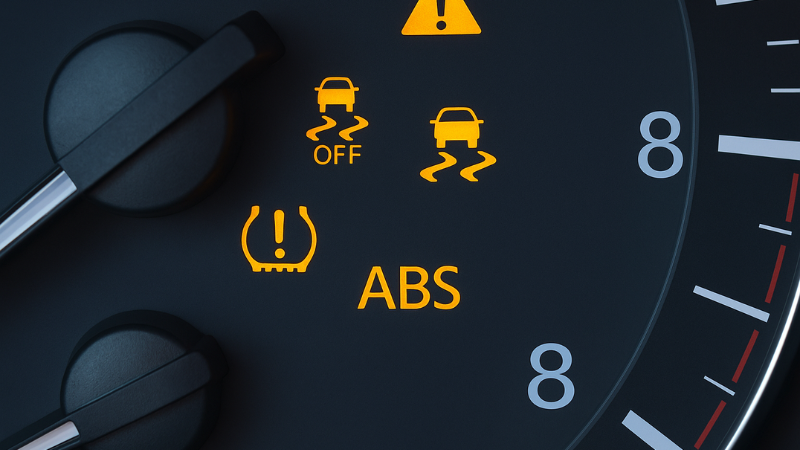
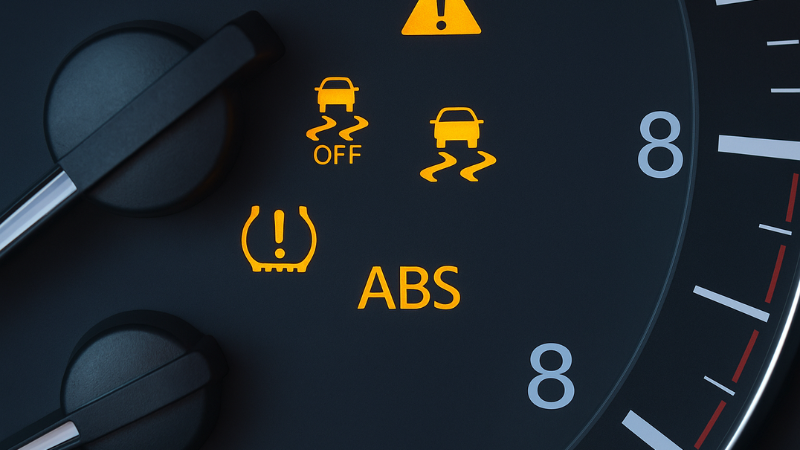
- Look at the warning lights. Note whether the ABS light is steady or flashing, and whether the red brake warning light or a traction-control light is on too. Do not confuse the ABS warning with a tire-pressure monitoring system (TPMS) light.
- Look for an obvious fit or damage issue. From a safe place, check that the spare appears properly seated and that no visible sensor wire or other part is hanging loose. Do not crawl under a vehicle supported only by a jack.
- Get the ABS codes read if the light stays on. A scan tool that can access the ABS system may identify a wheel-speed sensor or circuit fault. A basic engine-code reader may not show ABS codes.
If the warning began right after the tire change, tell the repair shop which wheel was replaced and what warning lights appeared. That detail can help narrow the inspection.
How can you tell whether it is the spare or another fault?
Timing offers a clue, not proof. If the ABS light appeared as soon as the spare was installed and goes off after the regular wheel is fitted again, the spare’s size or the vehicle’s response to it may be involved. If the light remains on, a sensor, wiring, or other ABS fault needs to be checked.
| What you notice | What it may suggest | Sensible next step |
|---|---|---|
| ABS light appears with a compact spare | The vehicle may be reacting to a difference in wheel speed, or a fault may have occurred during the tire change | Check the manual; arrange an ABS scan if the light remains on |
| ABS light stays on after the regular tire is back | A sensor, wiring, hub, or other ABS issue may be present | Have the ABS system checked |
| TPMS light appears after fitting the spare | The spare may lack a tire-pressure sensor, or the system may need time or service to register the change | Check the manual and tire pressures |
| ABS and red brake warning lights are both on | There may be a more serious brake-system issue | Stop safely and seek prompt professional help |
| Vehicle pulls, makes unusual noises, or brakes feel different | A tire fit, wheel, or brake problem may need urgent attention | Stop driving when safe and have the vehicle inspected |
The ABS and TPMS lights signal different systems. A spare without a compatible TPMS sensor may trigger a tire-pressure warning, but that does not by itself prove an ABS fault.
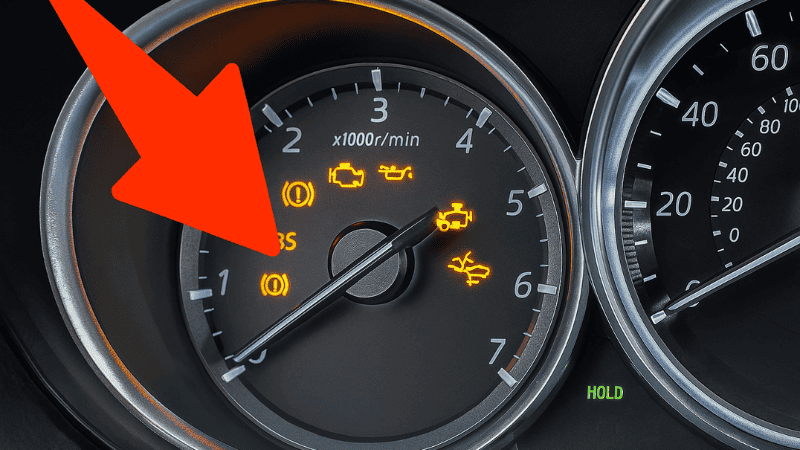
Is it safe to drive with the ABS light on?
If the ABS light is on by itself and the brake pedal feels normal, the vehicle’s standard brakes may still work, but ABS may not be available. That means the wheels could lock during hard braking, especially on slippery roads. Drive cautiously only as needed to reach a safe place or repair shop, and leave more room to stop.
Stop in a safe place and get help if the red brake warning light is also on, braking feels weak or unusual, or the vehicle pulls or makes a new grinding noise. A red brake warning can point to a problem beyond ABS. Follow the vehicle manual’s instructions.
If a temporary spare is fitted, follow its printed limits and the vehicle manual. Some vehicles, especially certain all-wheel-drive models, have strict rules about tire size and use. Do not assume that a spare is safe for normal-speed or long-distance driving just because it fits the wheel.

How does a mechanic diagnose an ABS warning after a tire change?
A mechanic can read the ABS fault codes and inspect the parts linked to the affected wheel. The code may point to a sensor circuit, but it does not always prove that the sensor itself has failed. Wiring, a wheel hub, or another part may be the cause.
The shop may compare live wheel-speed readings, inspect the sensor and wiring, and check that the correct tire and wheel are fitted. If the warning began with a compact spare, share that timing and the spare’s location. Do not clear the warning or replace parts based on a guess; the code and inspection should guide the repair.

Key Takeaways
- A spare tire can trigger an ABS warning on some vehicles, often because its rolling size differs from the other tires.
- A sensor or wire disturbed during the tire change is another possible cause.
- Check the vehicle manual and spare tire label, and distinguish the ABS light from the TPMS light.
- If the light stays on after the regular tire is back, have the ABS system scanned.
- Treat an ABS light with a red brake warning or abnormal braking as urgent.
FAQs
Will the ABS light turn off when I remove the spare?
It may, if the vehicle was reacting to the spare’s different size. If the light stays on after the regular tire is reinstalled, the system may have a separate fault and should be checked.
Can a donut spare affect traction control?
Yes. ABS and traction control may use information from the same wheel-speed sensors. A compact spare can affect how some vehicles manage traction, so follow the manual and watch for related warning lights.
Can low spare-tire pressure cause the ABS light?
Low pressure is more likely to trigger a TPMS warning than an ABS warning. Still, use the pressure specified for the spare, and do not drive on a visibly damaged or underinflated tire.
Can I drive if only the ABS light is on?
The standard brakes may still work, but the ABS may not. Drive cautiously only if braking feels normal, and arrange an inspection. If the red brake warning light is on too or the brakes feel abnormal, stop safely and get help.
Does the spare need a TPMS sensor?
That depends on the vehicle and spare. Some spares do not have a TPMS sensor, which can cause a tire-pressure warning. Check the owner’s manual for how your vehicle handles a spare without a sensor.
Conclusion
A spare tire can cause an ABS light, but the warning can also point to a sensor or wiring issue from the tire change—or an unrelated fault. Check the spare’s limits and pressure, note any other warning lights, and have the ABS codes read if the warning remains.