What Causes A Flat Tire: Common Reasons And Prevention
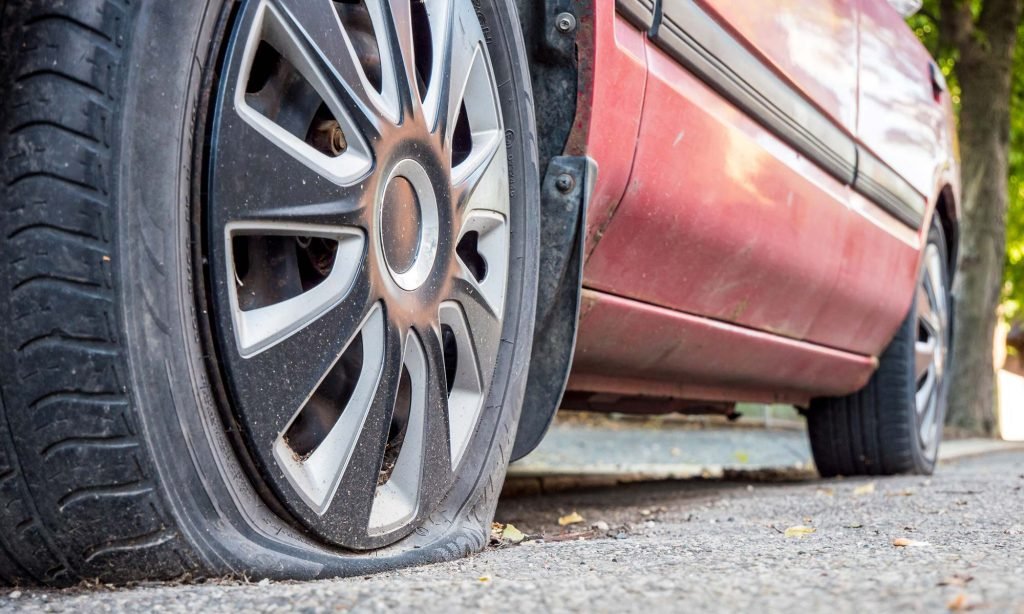
For drivers in the United States, a flat tire can happen on a city street, a rural road, or a highway. The most common causes are sharp objects, impact with a pothole or curb, air leaks around a valve or wheel, and tire damage linked to low pressure, age, or wear.
A tire that keeps losing air may have a slow leak rather than a large puncture. Finding the source matters: some tread punctures can be repaired, but a damaged sidewall or a tire that has been driven while flat may need to be replaced.

Common causes of a flat tire
A flat tire occurs when air escapes faster than the tire can hold it. The leak may be sudden, as with a large cut, or slow enough that the tire looks normal at first.
| Cause | How it leads to a flat | Common clue |
|---|---|---|
| Nail, screw, or other sharp object | The object pierces the tread and creates a path for air to escape. | The tire loses pressure over hours or days; an object may be visible in the tread. |
| Pothole, curb, or road debris | A hard impact can cut the tire, damage its structure, or harm the wheel. | A bulge, cut, bent rim, or sudden pressure loss after an impact. |
| Leaking valve or valve stem | Air escapes through a damaged, loose, or aging valve. | Pressure drops without an obvious tread puncture. |
| Leak at the wheel bead | The seal between the tire and wheel no longer holds air. Corrosion, dirt, or wheel damage can contribute. | A slow leak near the edge of the rim. |
| Low tire pressure or overloading | Low pressure makes a tire flex more, which can build heat and stress the tire. Carrying more than the vehicle or tire allows adds strain. | Repeated pressure loss, unusual wear, or damage after a long or heavily loaded drive. |
| Age, wear, or damage | Worn tread, cracks, or prior damage can weaken the tire and make air loss more likely. | Cracks, exposed cords, uneven wear, or recurring leaks. |
A puncture is not the only cause of a flat. The valve, wheel, and tire-to-wheel seal can all leak, so a tire that keeps losing air needs a full inspection. The National Highway Traffic Safety Administration (NHTSA) advises drivers to check tire pressure and condition, and to use the pressure listed on the vehicle’s tire information label—not the maximum pressure printed on the tire sidewall. See NHTSA’s tire safety guidance.

How to tell what may be causing the leak
A visible nail or screw can point to a tread puncture, but the true source may be harder to find. A tire shop can check the tread, sidewall, valve, wheel, and bead seal.
Notice when the pressure drops and whether the tire has been hit or damaged. These clues can help a technician narrow down the cause:
- The tire loses air soon after driving over debris: A puncture or impact damage is possible.
- The tire loses air slowly while parked: A small puncture, valve leak, or bead leak may be responsible.
- There is a bulge or deep cut: The tire may have structural damage. Do not keep driving on it.
- The tire looks flat or the vehicle pulls to one side: Stop in a safe place. The tire may be too low to drive on safely.
- The tire pressure warning light comes on: Check the pressure as soon as you can do so safely. The light does not tell you what caused the pressure loss.
A tire pressure monitoring system (TPMS) warns when tire pressure is low; it does not replace regular pressure checks or show exactly where air is escaping. Check pressure with a gauge when the tires are cold, and follow the vehicle label for the correct pressure. NHTSA explains that the label is usually on the driver’s door or door frame.
Do not pull out a nail or screw to “see if it leaks.” The object may be slowing the air loss, and removing it can make the tire go flat faster.
What to do when you get a flat tire
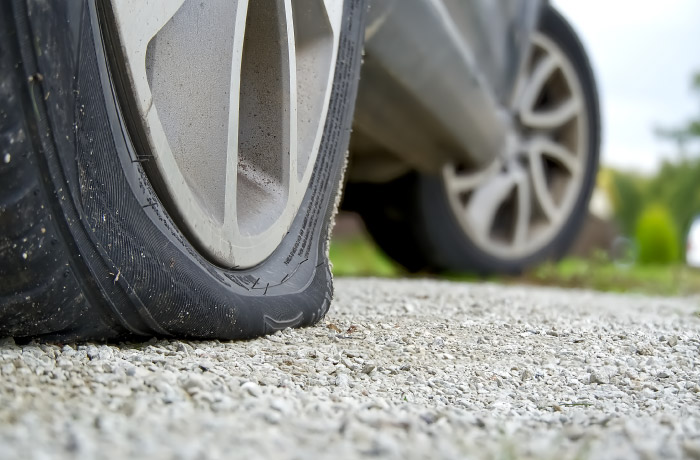
If a tire goes flat while driving, focus on control and getting out of traffic. A damaged or underinflated tire can fail further if you keep driving on it.
- Slow down smoothly. Keep a firm grip on the steering wheel and avoid sudden braking or sharp turns.
- Move to a safe place. If possible, pull well off the road and away from traffic. Turn on your hazard lights.
- Check the tire only when it is safe. Do not stand in a travel lane or on a narrow shoulder to inspect it.
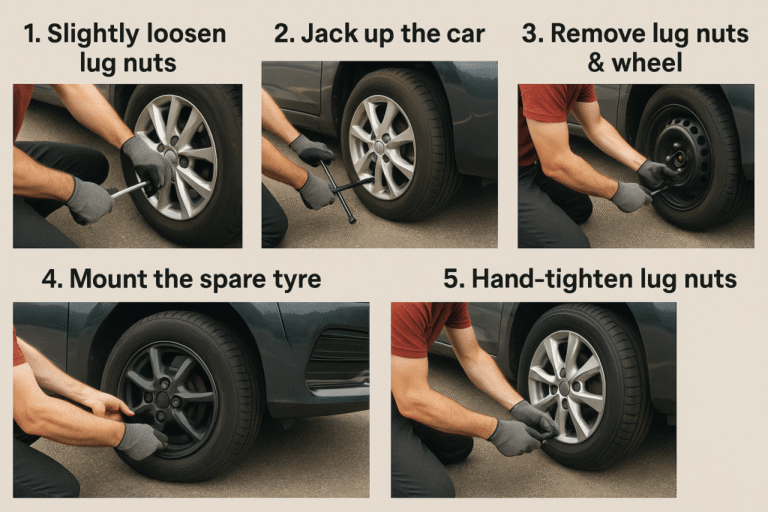
- Use a spare or call for help. Change a tire only if you have a safe, level place to work and can follow the vehicle manual. Otherwise, contact roadside assistance.
- Have the tire inspected before using it again. A tire that was driven while flat may have internal damage even if the outside looks intact.
Do not drive on a flat tire to reach a repair shop. Driving without enough air can damage the tire and wheel and may make the vehicle harder to control. A temporary tire sealant or inflator can help in some situations, but check the vehicle and product instructions first. These products may not work for every puncture or tire, and they do not replace a proper inspection.

Can a flat tire be repaired?
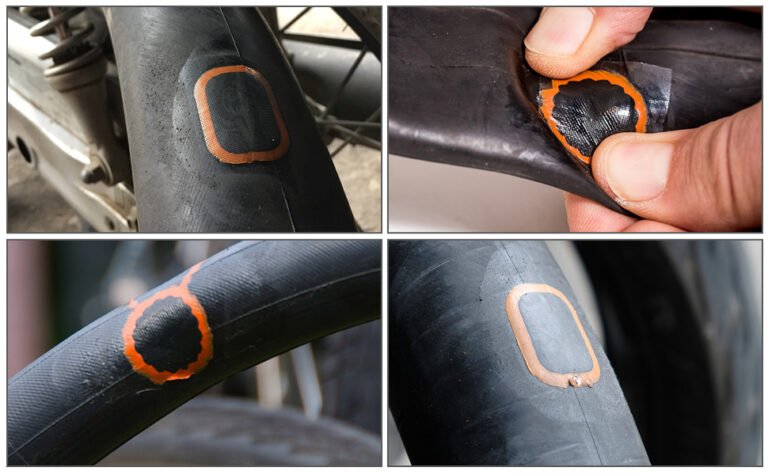
Some tire punctures can be repaired, but not all tire damage is safe to fix. A technician needs to inspect the tire and determine whether the damage is in a repairable area and whether the tire has been harmed by driving underinflated.
A puncture in the tread may be repairable if it meets applicable repair standards. Damage in the sidewall or shoulder, a large cut, a bulge, or damage to the tire’s internal structure usually means the tire should be replaced. A repair shop may also reject a tire that has been driven while flat.
Do not treat a plug from an emergency kit as a permanent repair unless a qualified tire professional confirms that the tire can be safely repaired. For safety guidance and inspection, consult a tire service provider and the tire or vehicle maker’s instructions. The U.S. Tire Manufacturers Association also provides tire safety information.

How to help prevent flat tires
You cannot prevent every puncture, but regular checks can catch low pressure and visible damage before they become a roadside problem.
- Check tire pressure monthly and before long trips. Use a tire gauge when the tires are cold, and follow the vehicle’s door-label pressure.
- Inspect the tread and sidewalls. Look for nails, cuts, bulges, cracks, and uneven wear. Do not touch or remove an object embedded in a tire.
- Replace worn or damaged tires. Follow the vehicle and tire maker’s guidance, and have a tire professional assess damage you are unsure about.
- Avoid potholes and road debris when you can do so safely. Do not swerve suddenly into traffic to miss an obstacle.
- Stay within load limits. Check the vehicle manual and tire information; extra weight can add stress to tires.
- Respond to warning lights. Check pressure promptly instead of assuming the light is a sensor fault.
The right pressure is the value listed for your vehicle, not the maximum pressure molded onto the tire. Pressure can also change with temperature, so a tire that was correctly filled in one season may need a new check later.

Key takeaways
- Sharp objects, impact damage, valve leaks, and leaks at the wheel are common causes of flat tires.
- Low pressure, excess load, age, and wear can increase tire stress or make damage more likely.
- A TPMS warning shows low pressure, not the cause of the leak.
- Do not drive on a flat tire or remove an object lodged in it.
- Have a tire professional inspect damage before deciding whether to repair or replace the tire.
FAQs
Can a tire go flat without a nail in it?
Yes. Air can escape through a faulty valve, a damaged wheel, or a poor seal between the tire and wheel. Cuts, cracks, and impact damage can also cause air loss without leaving a nail in the tread.
Why does my tire keep losing air after I fill it?
A recurring drop in pressure usually means there is a leak, but the cause may not be visible. A puncture, valve issue, or leak at the wheel can all lead to repeated pressure loss. Have the tire and wheel inspected.
Is it safe to drive with a slow leak?
A slow leak can become worse, and a tire with low pressure can be unsafe. Check the pressure when you can do so safely. If the tire is visibly low, damaged, or losing air quickly, do not drive on it; use a spare if it is safe to do so or call for roadside help.
Can a tire with a nail in it be repaired?
Sometimes. A technician must check where the puncture is and whether the tire has internal damage. A puncture in the sidewall or shoulder, or damage from driving while the tire was flat, may mean replacement is needed.
Why did my tire go flat while parked?
A tire can lose air while parked because of a small puncture, a leaking valve, a bead leak, or damage that worsens over time. A shop can inspect the tire and wheel to locate the leak.
Conclusion
Most flat tires result from a puncture, impact, or air leak at the valve or wheel. Check pressure and tire condition regularly, and treat sudden pressure loss or visible damage as a safety issue. If you cannot identify the cause, have a tire professional inspect it before driving on it again.