How Much Do Aztec Mud Tires Weigh: Weight By Size

How much do aztec mud tires weigh? Compare weights by size and learn how tire weight affects ATV and UTV performance before your next upgrade.
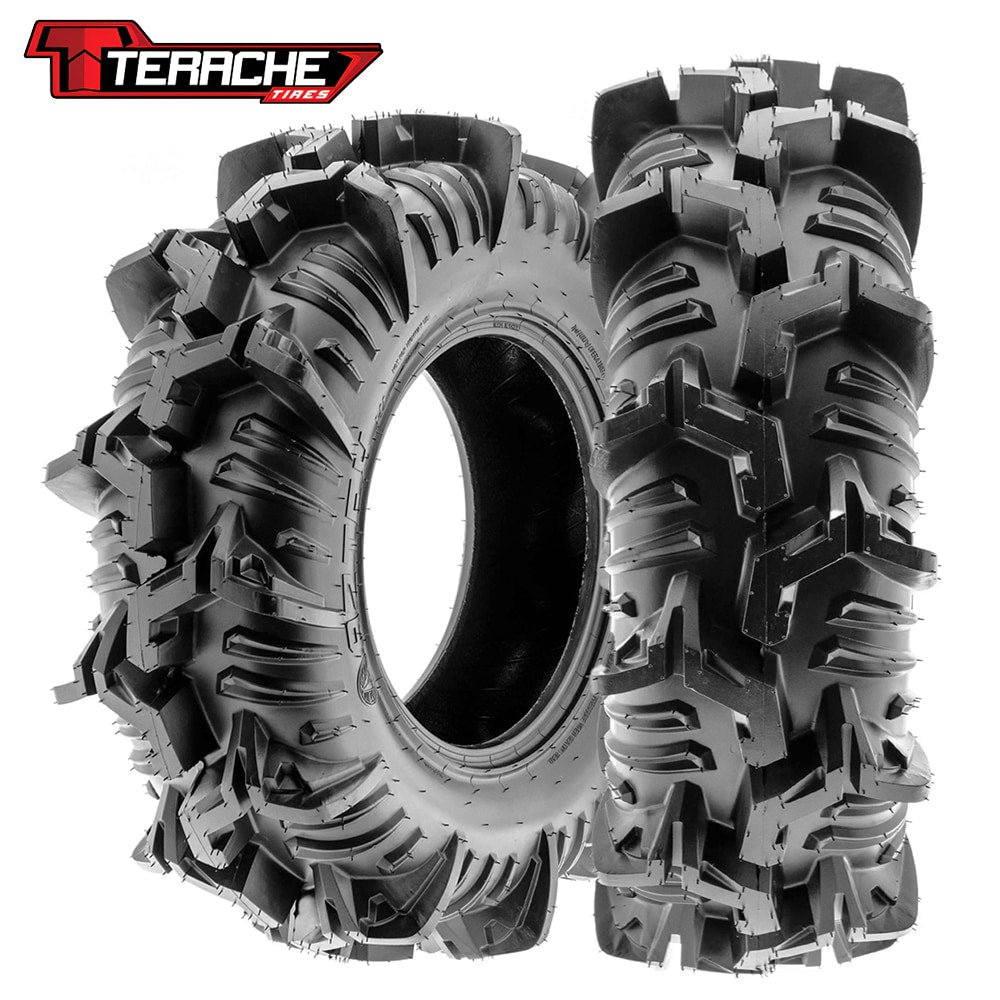
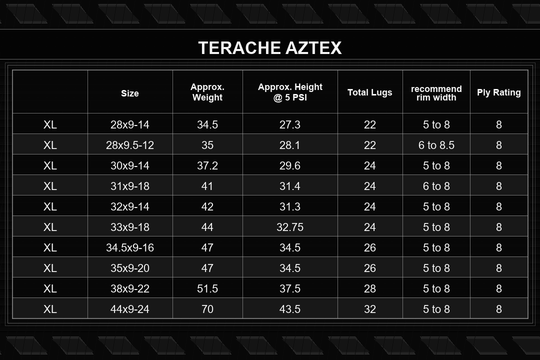
For U.S. buyers, there is no verified weight to quote from the name “Aztec mud tires” alone. The answer depends on the exact brand, model, size, and whether the listed weight includes a wheel. Check those details before using a weight figure to compare tires or plan an upgrade.
Live manufacturer and retailer listings could not be checked for this article, so no model-specific weight is presented as confirmed. The guide below explains how to find the right figure, weigh a tire, and work out the weight change for a full set.

What Determines an Aztec Mud Tire’s Weight?
The exact tire specification determines its weight—not the product name alone. Before looking for a number, copy the brand, model, full size, and part number from the tire or product listing. Check the spelling, too, rather than assuming a similar name refers to the same product.
These details help distinguish tires that may look much alike:
| Detail to confirm | Why it matters |
|---|---|
| Brand and model | Establishes which product the weight belongs to |
| Full tire size | Distinguishes different dimensions within a product line |
| Manufacturer part number | Helps match the tire to a specific specification |
| Construction and version | Different designs can use different amounts of material |
| Tire-only or mounted weight | Establishes whether the wheel is included |
| Pounds or kilograms | Prevents a unit error |
For many ATV and UTV tires, a size such as 30 × 10-14 means a nominal 30-inch outside diameter, 10-inch width, and fitment for a 14-inch wheel. That size does not state the tire’s weight. Other tire categories use different size formats.
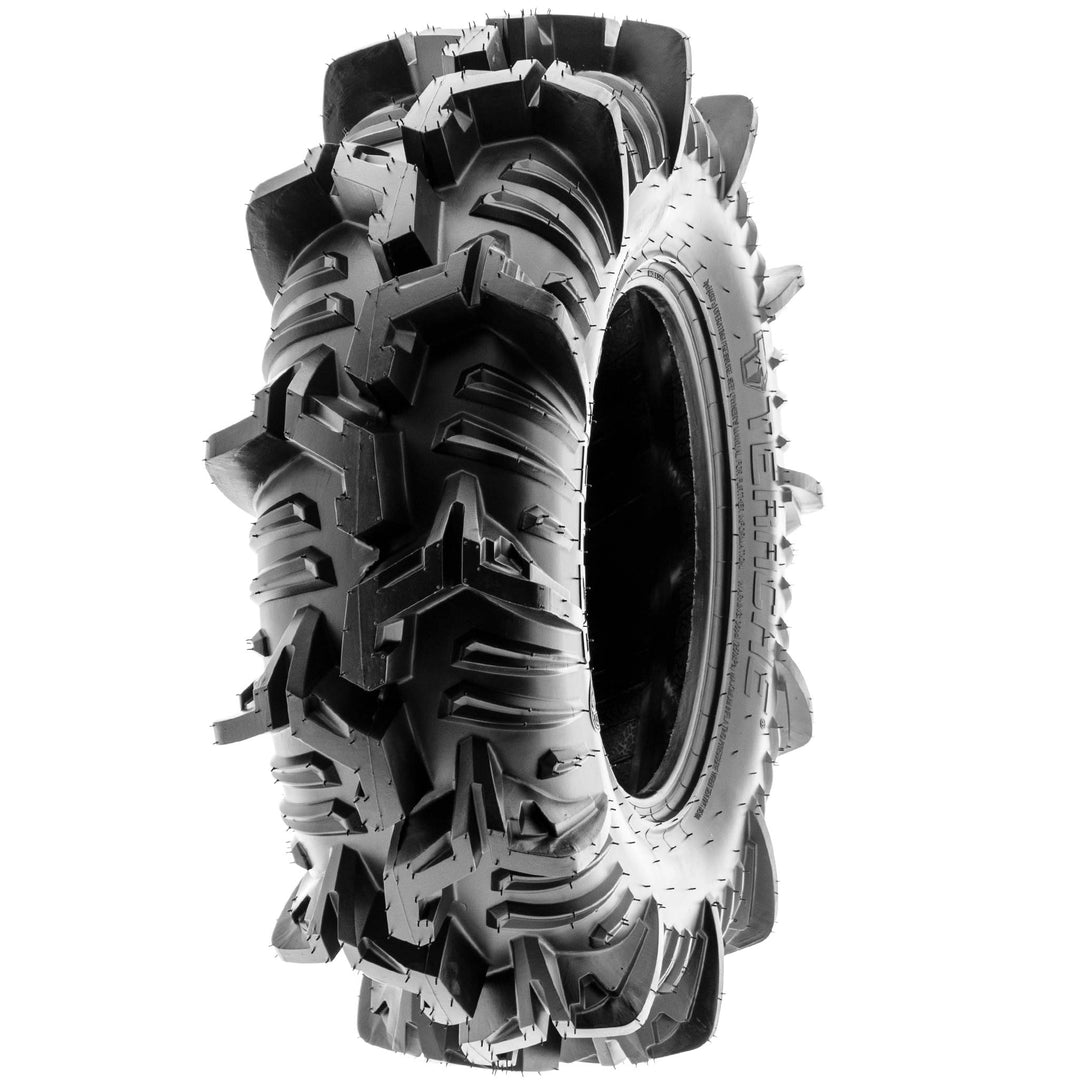
Even tires with the same nominal dimensions can weigh different amounts. Tread depth, lug shape, casing design, and reinforcement all affect how much material a tire contains.

How to Find a Reliable Published Weight
Use a manufacturer’s net tire weight for the exact part number when available. If that figure is not published, ask the manufacturer or seller to confirm it. A bare “item weight” field may not explain what was weighed.
Follow this sequence:
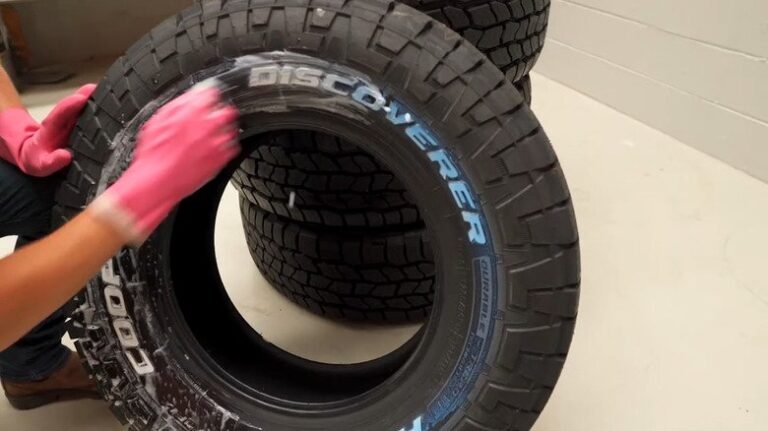
- Identify the tire. Take a clear photo of the sidewall and copy the full product name, size, and part number.
- Check the manufacturer’s specification. Look for “tire weight,” “net weight,” or another clearly defined field.
- Match the exact version. Do not borrow a weight from a nearby size or a similar product name.
- Check what the number includes. Confirm whether it covers one loose tire, a mounted assembly, a pair, or a set.
- Resolve conflicting figures. Ask for the source and measurement basis instead of averaging the numbers.
A useful message to a U.S. seller is:
What is the net weight in pounds of one unmounted tire in this exact size and part number? Please confirm whether the listed weight excludes the wheel, packaging, and pallet.
Tire Weight Is Not Shipping Weight
Shipping weight is not a dependable substitute for tire weight. It may include a box, wrapping, straps, or other packing materials. A freight listing may also cover more than one tire.
Likewise, a tire-and-wheel package weighs more than the tire alone. If two listings disagree, first check whether they describe the same thing. The difference may be a packaging or wheel issue rather than an error in the tire specification.
If the seller cannot explain the figure, treat it as unconfirmed and measure the tire before relying on it.
How to Weigh a Mud Tire Yourself
A suitable scale can establish the weight of the tire you actually own. For tire-only weight, the tire must be off the wheel, clean, and dry. Remove loose mud, stones, and water before weighing it.
What You Need
- A scale with enough capacity for the full load
- A firm, level surface
- A stable support, if needed to hold the tire
- A safe way to lift or move the tire
A platform scale is often easier to use than a small bathroom scale. Whatever scale you use, keep the tire clear of nearby walls and objects. Nothing but the scale should support the load.
Weighing Steps
- Place the scale on a hard, level floor.
- Set it to pounds and check that it reads zero.
- If using a support, tare the scale with the support in place, or record its weight separately.
- Place the tire fully on the weighing platform.
- Wait for the reading to settle.
- Remove the tire and repeat the check.
A successful check gives repeat readings that agree within the scale’s stated resolution. If the readings vary, check for rocking, contact with nearby objects, a soft floor, low batteries, or an overloaded scale.
Do not dismount a tire just to weigh it unless you have the right tools and skills. A tire shop can weigh the loose tire during installation. If the tire is already mounted, weighing the complete assembly may be more useful for comparing vehicle setups.

How to Calculate the Weight of a Full Set
Multiply the verified weight of one tire by the number of matching tires. If the front and rear tires differ, calculate each pair on its own.
For four identical tires:
Set weight = weight per tire × 4
For a staggered set:
Set weight = (front tire weight × 2) + (rear tire weight × 2)
The following figures are hypothetical. They are not Aztec tire specifications.
| Example setup | Calculation | Tire-only set weight |
|---|---|---|
| Four tires at 45 lb each | 45 × 4 | 180 lb |
| Four tires at 55 lb each | 55 × 4 | 220 lb |
| Two fronts at 42 lb and two rears at 48 lb | (42 × 2) + (48 × 2) | 180 lb |
In the first two examples, the heavier set adds 40 lb across four tires. That comparison excludes wheels, sealant, and any other parts.
Converting Kilograms to Pounds
If a specification lists kilograms, multiply by about 2.20462 to get pounds. For example, a hypothetical 20 kg tire weighs about 44.1 lb.
The underlying conversion is exact: 1 lb = 0.45359237 kg, as documented in NIST’s Guide to the SI conversion tables. Extra decimal places do not make an imprecise scale reading more accurate.
Why Tire Weight Matters Before an Upgrade
Tire weight helps you compare setups, but it does not prove that a tire fits or performs well. A lighter tire is not automatically better, and a heavier one is not automatically stronger.
Tires form part of the vehicle’s unsprung mass—the parts not supported by the suspension springs. They also rotate. Changes in tire mass and diameter can therefore affect acceleration, braking, steering feel, and suspension response.
The effect depends on more than pounds alone. Tire diameter, where the mass sits, wheel weight, gearing, pressure, and vehicle design all matter. Two tires of equal weight can behave differently.
Before installing a new size, check:
- Approved tire sizes and wheel widths
- Load and speed limits
- Clearance through steering and suspension travel
- Cold inflation pressure specified for the application
- Vehicle or drivetrain restrictions on tire changes
For an ATV or UTV, use the vehicle manual and the tire maker’s application guidance. For a road-going truck or SUV, also check the vehicle’s tire placard and applicable tire specifications; NHTSA’s tire guidance explains these road-vehicle checks.
A qualified tire shop or vehicle specialist can help when the proposed setup falls outside the vehicle maker’s listed sizes. A weight figure alone cannot establish safe fitment.
Common Mistakes When Comparing Mud Tire Weights
Compare the same size, measurement basis, and condition. Otherwise, a small-looking difference may come from how the figures were recorded rather than from the tires themselves.
Avoid these errors:
- Using size as a weight estimate. A 30-inch diameter does not imply a set number of pounds.
- Treating ply rating as weight. Ply rating is not a direct measure of tire mass.
- Comparing a loose tire with a mounted assembly. Include the same components on both sides.
- Using shipping weight as net weight. Packaging can change the figure.
- Weighing a muddy tire. Mud and trapped water add mass.
- Treating a worn tire as a new-tire specification. Wear removes material, while debris or repairs may add weight.
If you are comparing an upgrade with your current setup, weigh both complete assemblies under the same conditions. That gives a clearer answer to “How much weight will my vehicle gain?” than a loose-tire comparison with different wheels.

Research Limits and Next-Question Gap Map
The unresolved point is the exact Aztec product and its verified weight. No competing pages or live product specifications were inspected, so competitor coverage and current manufacturer figures remain unchecked. No hands-on tire testing was performed.
The questions below are inferred from the reader’s task, not claimed as observed search demand.
| Next question | Reader stage and basis | Competitor coverage | Benefit and answer evidence | Priority and placement |
|---|---|---|---|---|
| Which exact tire does the name identify? | Before lookup; inferred from the missing model details | Not checked | Prevents a wrong-model answer; needs sidewall or part-number confirmation | Highest; identification section |
| Does the number include a wheel? | During comparison; inferred from measurement scope | Not checked | Prevents unlike comparisons; needs a defined specification or measurement | High; published-weight section |
| How much will a full set add? | Before purchase; inferred from upgrade planning | Not checked | Supports a useful comparison; arithmetic from verified individual weights | High; calculation section |
| Can I measure it myself? | After an unclear listing; inferred fallback need | Not checked | Establishes the owned tire’s mass; repeat scale measurements | High; weighing section |
| Does the weight prove fitment? | Before installation; inferred safety need | Not checked | Separates mass from compatibility; needs vehicle and tire guidance | High; upgrade section |

Conclusion
Do not rely on a generic weight for “Aztec mud tires.” Confirm the exact product and size, then obtain the net weight of one unmounted tire—or weigh it on a suitable scale.
Your next step is to photograph the sidewall and ask the manufacturer or seller for the tire-only weight in pounds for that exact part number. Once that figure is confirmed, you can calculate the set weight and compare it fairly with your current setup.