Whats The Biggest Tire For A Stock F150: Fitment Guide

Wondering whats the biggest tire for a stock f150? Get tire size guidance, wheel fitment tips, and rubbing checks before upgrading your truck.
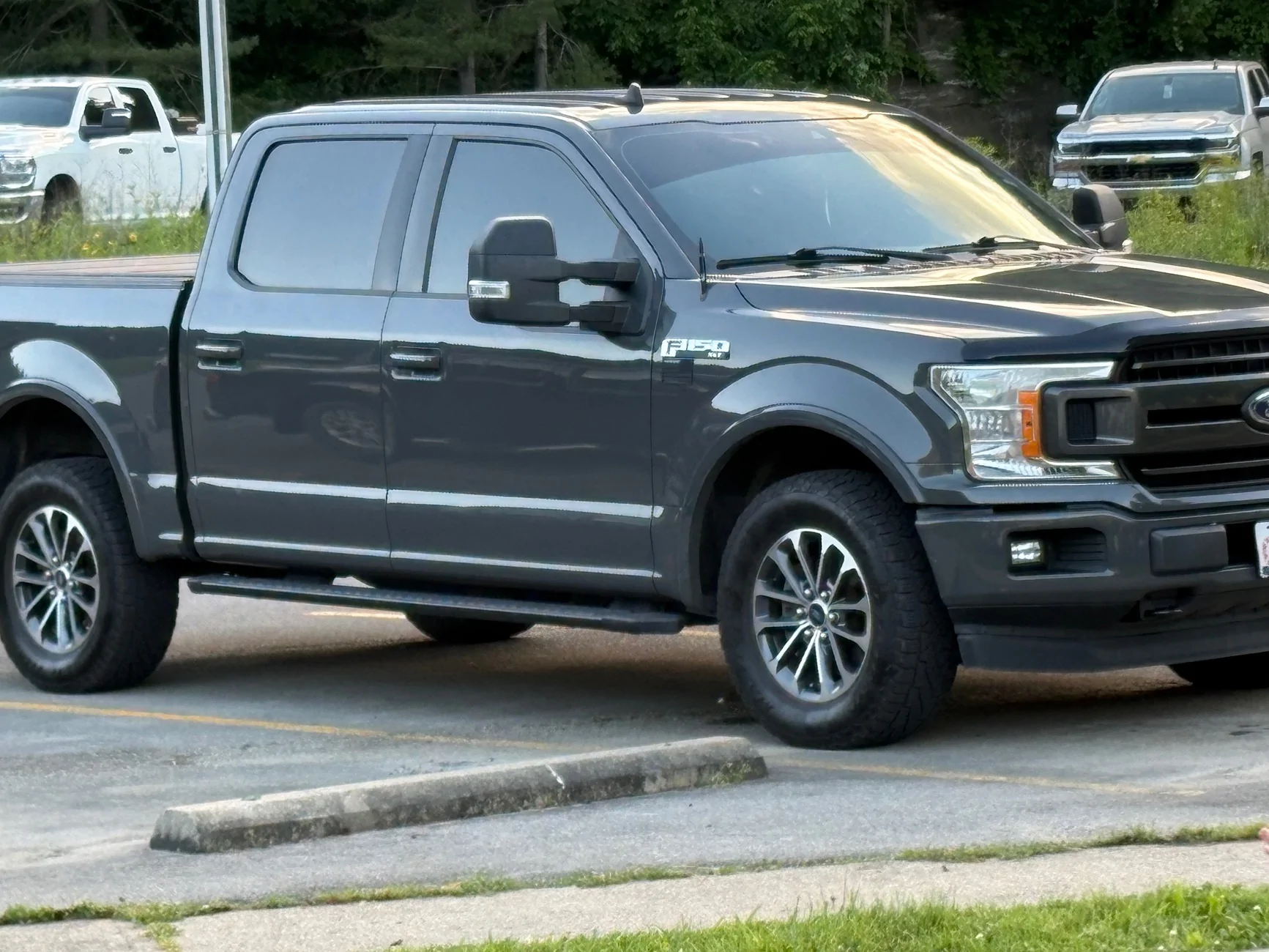
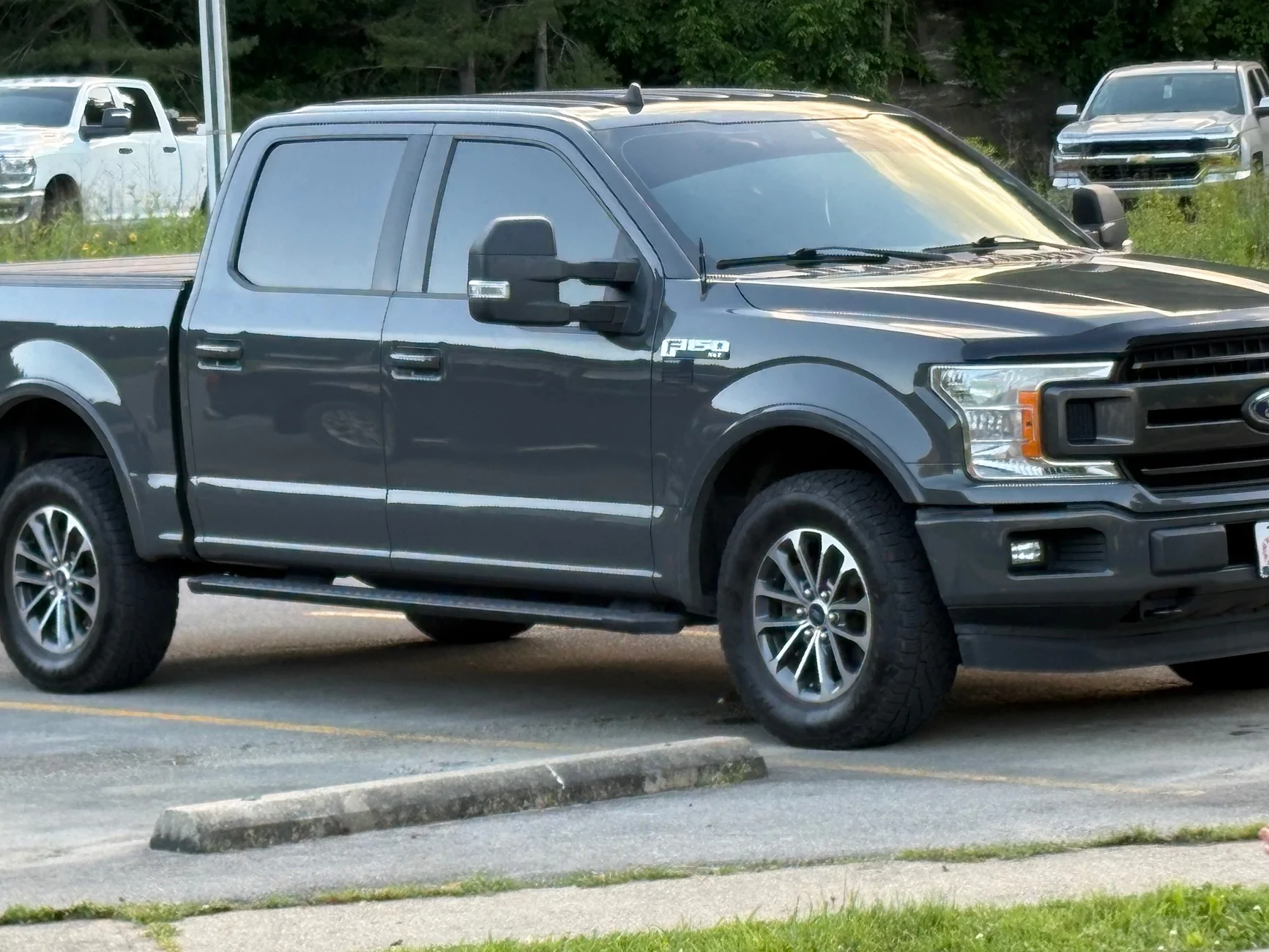
For a standard U.S.-market Ford F-150 with stock suspension and factory wheels, a tire around 33 inches tall is a sensible size to investigate—not a guaranteed maximum. The largest tire that fits depends on the truck’s model year, trim, wheel width, wheel offset, and the tire’s actual dimensions.
There is no single “biggest tire” that fits every stock F-150 without rubbing. A narrow tire near 34 inches tall may be a candidate on one configuration, while a wider, shorter tire may rub on another. Factory off-road models, such as the Tremor and Raptor, also need separate fitment guidance.
For a no-modification fit, verify the exact tire on your exact truck before buying a full set. Diameter alone cannot tell you whether it will clear.

What Does “Stock F-150” Mean for Tire Fitment?
A stock F-150 has its original suspension height and factory-spec wheels. For this guide, “fits stock” also means no leveling kit, lift, wheel spacers, trimming, or removal of clearance-related parts.
That distinction matters. A truck with factory springs but aftermarket wheels is not the same fitment case. Moving a tire inward or outward can change where it rubs.
Before choosing a size, identify:
- Model year and trim: Body shape, suspension layout, and available tire packages vary.
- Drivetrain: Do not assume a fit reported on a 4WD truck applies to a 2WD version.
- Wheel specifications: Diameter, width, and offset all matter.
- Current tire size: Read the sidewall and compare it with the driver’s door-jamb tire label.
- Exact replacement tire: Two tires with the same size label can have different measured dimensions.
The tire label and the Ford owner’s manual for your model year provide the starting specifications. They do not establish a universal maximum aftermarket tire size.

Which Tire Sizes Should You Consider?
For a regular F-150, start by comparing sizes near the truck’s original tire diameter, then assess any increase in height and width. Do not treat a size chart as proof of clearance.
The table below shows calculated diameters for several useful comparison sizes. These are nominal measurements, not verified fitment recommendations.
| Tire size | Nominal diameter | Nominal section width | Fitment significance |
|---|---|---|---|
| 265/70R17 | 31.6 inches | 10.4 inches | A smaller-diameter reference for a 17-inch wheel |
| 285/70R17 | 32.7 inches | 11.2 inches | Near 33 inches tall, with more width to clear |
| 275/65R18 | 32.1 inches | 10.8 inches | A reference point for an 18-inch wheel |
| 275/70R18 | 33.2 inches | 10.8 inches | A taller candidate that needs clearance checks |
| 275/60R20 | 33.0 inches | 10.8 inches | A near-33-inch option to evaluate on a compatible 20-inch wheel |
| 275/65R20 | 34.1 inches | 10.8 inches | A larger step that needs careful verification |
These sizes are not interchangeable across wheel diameters. An R18 tire requires an 18-inch wheel, for example. Each exact tire must also list your wheel width within its approved rim-width range.
Is 275/70R18 the Biggest Tire for a Stock F-150?
275/70R18 is a useful size to investigate, but it is not a universal stock-fit answer. Its calculated diameter is about 33.2 inches. Whether it clears depends on the truck, wheel, and tire model.
Check the tire manufacturer’s published overall diameter, section width, and approved rim widths. Then have clearance checked on the vehicle. An owner report from a different model year is not enough.
Will 35-Inch Tires Fit a Stock F-150?
Do not assume 35-inch tires will fit a standard F-150 without modifications. Depending on the combination, they may interfere with the wheel liner, bumper area, suspension parts, or other components.
Selected factory Raptor configurations use 35- or 37-inch tires, but those trucks have different supporting hardware. Their fitment does not establish what fits a regular F-150. Likewise, a “35” sidewall label does not mean every tire measures exactly 35 inches.

Why Height, Width, and Wheel Offset All Matter
A tire must clear the truck while turning and while the suspension moves. A parked truck with its wheels straight only shows one part of that clearance envelope.
Think of the tire as moving through a space, not sitting inside a fixed hole. More height, more width, or a change in wheel position can put it closer to a different obstacle.
Tire Diameter Affects More Than Fender Clearance
A taller tire extends farther toward the wheel well. It can also affect the speedometer, effective gearing, spare-tire compatibility, and room for traction devices.
Read a size such as 275/70R18 this way:
- 275: Nominal section width in millimeters.
- 70: Sidewall height as a percentage of section width.
- R: Radial construction.
- 18: Wheel diameter in inches.
The nominal diameter formula is:
Diameter = wheel diameter + 2 × (section width × aspect ratio ÷ 100 ÷ 25.4)
For 275/70R18:
18 + 2 × (275 × 0.70 ÷ 25.4) = approximately 33.2 inches
Use that calculation to compare sizes. Use the tire maker’s specifications to evaluate the actual product.
Tire Width Can Cause Rubbing Before Height Does
A wider tire may contact a suspension part on the inside or a liner near the outside of the wheel opening. Tread shoulders and sidewall features can also affect clearance.
This is why a narrower, taller tire may clear where a wider, shorter tire does not. “It fits 33s” leaves out too much information to be a reliable recommendation.
Wheel Offset Changes the Tire’s Position
Offset describes the position of the wheel’s mounting surface relative to its centerline. Changing offset can move the tire inward or outward.
Moving a tire outward may improve clearance at one point while increasing contact elsewhere as the wheel turns. Wheel spacers are therefore not a universal cure for rubbing, and they fall outside a strict stock-wheel fitment.
How to Check the Biggest Tire Your F-150 Can Safely Fit
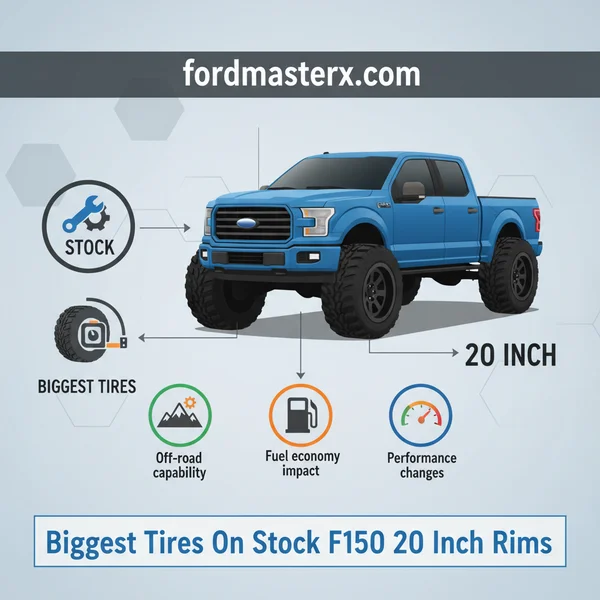
The safest method is to confirm specifications first, then have the exact tire checked on the truck. Ask the tire shop about its test-fit and return policy before ordering.
1. Record the Truck and Wheel Details
Provide the shop with the model year, trim, drivetrain, current tire size, and intended use. Include towing, hauling, off-road use, and any need for snow chains.
Have the shop verify wheel width and offset. A truck that looks stock may have replacement wheels or a leveling kit.
2. Check the Exact Tire’s Specifications
Confirm the candidate tire’s:
- Published overall diameter and section width.
- Approved rim-width range.
- Load index or load range.
- Speed rating.
- Weight and inflation requirements.
Do not choose a tire solely because its size appears in an online fitment discussion. The exact tire model matters.
3. Verify Load Capacity and Inflation
The replacement must provide suitable load capacity for the truck and its use. Tire pressure also needs to suit the replacement tire’s construction and load.
If changing from a passenger-type tire to an LT tire, have a qualified tire professional determine the correct pressure using applicable load-and-inflation data. The maximum pressure on the sidewall is not automatically the correct operating pressure.
The NHTSA tire safety guide explains why tire selection, loading, and inflation must be considered together.
4. Check Steering and Suspension Clearance
Have a qualified shop inspect clearance with the steering turned both ways and with suspension movement considered. A static, straight-ahead check is not enough.
Potential contact points include:
- Wheel-well liners and nearby fasteners.
- Bumper or valance edges.
- Control arms and other suspension parts.
- Brake hoses and ABS wiring.
- Clearance-related brackets or structures.
Do not cut, grind, or remove structural or crash-related components simply to make a tire fit.
5. Confirm the Spare and Follow-Up Needs
Check whether a compatible spare fits the storage location. Review Ford’s instructions for temporary spare use and tire-size differences, especially on a 4WD truck.
Ask whether the size change needs speedometer calibration or other vehicle-specific adjustments. Confirm TPMS operation and any traction-device restrictions before leaving the shop.
What Counts as a Successful Fit?
A successful fit has no contact through the checked steering and suspension range. The tire also meets wheel, load, inflation, and vehicle requirements.
If the tire rubs, stop and identify the contact point. Choose a smaller or narrower tire if needed rather than treating rubbing as normal. Stop driving if there is sidewall damage, contact with a brake hose, or another safety concern.
What Changes When You Install Bigger Tires?
Bigger tires can add clearance under the axles, but the gain is smaller than the increase in diameter. They can also change how the truck accelerates, brakes, and reports speed.
The following example is a calculation, not a test result.
Speedometer Difference: A 32-Inch to 34-Inch Example
If a truck is calibrated for a 32-inch tire and receives a 34-inch tire:
34 ÷ 32 = 1.0625
Without a calibration change, an indicated 60 mph would correspond to about 63.8 mph. That assumes the original reading was accurate and the stated diameters reflect the rolling-size difference.
For a more useful estimate, compare the tire manufacturers’ revolutions-per-mile figures where available.
Ground Clearance: Half the Diameter Increase
Changing from a 32-inch tire to a 34-inch tire raises the axle centerline by roughly 1 inch, not 2 inches. The increase in radius determines the gain.
Actual clearance also depends on load, inflation, and tire deflection. It will not necessarily match the nominal calculation.
Towing and Payload: No Automatic Increase
A larger or higher-load-rated tire does not increase Ford’s listed payload, axle ratings, or maximum loaded vehicle weight. Those limits still apply.
Larger tires also make the effective gearing taller. Heavier tires add mass that must be accelerated and slowed. The result can affect towing feel and braking response, but the size of the change depends on the tire and truck.

Common Mistakes When Choosing F-150 Tires
The most common mistake is treating “33-inch” or “35-inch” as a complete fitment specification. Diameter is only one part of the answer.
Avoid these shortcuts:
| Mistake | Why it can fail | Better approach |
|---|---|---|
| Using another owner’s photo as proof | It may hide trimming, spacers, or a leveling kit | Confirm the full truck, wheel, and tire setup |
| Checking only at ride height | Contact may occur while turning or over bumps | Have steering and suspension clearance assessed |
| Assuming every tire in one size is identical | Actual dimensions and shoulder shapes vary | Check the exact manufacturer specifications |
| Choosing by appearance alone | Load capacity or rim compatibility may be wrong | Verify technical requirements first |
| Ignoring the spare | A size mismatch can complicate roadside use | Plan the spare before buying |
| Treating a leveling kit as a complete fix | It does not resolve every width or steering conflict | Reassess the whole fitment |
A tire that barely clears in the shop may leave too little room for mud, packed snow, or traction devices. Choose usable clearance over the largest possible sidewall number.

Frequently Asked Questions
Will Bigger Tires Void My F-150 Warranty?
A tire change does not by itself establish that every warranty claim is invalid. However, damage related to a modification may affect coverage.
Review the applicable U.S. warranty terms and ask the dealer about the specific change. Avoid relying on a blanket promise that larger tires either “void everything” or “cannot affect coverage.”
Can I Keep My Existing TPMS Sensors?
Often, a tire-only change can retain compatible, working sensors when the original wheels remain. Sensor condition, valve hardware, and service or relearn requirements still need to be checked.
Tell the installer if a TPMS warning is already present. A larger tire will not fix a sensor fault.
Can I Still Use Snow Chains With Larger Tires?
Not necessarily. A tire can clear during normal driving yet leave too little room for chains or cables.
Follow the traction-device instructions in the owner’s manual for your exact truck and tire configuration. If winter travel requires chains, verify that requirement before sizing up.
Will Bigger Tires Reduce Fuel Economy?
They can, but there is no reliable one-number penalty. Tire weight, tread, rolling resistance, diameter, and driving conditions all affect the result.
An uncorrected odometer can also distort a hand-calculated mpg figure. Account for the size change before comparing fuel use.
Do Bigger Tires Require New Axle Gears?
Not every size increase requires regearing. The decision depends on the size change, original axle ratio, engine, transmission, load, and intended use.
If towing performance is the main concern, discuss the exact combination with a qualified shop before buying tires. Fitment alone does not establish that the change suits the truck’s job.
Sources, Evidence Limits, and Next Questions
This guide uses tire-size calculations and general fitment principles. Live competitor research and model-specific fitment testing were not available for this article. No size above should be read as a verified fit for an unidentified F-150.
Use these primary resources to confirm the details that can change the decision:
- Ford Owner Manuals: Vehicle-specific tire, spare, loading, and traction-device instructions.
- NHTSA Tire Safety: Tire selection, inflation, maintenance, and loading guidance.
- The exact tire manufacturer’s specification sheet: Actual dimensions, approved rim widths, and load information.
The next-question map below identifies practical needs, not verified search demand. Competitor coverage was not checked.
| Next question | Reader stage and basis | Coverage checked | Benefit and supporting evidence | Priority and placement |
|---|---|---|---|---|
| Will this exact tire clear my wheels and suspension? | Before purchase; inferred from fitment variables | Not checked | Prevents an incompatible purchase; needs tire specifications and a physical clearance check | High; fitment method |
| Will the spare remain usable? | Before and after purchase; inferred from roadside use | Not checked | Avoids an overlooked recovery problem; needs Ford’s model-specific instructions | High; spare check |
| What pressure should an LT replacement use? | Installation; inferred from construction changes | Not checked | Supports proper loading and inflation; needs load tables and professional assessment | High; load and inflation |
| Will chains still fit? | Winter use; inferred from reduced clearance | Not checked | Preserves required winter capability; needs the exact owner’s manual | Conditional high; FAQ |

Conclusion: Verify the Exact Fit Before Buying
For a standard stock F-150 in the United States, start by evaluating tires around 33 inches tall rather than assuming 35s will fit. A larger size may work on a specific configuration, but the model year, wheels, tire width, and clearance checks decide the answer.
Your next step is to give a qualified tire shop your truck details and one exact candidate tire. Ask it to verify wheel compatibility, load requirements, steering clearance, suspension clearance, and spare use before ordering the full set.