

Does GEICO Roadside Assistance Cover Flat Tire: Key Facts

Wondering: does geico roadside assistance cover flat tire? Learn about spare tire service, coverage limits, and potential costs before you call.
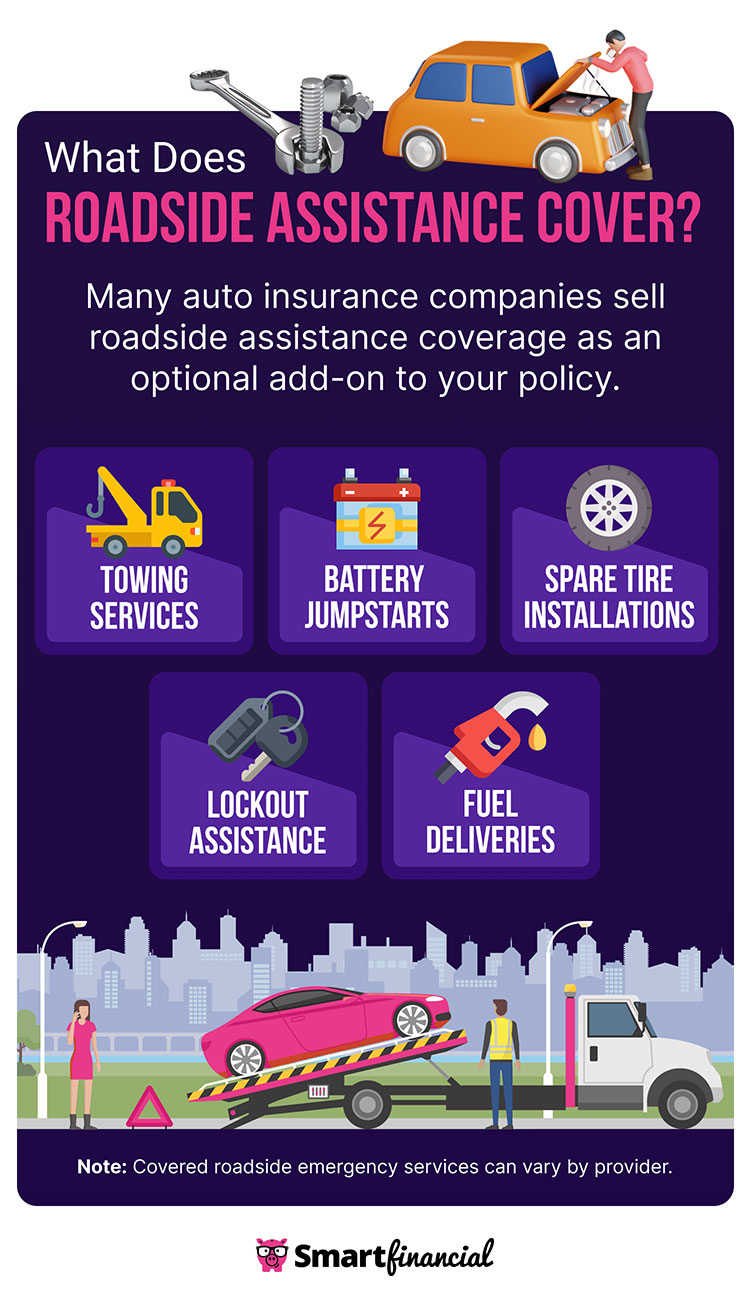
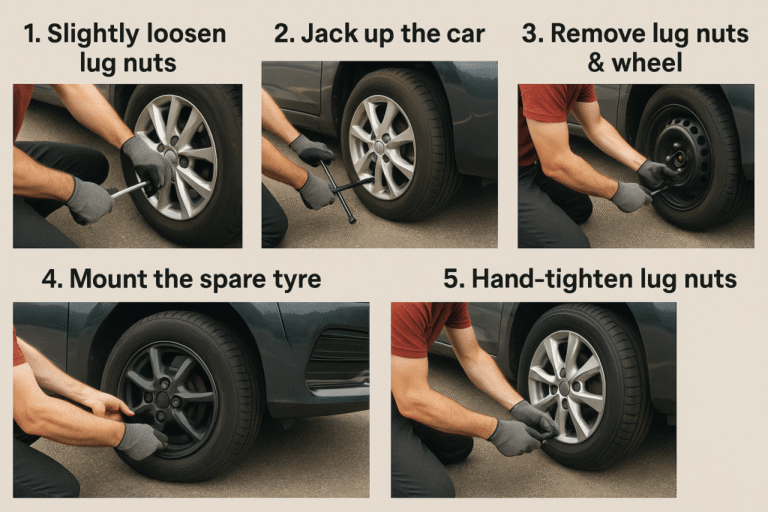
Yes. In the United States, GEICO’s Emergency Road Service generally covers the labor to change a flat tire using your vehicle’s usable spare, if you have that coverage on the disabled vehicle. It does not mean GEICO pays for a new tire or includes tire repair at a shop.
GEICO calls its roadside assistance coverage Emergency Road Service, or ERS. If you have no usable spare, tell the dispatcher before help arrives. You may need a tow instead, subject to your policy’s terms and service limits.

What Does GEICO Cover for a Flat Tire?
The key distinction is between help at the roadside and the cost of fixing or replacing the tire. GEICO’s Emergency Road Service overview lists tire changes among its roadside services. Your policy determines the exact coverage and limits.
Use this table to separate the service you may receive from costs you may still owe.
| Situation | What roadside assistance may provide | What you should confirm |
|---|---|---|
| One flat tire and a usable spare | Labor to remove the flat and install the spare | That ERS is active on the disabled vehicle |
| No spare or an unusable spare | A tow, if covered and needed | Covered destination, distance, and any extra charge |
| Tire needs a patch or plug | Help changing the wheel or arranging a tow | Do not assume roadside tire repair is included |
| Tire is damaged beyond repair | A spare-tire change or covered tow | The cost of a replacement tire and shop work |
| Two or more flat tires | A tow may be needed | Whether the vehicle can be moved safely |
| Damaged wheel or stuck wheel hardware | A tow or other suitable service may be needed | Whether a roadside tire change is possible |
A “tire change” usually means swapping the wheel with the flat tire for the spare wheel. It is not the same as removing a tire from its rim, repairing a puncture, or mounting a new tire.
Do not assume that having GEICO auto insurance means you have roadside coverage. Check the coverage shown for the specific vehicle in your policy.

How to Request GEICO Flat-Tire Assistance
First get out of immediate danger, then request help through GEICO and describe the tire problem clearly. A correct service request can prevent a technician from arriving prepared for a spare-tire change when you actually need a tow.
1. Stop in the safest available place
If the vehicle is still moving, slow down smoothly and seek a safe place away from traffic. Turn on your hazard lights. Avoid driving farther on a flat just to reach a preferred repair shop; this can damage the wheel and affect control.
Do not try to change a tire beside fast-moving traffic, on a steep slope, or on soft or unstable ground. If the vehicle is blocking a live lane or you face an immediate threat, call 911.
Whether you should stay inside or leave the vehicle depends on the setting. Avoid standing beside traffic or between vehicles, and follow instructions from emergency responders.
2. Check whether the vehicle has ERS coverage
Open the GEICO app or sign in to your account to review the vehicle’s coverage. Look for Emergency Road Service rather than assuming that collision, comprehensive, or a policy described as “full coverage” includes it.
If you cannot find the answer, ask GEICO to confirm coverage before you authorize a paid service. Do not delay an urgent safety response while searching policy documents.
3. Request roadside help
Use the roadside assistance option in the GEICO app or follow the contact instructions on GEICO’s official website or your policy documents. Give the dispatcher:
- Your location, including the road name, direction of travel, and nearby exit or landmark.
- The vehicle’s year, make, and model.
- Which tire is flat and whether more than one tire is damaged.
- Whether you have a usable spare.
- Whether you have the key for any locking lug nuts.
- Any safety concern, such as a narrow shoulder or traffic obstruction.
If you are unsure whether the spare is usable, say so. A spare that is flat, damaged, or unsuitable for the vehicle may not solve the problem.
4. Confirm the service and any charge
Ask whether the request is for a tire change or a tow. If towing is needed, confirm the covered destination and any cost for going farther or choosing another shop.
Do not assume that every service arranged through a roadside request is covered without limits. Get approval before agreeing to an extra service or paying a provider yourself.
5. Check the result before driving
After the spare is installed, ask the technician about any concern that could make the vehicle unsafe to drive. Follow the speed, distance, and inflation instructions on the spare and in the owner’s manual.
The job is not complete just because the vehicle can move. A temporary spare is a short-term bridge to proper tire service, not a full replacement for the damaged tire.

What Happens If You Have No Spare Tire?
Tell GEICO that you have no usable spare when you request help. A normal roadside tire change requires a suitable replacement wheel and tire. Without one, towing may be the practical next step.
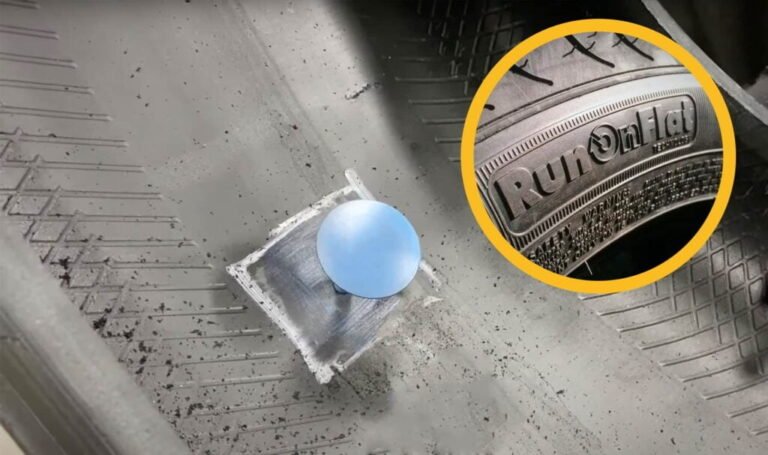
Some US-market vehicles have a tire sealant kit, run-flat tires, or no spare at all. The correct response depends on the equipment fitted to your vehicle and the type of damage. A kit that can address a small tread puncture may not help with a torn sidewall or damaged wheel.
Check the owner’s manual before using a sealant kit or driving on a run-flat tire. Do not treat the term “run-flat” as permission to keep driving without limits.
Ask these questions before a tow is dispatched
- Is this tow covered under my vehicle’s ERS coverage?
- Which repair facility is included?
- Can I choose another shop, and would that create an extra charge?
- Does the vehicle require special towing equipment?
- Will I need to pay anything at pickup or drop-off?
For example, a driver with one flat tire and a sound spare may need only a wheel change. A driver with two flat tires and one spare will usually need another solution. The same coverage can lead to different service based on the vehicle’s condition.
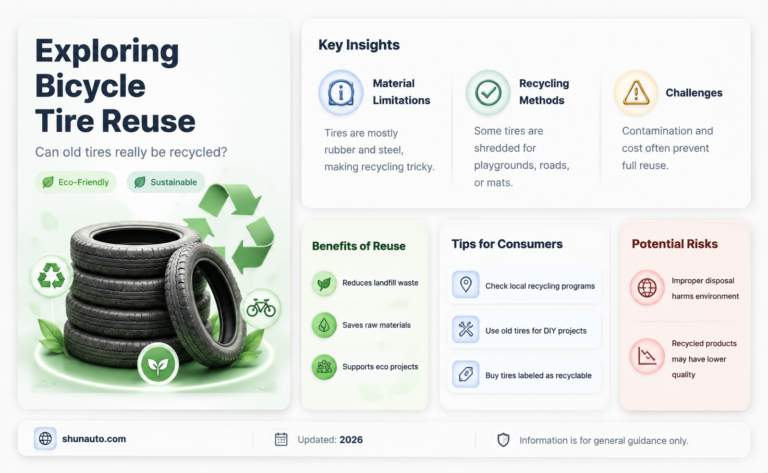
Does GEICO Pay for a New Tire or Tire Repair?
Roadside tire-change coverage generally pays for the assistance, not a new tire. Do not treat ERS as a tire warranty or a tire-and-wheel protection plan.
Costs that may remain your responsibility include:
- A replacement tire or wheel.
- Puncture repair at a tire shop.
- Tire mounting and balancing.
- A replacement valve or damaged tire-pressure sensor.
- Services beyond the limits of your roadside coverage.
Separate coverage may apply when a covered event causes the damage. For instance, a crash that damages a wheel and other parts of the vehicle raises a different insurance question from a worn tire that loses air. Any payment depends on the cause, applicable coverage, exclusions, and deductible.
A tire warranty or tire-and-wheel plan may also be relevant, but it has its own terms. Ask the provider rather than assuming GEICO roadside assistance will reimburse the expense.
Should you arrange service yourself and seek reimbursement?
Contact GEICO first when it is safe to do so. Do not assume that hiring your own tow truck or roadside technician guarantees reimbursement.
If circumstances force you to arrange help, keep the itemized receipt and record the location, time, and reason for service. Ask GEICO what documentation is required and whether the expense qualifies under your policy.

Limits and Safety Issues That Can Change the Answer
A covered service still has to be safe and practical at the vehicle’s location. The presence of a spare does not guarantee that a technician can complete a roadside tire change.
A missing wheel-lock key can prevent removal
Some wheels use locking lug nuts that need a matching key. Tell the dispatcher if the key is missing or you cannot find it. The provider may need different equipment, a shop visit, or a tow.
A spare may be unsafe to use
A spare can lose air or develop damage while stored. Check its condition and inflation as part of routine vehicle care, using the vehicle’s specified pressure rather than guessing.
The National Highway Traffic Safety Administration’s tire guidance explains tire maintenance and safety checks. For your spare’s operating limits, use the owner’s manual and the markings on the spare itself.
Location can prevent a tire change
A narrow highway shoulder, unstable ground, or damaged lifting point can make a roadside wheel change unsafe. In those cases, moving the vehicle to a suitable place may be necessary.
Do not crawl under a vehicle supported only by an emergency jack. If the wheel, suspension, or underside appears damaged, leave the assessment to a qualified technician.
A tire-pressure warning does not reveal the cause
A tire-pressure monitoring system, or TPMS, warns about low pressure; it does not tell you whether the cause is a puncture, leak, or other damage. If the tire looks flat or the vehicle handles abnormally, stop safely rather than assuming it only needs air.
After the roadside visit, have a tire professional inspect the damaged tire. A spare gets you moving, but it does not establish that the original tire can be repaired.

FAQs About GEICO Flat-Tire Assistance
Can I use GEICO roadside assistance for a flat tire in my driveway?
A vehicle does not have to be on a highway to become disabled. However, confirm whether your ERS coverage applies at the vehicle’s location and whether the provider can safely access it. Describe any garage clearance, steep driveway, or parking restriction when requesting service.
Does GEICO roadside assistance cover a rental car’s flat tire?
Do not assume that roadside coverage for your insured vehicle automatically applies to a rental car. Ask GEICO about your policy and check the rental agreement. The rental company may require you to use its assistance service or obtain approval before work is done.
Can I add roadside assistance after the tire goes flat?
Do not expect newly added coverage to pay for a breakdown that has already happened. Ask GEICO when any coverage change takes effect and whether help is available for the current incident at your expense.
Will a flat-tire roadside request raise my insurance premium?
There is no reliable universal answer for every policy and state. Ask GEICO how a roadside service request is recorded and whether it can affect your policy, eligibility, or price. Do not confuse a roadside request with a collision claim.
How many times can I request tire assistance?
Check your policy and ask GEICO about any service-use limits. Do not assume assistance is unlimited because a general coverage page does not state a number. Repeated flats also warrant a tire-shop inspection to find the cause.
Research Scope and Next-Question Gap Map
This guide explains the general coverage distinction; it does not verify your individual policy. Live browsing was not available for this draft, so current competitor pages, prices, policy forms, and state-specific changes were not inspected. The official GEICO and NHTSA links above are starting points for verification, not a claim of live access.
The questions below are inferred from the steps a US driver must take before, during, and after a flat tire. They are not presented as verified search-volume findings or gaps across the whole internet.
| Next question | Reader stage and basis | Competitor coverage | Reader benefit and evidence needed | Priority and placement |
|---|---|---|---|---|
| What if I have no spare? | During breakdown; inferred service obstacle | Not checked | Prevents the wrong dispatch; confirm with GEICO and the owner’s manual | High; no-spare section |
| Will I owe extra for towing? | Before authorization; inferred cost risk | Not checked | Avoids surprise charges; requires policy and dispatch confirmation | High; request and towing sections |
| Does assistance buy me a new tire? | Before repair; inferred coverage confusion | Not checked | Separates service from parts; verify ERS and any separate protection plan | High; repair-cost section |
| Can I safely drive on the spare? | After service; inferred safety need | Not checked | Reduces misuse; requires the vehicle manual and spare markings | High; request and safety sections |

Conclusion
GEICO roadside assistance generally covers changing a flat tire with a usable spare when Emergency Road Service is active on the disabled vehicle. It does not generally cover buying a new tire, and a vehicle without a usable spare may need a covered tow instead.
Your next step is to get to a safe location, check ERS coverage for that vehicle, and tell the dispatcher whether you have a spare and wheel-lock key. Confirm the service, towing destination, and any out-of-pocket cost before work begins.

One Comment
Comments are closed.