Do Flat Tyres Use More Petrol: Fuel-Saving Facts
Yes. A tire that is low on air can make your car use more gas because it takes more energy to roll. A fully flat tire is a different matter: do not keep driving on it. Pull over somewhere safe and arrange for a repair or roadside help.
For U.S. drivers, the right tire pressure is listed on the vehicle’s driver-side door-jamb label or in the owner’s manual. Check it with a tire gauge when the tires are cold. The number on the tire’s sidewall is usually the tire’s maximum pressure, not the pressure your car calls for.
Do flat or underinflated tires use more gas?
Yes. Underinflated tires can lower fuel economy, but the effect depends on how low the pressure is and how many tires are affected. A tire with too little air flexes more as it rolls. That raises rolling resistance, so the engine must use more energy to move the vehicle.
The U.S. Department of Energy estimates that underinflated tires can reduce gas mileage by about 0.2% for each 1 psi drop in pressure across all four tires. It says keeping tires properly inflated can improve gas mileage by up to 3.3%, though results vary by vehicle and driving conditions. These are broad estimates, not a precise forecast for one car or one tire.
| Example pressure loss | Approximate fuel-economy effect |
|---|---|
| 1 psi below the recommended pressure on all four tires | About 0.2% lower |
| 4 psi below the recommended pressure on all four tires | About 0.8% lower |
For example, if a car normally gets 30 mpg, a 0.8% drop would equal about 29.8 mpg. This is a simplified example based on the DOE estimate. It does not mean one tire that is 4 psi low will always cause that exact change.
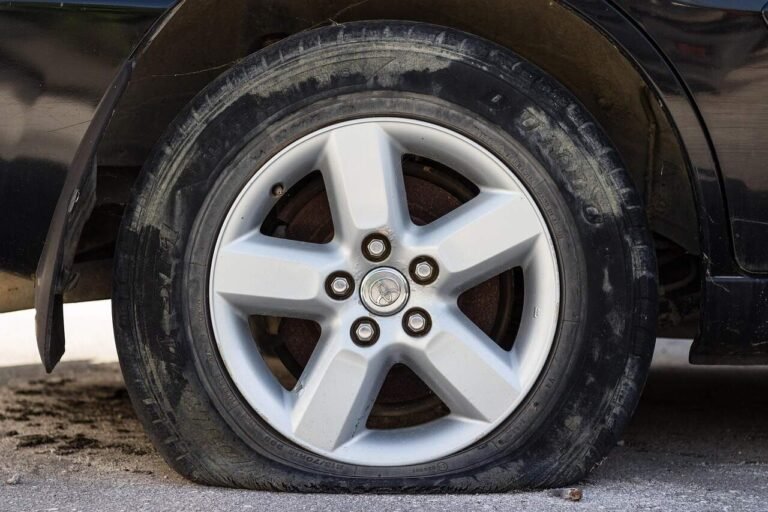
A completely flat tire is not just a fuel-economy problem. Driving on it can damage the tire and wheel, and may make the car harder to control. If a tire looks flat or the vehicle pulls or thumps, slow down gently and stop in a safe place.
How to check tire pressure and find the right PSI
Use the pressure listed by the vehicle maker, not the maximum pressure printed on the tire. The correct figure is usually on a label inside the driver’s door area. It may also be in the owner’s manual.
Check pressure with a tire gauge when the tires are cold. “Cold” means the car has been parked for several hours or driven only a short distance. Driving warms the tires and can raise the pressure reading.
- Find the recommended PSI on the door-jamb label or in the manual.
- Remove the valve cap from one tire.
- Press a tire gauge firmly onto the valve stem and read the pressure.
- Add air if the pressure is low, or release a small amount if it is high.
- Check the pressure again, then replace the valve cap.
- Repeat for each tire, including the spare if it has one.
The National Highway Traffic Safety Administration advises checking tire pressure at least once a month and before long trips. Check sooner if the tire-pressure warning light comes on, a tire looks low, or the car’s handling changes. The tire-pressure monitoring system can alert you to a problem, but it does not replace regular pressure checks.
What to do if a tire is flat
Do not drive on a flat tire to reach a gas station or repair shop. Continuing can ruin a tire that might otherwise be repairable, damage the wheel, and put you at risk of losing control.
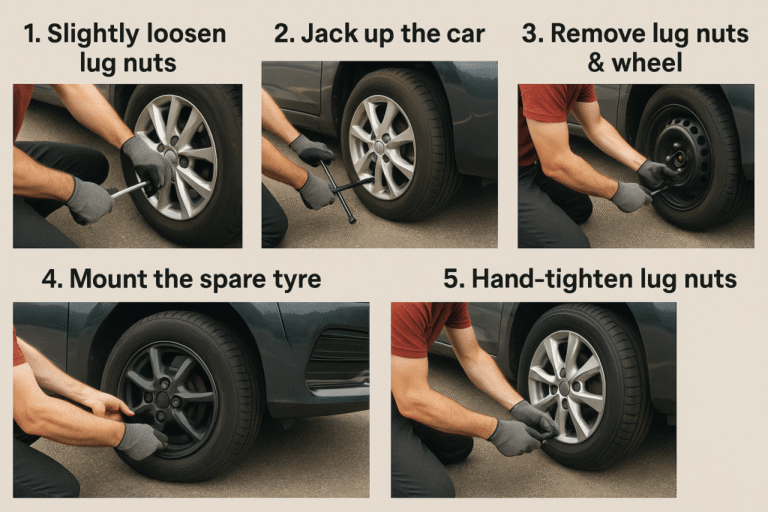
If you notice a flat while driving, ease off the accelerator and steer smoothly. Avoid sudden braking or sharp turns. When it is safe, move well away from traffic, turn on your hazard lights, and call for roadside assistance or follow your vehicle’s instructions for changing a tire.
A spare tire may help you reach a repair shop, but use it only if you can install it safely and follow the vehicle manual. Many temporary spares have limits on speed and distance. If your vehicle has run-flat tires, follow the tire maker’s and vehicle maker’s instructions; do not assume every run-flat tire can travel the same distance after losing pressure.
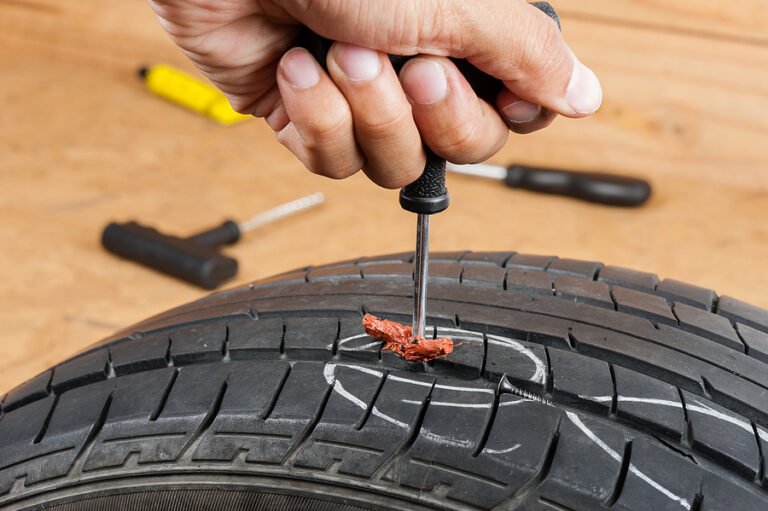
A tire that repeatedly loses air needs inspection. A nail or other puncture, a damaged valve, a leak at the rim, or a damaged tire can all cause pressure loss. A tire professional can assess whether it can be repaired safely or needs replacement.
Why tire pressure can fall—and when fuel use may not be the main concern
A gradual pressure drop can result from a puncture, a leak, or normal pressure loss over time. A sudden drop may point to tire damage. In either case, check the tire before driving far.
Cold weather can also lower tire pressure. A warning light that appears on a cold morning may go off after the tires warm up, but do not rely on that as proof that pressure is correct. Check all tires with a gauge and inflate them to the vehicle’s recommended pressure.
Low pressure can also affect tire wear and handling. It may make the tire wear more along its outer edges and can change how the vehicle responds. If the tire is badly underinflated, damaged, or losing air quickly, safety comes before any effort to save gas.
Key takeaways
- Underinflated tires can use more gas because they increase rolling resistance.
- The DOE estimate is about a 0.2% fuel-economy loss per 1 psi drop across all four tires; actual results vary.
- Use the PSI on the vehicle’s door label or in its manual—not the tire’s sidewall maximum.
- Check pressure monthly, before long trips, and when a warning light or handling change calls for it.
- Do not drive on a fully flat tire. Stop safely and get help.
Frequently asked questions
Can one low tire make my car use more gas?
It can. A low tire adds rolling resistance, but the fuel impact depends on how low it is, the vehicle, and driving conditions. The DOE’s per-PSI estimate applies to pressure loss across all four tires, so it should not be used as an exact calculation for one tire.
How much does low tire pressure affect gas mileage?
The Department of Energy estimates about a 0.2% reduction in gas mileage for each 1 psi drop across all four tires. This is a general estimate. The actual effect can differ, and a severely underinflated tire can create a safety risk beyond fuel use.
Should I inflate my tires to the PSI on the tire’s sidewall?
Usually, no. The sidewall figure is generally the tire’s maximum pressure, while the vehicle label gives the recommended pressure for that car. Follow the door-jamb label or owner’s manual.
Can I drive a short distance on a flat tire?
It is not recommended. Even a short drive can damage the tire or wheel and affect vehicle control. Stop in a safe location and use a suitable spare only if you can do so safely; otherwise, call for assistance.
Does the tire-pressure warning light tell me which tire is low?
Some vehicles show the tire or pressure reading, while others only show a general warning. Check the owner’s manual to learn what your system displays, then use a tire gauge to check each tire.
Conclusion
Low tire pressure can reduce fuel economy, but a flat tire is a safety issue first. Check tires with a gauge when cold, use the vehicle’s recommended PSI, and do not drive on a flat. For a tire that will not hold air or looks damaged, have it inspected before driving again.
Sources: U.S. Department of Energy: Gas Mileage Tips—Keep Your Car in Shape; National Highway Traffic Safety Administration: Tires