Can You Repair A Cut Bicycle Tire: What Really Works
Usually, you cannot make a cut bicycle tire safe for long-term use. A tire boot can cover some cuts from the inside and help you reach home, but it does not restore the tire’s full strength. Replace the tire if the cut reaches the casing, opens under pressure, shows threads, or causes a bulge.
For cyclists riding on U.S. roads and trails, the key question is whether the tire itself is damaged or only the inner tube. A tube puncture is often repairable; a cut in the tire casing is a more serious problem. This guide explains how to check the damage, use a tire boot in an emergency, and decide when to stop riding.

First, find out what is cut
A flat tire does not always mean the tire is damaged. The inner tube may have a puncture while the outer tire remains sound, so inspect both before deciding what to repair.
The tire casing is the fabric body beneath the rubber tread and sidewall. It helps the tire hold its shape under pressure. The inner tube sits inside the tire and holds air. A tire boot is a strong patch placed inside the tire to cover a cut; it helps keep the tube from pushing through the opening.
After removing the wheel, check the tire’s inside and outside. Look for a sharp object, a slit, a hole, or damage near the sidewall. Also inspect the tube to see where air escaped. A matching cut or puncture in the tube can help you locate the tire damage.
If the tire has no cut or hole, and its casing looks intact, you may only need to patch or replace the tube. If you find a cut in the tire, assess its depth and location before riding again.

Can a cut bicycle tire be repaired permanently?
A tire boot is best treated as a temporary fix, not a permanent repair. It covers the cut from inside and helps stop the tube from bulging through it. But it does not rebuild damaged casing threads or restore the tire to its original strength.
A small mark in the rubber tread may not have reached the casing. If you cannot see fabric or threads, the tire has no bulge, and the cut stays closed when gently flexed, the casing may be intact. Keep checking the tire; damage can grow with use.
Replace the tire if you see any of these signs:
- Casing threads or fabric through the cut
- A cut that passes through the tire
- A split sidewall
- A bulge, lump, or spot where the tube pushes through
- A cut that spreads or opens when the tire is inflated
- Repeated flats at the same spot
There is no single cut-length limit that makes every tire safe. The location, depth, casing condition, tire design, and riding conditions all matter. A short cut through the sidewall can be more concerning than a longer scrape in the tread.

How to use a tire boot to get home
Use a tire boot only if the tire still holds its shape and the damage does not make the wheel unsafe to ride. If the casing is badly split, the sidewall is bulging, or the cut keeps opening, walk the bike or arrange a ride instead.
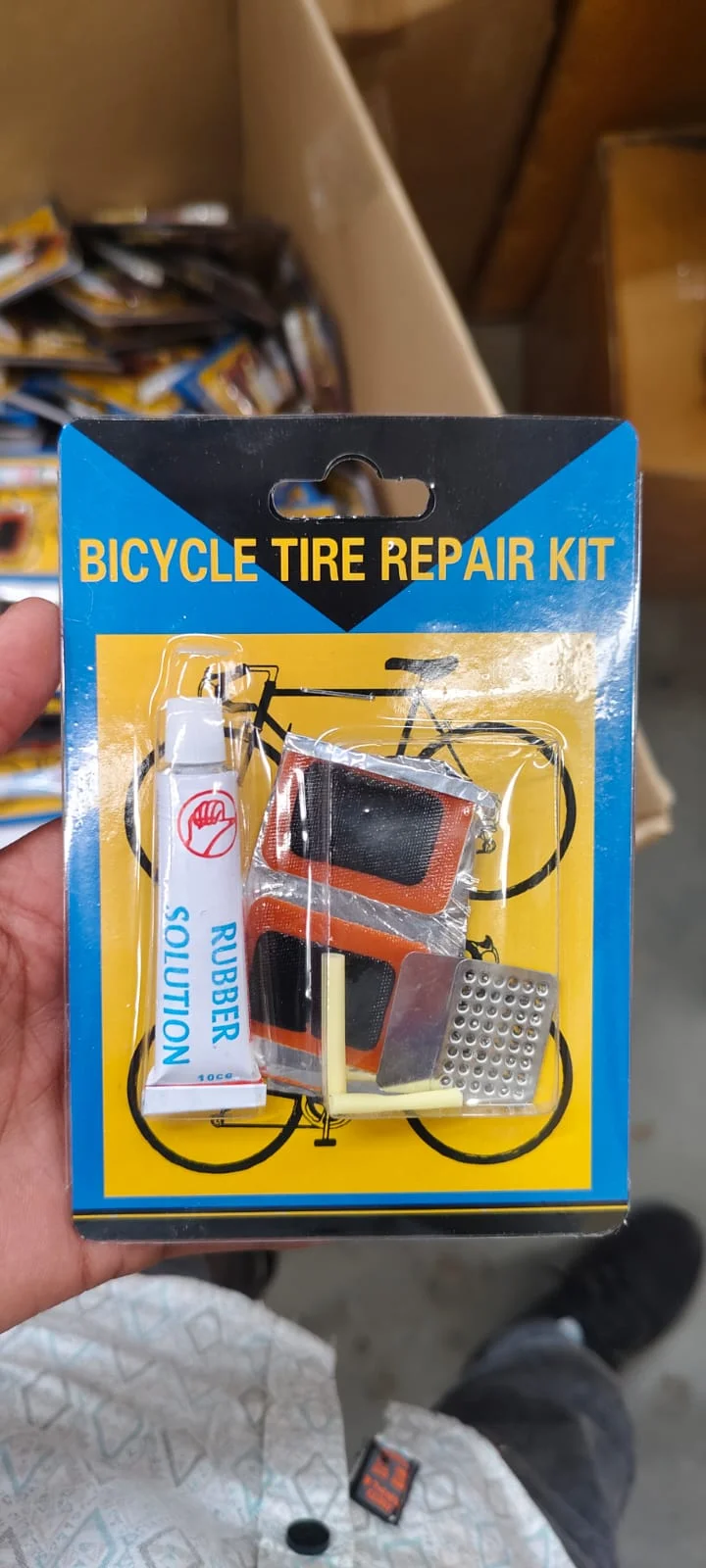
You will need tire levers, a pump, and a tire boot made for bicycle tires. A boot is more reliable than an improvised piece of packaging, which may shift or tear. Follow the boot maker’s directions if they differ from these general steps.
- Stop and inspect the tire. Remove any glass, wire, or other object. Check the tire inside and out, and note where the cut is.
- Remove the tire and tube. Take out the tube so you can see the inside of the casing. Do not run your fingers quickly along the tire; sharp debris can cut you.
- Check the damage. If threads are badly torn, the sidewall is split, or the tire has a bulge, do not ride on it.
- Place the boot inside the tire. Center it over the cut, following the product instructions. Make sure it covers the opening fully.
- Check the tube. Patch or replace it if needed. Ensure no sharp object remains inside the tire.
- Reinstall and inflate carefully. Seat the tire bead evenly around the rim. Add air slowly and check that the boot stays in place and the tire does not bulge.
A successful boot should cover the cut, stay put, and prevent the tube from showing through. If the tire deforms, the boot moves, or air escapes, stop. Do not try to make a damaged tire safe by adding more pressure or more patches.
Even if the tire holds air, ride slowly and only as far as needed to reach a safe place. Avoid fast descents, hard turns, and rough roads. Replace the tire before returning to normal riding.

What to do with a cut tubeless tire
A tubeless setup has no inner tube, but the same casing limits apply. Sealant may close some small punctures, and a tubeless plug may seal a suitable hole if the tire maker’s guidance allows it. Neither method restores strength to a large cut or a damaged sidewall.
For a cut that will not seal, some riders use a tire boot inside the tire to help contain the sealant and support the opening. This is an emergency measure, not proof that the casing is sound. Follow the tire and repair-product makers’ instructions, and replace the tire if the casing is torn, the cut opens, or a bulge forms.
Do not assume that adding more sealant will fix a structural cut. Sealant can help close a hole; it cannot replace torn casing threads.

Tire cut or tube puncture: what needs repair?
Use this table to sort out the likely repair. If you are unsure whether the casing is damaged, treat the tire as unsafe until you can inspect it closely.
| What you find | What it means | Sensible next step |
|---|---|---|
| Hole in the tube; tire casing looks intact | The tube may be punctured | Patch or replace the tube; remove any debris |
| Cut in rubber, with no visible casing damage | The surface may be damaged, but the casing may remain intact | Inspect closely and monitor the spot |
| Casing threads visible through the tire | The tire’s structure is damaged | Replace the tire; use a boot only if needed to reach safety |
| Split sidewall or bulge | The tire may not safely contain air | Do not ride; replace the tire |
| Tubeless puncture that seals and leaves the casing intact | The hole may be sealed, but the tire still needs inspection | Follow the maker’s guidance and check for leaks or deformation |

Common mistakes and safety checks
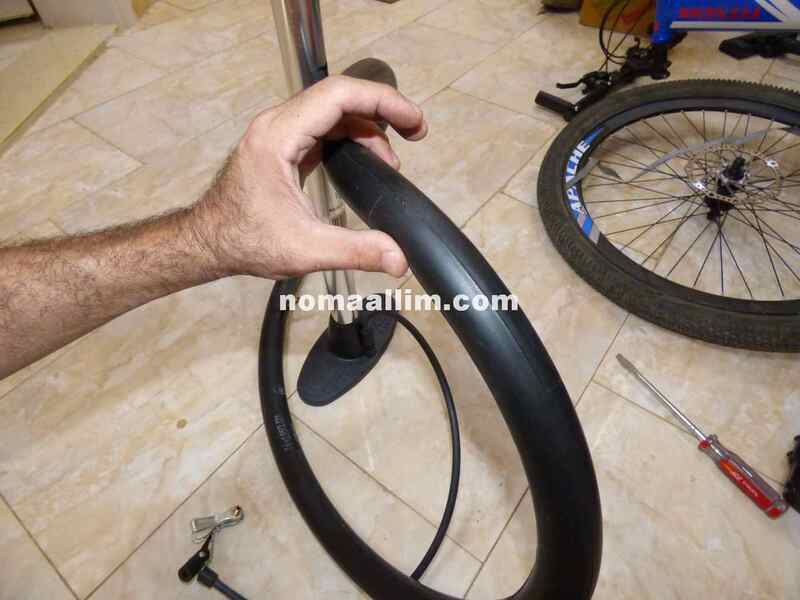
A tube patch repairs a tube, not a cut in the tire. If you patch the tube but leave a sharp object or casing cut in place, the tube may go flat again or push through the opening.
Avoid these errors:
- Riding on a visible bulge. It signals that the tire is not holding its shape normally.
- Treating a boot as a permanent repair. It may help you reach a repair shop or home, but it does not restore the casing.
- Ignoring the inside of the tire. A shard can remain embedded and puncture a new or repaired tube.
- Inflating quickly after a repair. Add air gradually and watch for uneven seating or a bulge.
- Using glue, tape, or a tube patch as a casing repair. These are not a reliable substitute for a proper tire boot or a replacement tire.
- Continuing at normal speed after an emergency boot. Keep the ride short and cautious, then replace the damaged tire.
If you cannot tell whether the casing is torn, ask a bicycle mechanic to inspect it. That is especially important before riding at high speed, carrying a load, or using the bike in traffic.
Frequently asked questions
Can I ride with a small cut in my bicycle tire?
It depends on whether the cut reaches the casing. If you see threads, a bulge, or a gap that opens when the tire is inflated, do not ride on it. If it appears to affect only the outer rubber, inspect it closely and keep checking for changes.
Can I use a tube patch on the inside of the tire?
A tube patch is made to repair an inner tube, not to restore tire casing strength. Use a tire boot for an emergency casing cut, then replace the tire if the casing is damaged.
Will a tire boot hold for a long ride?
Do not count on it for a long ride. A boot is a temporary measure, and its performance depends on the cut, tire condition, pressure, and repair product. Use it only to reach safety, and replace the tire before normal use.
Can tubeless sealant fix a cut?
Sealant may close some small holes, but it cannot rebuild torn casing. A cut that opens, exposes threads, or causes a bulge calls for tire replacement, even if sealant slows the leak.
Should I replace the tube as well as the tire?
Replace the tube if it is damaged, badly stretched, or cannot be patched reliably. If the tube is sound and the tire is being replaced, you may be able to reuse it after checking for damage and ensuring it matches the tire and rim.
Conclusion
You can sometimes use a tire boot to get home after a cut, but it is not a lasting repair. Check whether the casing is damaged, remove any debris, and replace the tire if threads show, the sidewall splits, or a bulge appears. When in doubt, do not ride on a tire that may fail.
Sources and further reading
- Park Tool: Tire Booting and Repairing — guidance on using a boot to cover tire damage.
- REI: How to Fix a Flat Bike Tire — general steps for removing a wheel and repairing a flat.