How Can You Avoid Getting A Flat Tire Joke: Funny Answer

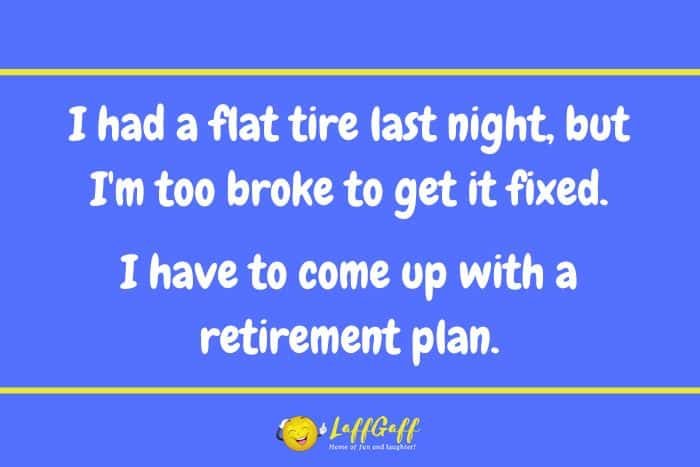
Looking for the how can you avoid getting a flat tire joke? Get the funny punchline and more tire puns to keep your friends laughing.
For U.S. readers looking for the “How can you avoid getting a flat tire?” joke, a fitting punchline is: “Don’t drive over a fork in the road!” It turns a familiar phrase from American road trips into a joke about a sharp object.
Here is the short version:
Question: How can you avoid getting a flat tire?
Answer: Don’t drive over a fork in the road!
This is a wordplay answer, not a real tire-care rule. Below, you’ll find what makes it work, how to tell it, and where the joke ends and sound driving advice begins.
Why Does the Flat Tire Joke Work?
The joke works because “a fork in the road” has two meanings. You expect one meaning, but the punchline gives you the other.
In normal use, a fork in the road is a place where a road splits into two paths. A fork is also the pointed tool you use to eat. The joke asks you to picture that tool lying on the pavement.
The setup sounds like a real question about car care. The answer then shifts from road safety to a silly, literal image. That quick change is the heart of the joke.
| Part of the joke | What it makes you think |
|---|---|
| “How can you avoid getting a flat tire?” | You will hear a useful driving tip. |
| “A fork in the road” | The road splits, so you must choose a route. |
| The punchline’s twist | There is an actual eating fork on the road. |
The joke does not need a claim that every fork can pierce a tire. It only needs the link between sharp points and a flat.
How to Tell the Joke So the Punchline Lands
Ask the question, pause briefly, and give the answer without explaining it first. The surprise works best when the listener has time to expect a serious tip.
Use this simple sequence:
- Ask the setup: “How can you avoid getting a flat tire?”
- Pause for a guess: Let the listener think about tires or road hazards.
- Give the punchline: “Don’t drive over a fork in the road!”
- Let it sit: Explain the two meanings only if the listener asks.
Keep your tone casual. A long lead-in about driving or tire repair can hide the joke under too much detail.
What If the Listener Does Not Get It?
Explain the phrase in one line: “A fork in the road means a split in the road—but this joke means a fork you eat with.”
That is most useful for young children or people learning English. If the phrase is new to them, the joke may need that small bit of context.
Can You Change the Wording?
Yes. These are suggested wording options, not verified historical versions:
- “How do you keep from getting a flat tire? Stay away from forks in the road!”
- “Want to avoid a flat tire? Watch out for that fork in the road!”
The first version is clear and direct. The second works better as a quick remark than as a question-and-answer joke.
The Real Answer: Can You Prevent Flat Tires?
You can reduce the risk of tire trouble, but you cannot prevent every flat. The joke points toward road debris, yet tire care involves more than watching for sharp objects.
The U.S. National Highway Traffic Safety Administration provides tire-care guidance on its Tires page. Its guidance supports these practical steps:
- Check tire pressure at least once a month. Use a gauge when the tires are cold.
- Use the vehicle’s recommended pressure. Find it on the tire-information label, often on the driver’s door pillar, or in the owner’s manual. Do not use the tire sidewall’s maximum pressure as your target.
- Look for wear and damage. Cuts, cracks, bulges, and uneven wear call for attention.
- Check the spare, if your vehicle has one. Follow the vehicle’s instructions for its pressure and use.
- Avoid debris when you can do so safely. Do not swerve into traffic to miss an object.
A tire-pressure monitoring system, or TPMS, is not a substitute for routine checks. A tire can need air before its warning light comes on.
What If a Tire Keeps Losing Air?
Have a tire professional inspect it rather than just adding air again and again. A puncture, valve leak, wheel problem, or other damage may need repair.
If a tire suddenly fails while driving, focus on control. NHTSA advises against slamming on the brakes: hold the steering wheel firmly, ease off the accelerator, and pull over when it is safe.
The key distinction is simple: the punchline is entertainment; recurring air loss is a maintenance problem.
FAQs
Is this flat tire joke suitable for kids?
Yes. It contains no adult theme or harsh language. A child may need to learn what “a fork in the road” means before the wordplay makes sense.
What if a worksheet expects a different answer?
Use its clues, letter count, or answer bank. A short riddle can have more than one plausible punchline, so the wording here may not match a specific worksheet.
Who wrote the original joke?
The original author is not established here. Do not attach a person’s name or an origin date without a traceable source.
Research Scope and Next-Question Gap Map
The main task is to explain an English-language joke for a U.S. reader. This page serves as a supporting explainer, not a full tire-maintenance guide. No site map was supplied, so no parent or neighboring pages are assumed.
Live browsing was unavailable for this article. No competing pages, current search results, or live question features were inspected. The official NHTSA link above provides a route to U.S. safety guidance; it is not presented as a page accessed during this task.
The follow-up needs below are inferred from the reader’s task, not claimed search-demand findings.
| Next question | Reader stage | Basis and source | Competitor coverage | Reader benefit | Answer basis | Priority and placement |
|---|---|---|---|---|---|---|
| Why is the answer funny? | Understanding | Inferred from the phrase’s two meanings | Not checked | Makes the wordplay clear | Analysis of the joke | High; explanation section |
| How should I tell it? | Using | Inferred from the question-and-answer format | Not checked | Keeps the surprise intact | Practical delivery suggestion, not testing | Medium; telling section |
| Is it real tire advice? | After reading | Inferred from the safety-related setup | Not checked | Separates humor from maintenance | U.S. NHTSA tire-care guidance | High; safety section |
No claim is made that these topics are missing from competing pages. The joke’s first publication and a single canonical wording also remain unverified.
Conclusion
The joke answer is: “Don’t drive over a fork in the road!” It works by turning a road junction into a piece of cutlery.
Use the short version when telling it aloud. For actual tire care, check pressure, inspect for damage, and get a persistent leak checked by a tire professional.