Will Driving Over Glass Cause A Flat Tire: Know The Risks

Wondering, will driving over glass cause a flat tire? Learn which shards pose a risk, what damage to check for, and when to get your tires inspected.
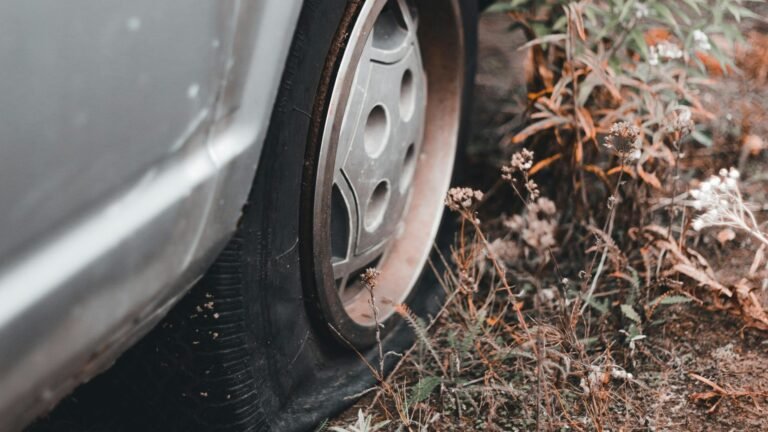
Yes, driving over glass can cause a flat tire, but it does not always cause a puncture. On US roads, broken bottles, crash debris, and sharp glass near parking spaces can damage a tire if a shard cuts deep enough to reach its air chamber. The result may be an immediate flat or a slow leak.
If you just drove over glass, do not swerve or stop in a traffic lane. Keep control, find a safe place to park, and check your tires. A tire that looks normal may still be losing air.
How Can Glass Puncture a Car Tire?
Glass causes a flat when it cuts through the tire far enough to let air escape. A small surface cut is not the same as a puncture.
Most modern passenger vehicles use tubeless tires. The tire’s inner liner helps hold air inside the tire-and-wheel assembly. Glass lodged in the outer tread may not reach that liner, but a deep puncture can create a leak.
Several conditions change the risk:
| Factor | Why it matters |
|---|---|
| Shard shape and position | A sharp point pressed into the tire can penetrate more readily than a piece lying flat. |
| Depth of the damage | A shallow tread nick may not leak; damage reaching the air chamber can. |
| Location on the tire | Tread punctures may be repairable. Sidewall and shoulder damage generally are not. |
| Tire condition | Worn tread leaves less rubber between the road and the tire’s deeper structure. |
| Air pressure and load | Underinflation and overloading add stress and may worsen the consequences of damage. |
A visible piece of glass does not prove that the tire is punctured. Likewise, no visible glass does not prove that the tire is sound: a shard may fall out after making a hole.
Can glass cause a slow leak instead of an immediate flat?
Yes. A small puncture may release air slowly, and an embedded object can partly block the opening. You may notice low pressure later rather than at the moment you cross the debris.
There is no dependable countdown from contact with glass to a flat tire. The useful checks are pressure readings, signs of damage, and a professional inspection when needed.
What Should You Do After Driving Over Glass?
Check safety first, then check the tire’s condition and pressure. You do not need to replace a tire solely because it rolled over glass, but you should not ignore signs of air loss.
For a basic check, you need a safe parking spot, a tire-pressure gauge, and the vehicle’s recommended tire pressure. Gloves and a flashlight can help with a visual check.
1. Reach a safe place without sudden moves
If the vehicle still handles normally, slow down smoothly and leave traffic when safe. Do not brake hard or make a sudden lane change just to avoid scattered glass.
If a tire rapidly loses air, hold the steering wheel firmly. Avoid slamming on the brakes, ease off the accelerator, and pull over once you have control and a safe route.
On a busy highway shoulder, inspecting a tire can be more dangerous than the glass itself. Use roadside assistance if you cannot work well away from traffic.
2. Look for signs that the tire is unsafe to drive on
Check for:
- A visibly low or flat tire.
- A deep cut, bulge, or exposed cords.
- A shard embedded in the tread or sidewall.
- Hissing or obvious air loss.
- New pulling, vibration, or thumping while driving.
Do not crawl under the vehicle or lift it just to search for glass. Never touch the tread with a bare hand.
3. Measure tire pressure
Use the pressure listed on the driver’s door-jamb label or in the owner’s manual. Do not use the maximum pressure on the tire sidewall as your normal inflation target.
NHTSA recommends checking pressure when tires are cold, meaning the vehicle has not been driven for at least three hours. If you must check after driving, remember that warm tires can show a higher reading. Do not bleed air from a warm tire merely to match the cold-pressure number.
A tire can look fairly normal while underinflated. A gauge is more useful than appearance alone.
4. Leave embedded glass for a technician
Do not pull out a deeply embedded shard to “see what happens.” Removing it may open a leak that the glass was partly blocking.
Avoid digging into the tread with a screwdriver or other tool. If glass appears lodged in the tire, have a tire shop inspect it.
5. Recheck pressure and watch for changes
If you find no damage, pressure is correct, and the vehicle handles normally, continued use may be reasonable. Recheck the pressure when the tires are cold, including the next morning.
Compare readings under similar conditions. A temperature change can affect all four tires, while one tire repeatedly losing pressure points toward a leak that needs diagnosis.
A successful initial check means no visible damage, no unusual handling, and stable pressure—not proof that hidden damage is impossible.
Is It Safe to Keep Driving After Running Over Glass?
The deciding factor is the tire’s condition, not simply whether you crossed glass. Use the signs below to choose your next step.
| What you find | What it may mean | Recommended next step |
|---|---|---|
| Normal pressure, no visible damage, normal handling | No obvious sign of a puncture | Monitor pressure and recheck when cold. |
| Embedded glass, even with normal pressure | Possible damage or a partly blocked puncture | Arrange a tire inspection; do not pull it out yourself. |
| One tire repeatedly loses pressure | A leak is present somewhere in the tire-and-wheel assembly | Have the leak located and repaired if eligible. |
| Tire-pressure warning light | One or more tires may be significantly underinflated | Stop somewhere safe and check all tires with a gauge. |
| Flat tire, deep cut, bulge, or exposed cords | Unsafe condition or possible structural damage | Do not continue normal driving; use roadside assistance or a suitable spare. |
| New thumping, pulling, or vibration | Tire, wheel, or another vehicle problem | Stop safely and arrange an inspection. |
A tire-pressure monitoring system, or TPMS, is a warning aid—not a clean bill of health. NHTSA notes that TPMS warns when a tire is significantly underinflated. It may not alert you to the early stages of a slow leak.
There is also no universal “safe distance” to drive on a leaking tire. A leak can worsen, and driving underinflated can damage the tire internally. When pressure is dropping or damage is visible, towing or roadside service avoids that risk.
Can a Tire Punctured by Glass Be Repaired?
Some glass punctures can be repaired, but only after the tire’s location and internal condition are checked. Glass does not automatically make a tire repairable or unrepairable.
The US Tire Manufacturers Association’s passenger and light-truck tire repair guidance limits repairs to eligible punctures in the tread area. The injury must be no larger than 1/4 inch, or 6 millimeters, and other conditions must also be met.
A proper repair requires the tire to be removed from the wheel for inspection. The repair must fill the injury and seal the inner liner; an outside-only plug is not an adequate permanent repair under that guidance.
When repair may be possible
A technician may consider a repair when:
- The puncture is within the repairable tread area.
- The injury is within the permitted size.
- The tire has no disqualifying internal or structural damage.
- The repair would not overlap another repair.
- The tire manufacturer’s repair policy allows it.
When replacement may be needed
Replacement is generally needed for sidewall or shoulder punctures, substantial cuts, bulges, exposed cords, or damage caused by driving flat or severely underinflated.
Glass may create a cut or irregular injury rather than a neat round hole. Its appearance from outside is not enough to judge repairability.
Even a small puncture can lead to replacement if the tire was driven without enough air. The key issue is the full damage—not just the size of the visible opening.
Common Mistakes That Can Make Glass Damage Worse
The biggest mistakes are ignoring air loss, removing embedded objects, and assuming tread appearance tells the whole story. Avoid these shortcuts:
- Waiting for the tire to look flat. Use a gauge rather than relying on appearance.
- Assuming no TPMS warning means no leak. A small pressure loss may not trigger the light.
- Pulling out embedded glass. This can turn a slow leak into a faster one.
- Driving on a low tire to save a repair. Underinflated driving can ruin an otherwise repairable tire.
- Treating an external plug as a complete repair. Internal inspection is needed to assess hidden damage.
- Assuming all later air loss came from the glass. Valve leaks, wheel damage, and other punctures can cause similar symptoms.
Tread depth also matters to overall tire safety. NHTSA advises replacing tires when tread reaches 2/32 inch. That threshold is not a guarantee against glass damage: tires with more tread can still be punctured.
FAQs
Is broken windshield glass less likely to puncture tires than bottle glass?
Not all vehicle glass breaks the same way. Tempered side or rear glass often breaks into small fragments, while laminated windshield glass tends to remain attached to its plastic layer. Bottles can leave sharp, pointed shards.
Those differences do not establish a reliable puncture-risk ranking for real road debris. Treat any glass field as a hazard and judge your tire by its condition and pressure afterward.
Will tire sealant fix a puncture caused by glass?
It may temporarily seal some small tread punctures, but it cannot fix every cut or make structural damage safe. Use sealant only within the limits in your vehicle’s instructions and the sealant directions.
Tell the tire shop if you used it. A sealed leak still needs inspection, and sealant is not a substitute for a proper permanent repair.
Can run-flat tires keep going after a glass puncture?
Some run-flat tires permit limited driving after pressure loss, but only under the tire and vehicle manufacturer’s stated conditions. Do not assume a distance or speed limit that applies to another tire.
Check the owner’s manual and the exact tire guidance. Run-flat capability does not mean the damaged tire will remain repairable.
Conclusion
Driving over glass can cause a flat tire, but contact alone does not mean a puncture occurred. Deep cuts, embedded shards, pressure loss, and changes in handling are the signs that need attention.
If you just crossed broken glass, park safely, inspect without touching sharp debris, and check pressure with a gauge. Leave embedded glass in place for a technician, and do not keep driving on a flat or visibly damaged tire.
Sources and Evidence Limits
The safety and repair guidance above is based on these US primary-source references:
- NHTSA: Tires — Tire pressure, cold-pressure checks, TPMS, tread wear, and tire-failure safety.
- US Tire Manufacturers Association: Tire Repair — Repair location, puncture-size limits, internal inspection, and proper repair methods.
Live browsing was not available for this article. These pages were not rechecked during drafting, and no current competitor rankings, glass-specific puncture probability, or hands-on testing is claimed. Vehicle- and tire-specific instructions remain controlling where they differ from general guidance.
Next-question coverage map
The questions below are inferred from the reader’s decision path, not verified search-demand data. Competitor coverage is not checked because competing pages could not be inspected.
| Question | Reader stage and basis | Reader benefit | Evidence basis | Priority and placement |
|---|---|---|---|---|
| Can I drive if the tire looks normal? | After exposure; appearance may miss low pressure | Avoids false reassurance | NHTSA pressure and TPMS guidance | High; driving decision table |
| Should I pull out embedded glass? | During inspection; removal may expose a leak | Avoids sudden air loss and injury | Puncture mechanism and need for professional inspection | High; inspection steps |
| Can a small puncture still require replacement? | At the repair decision; internal damage may change eligibility | Explains why hole size alone is insufficient | USTMA repair guidance | High; repair section |
| Could the pressure loss have another cause? | During follow-up; timing does not prove causation | Supports correct leak diagnosis | Tire-and-wheel leak troubleshooting | Medium; common mistakes |