Does Flat Tyres Use More Petrol: Fuel Costs Explained

Searching ‘does flat tyres use more petrol’? Learn how low pressure raises fuel costs and why you should never drive on a flat tyre.
Yes. For drivers in the United States, underinflated tires can increase gasoline use because they make a vehicle harder to roll. The engine must do more work to keep the car moving, which can lower miles per gallon (MPG).
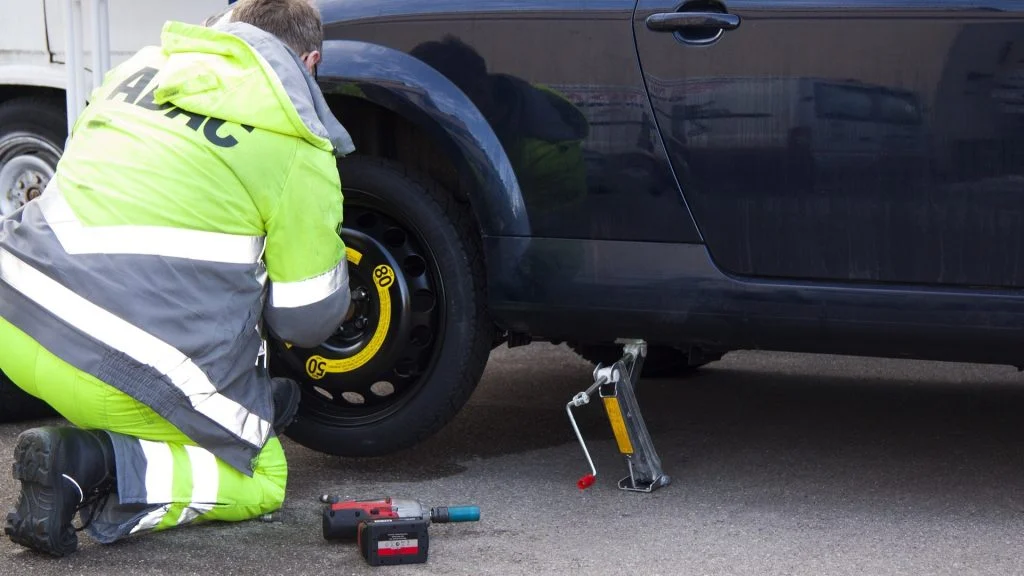
But a low tire and a fully flat tire are not the same problem. A fully flat tire is a safety issue, not just a fuel-cost issue. Do not keep driving on it to reach a gas station. Pull over somewhere safe and follow your vehicle’s instructions for a spare tire or roadside help.

Why Low Tire Pressure Makes a Car Use More Gas
Low tire pressure increases rolling resistance—the force that works against a tire as it rolls.
A tire needs the right air pressure to support the vehicle’s load and hold its shape. When pressure is too low, the tire bends more with each turn. That flex turns more energy into heat, so the engine must supply more energy to move the car.
Think of pushing a shopping cart with a soft wheel. It still moves, but it takes more effort. A car faces a similar problem when its tires lack enough air.
The terms below help separate a fuel-economy concern from a roadside emergency:
| Tire condition | What it means | What to do |
|---|---|---|
| Properly inflated | Cold pressure matches the vehicle’s recommended pressure | Check it regularly |
| Underinflated | Pressure is below the vehicle’s cold-pressure target | Check for damage and adjust pressure |
| Flat or severely deflated | The tire cannot properly support the vehicle | Stop driving and arrange safe assistance |
A tire can be low on air without looking flat. A pressure gauge is more reliable than a visual check.
How Much More Gas Do Underinflated Tires Use?
The fuel penalty is usually modest for slightly low tires, but it can add up. The exact change depends on how low the pressure is, how many tires are affected, and the vehicle.
The U.S. Department of Energy’s FuelEconomy.gov maintenance guide states that:
- Keeping tires at the proper pressure can improve gas mileage by 0.6% on average, and by up to 3%.
- Underinflated tires can lower gas mileage by about 0.2% for each 1 PSI drop in the average pressure of all four tires.
PSI means pounds per square inch. These figures are general estimates, not a precise forecast for every car or tire.
Example: All Four Tires Are 5 PSI Low
Suppose your car calls for 35 PSI in each tire, but all four measure 30 PSI when cold.
The average shortfall is 5 PSI. Using the Department of Energy’s estimate:
5 PSI × 0.2% = about a 1% decrease in MPG.
A car that would otherwise get 30 MPG might get about 29.7 MPG under the same conditions.
Here is an illustrative annual cost calculation:
| assumption or result | Correct tire pressure | All four tires 5 PSI low |
|---|---|---|
| Annual driving | 12,000 miles | 12,000 miles |
| Fuel economy | 30 MPG | 29.7 MPG |
| Gas used | 400 gallons | About 404 gallons |
| Cost at an assumed $4 per gallon | $1,600 | About $1,616 |
That is about $16 more per year in this example. The gas price is an assumption, not a current national average.
What If Only One Tire Is Low?
The Department of Energy’s estimate uses the average pressure drop across all four tires.
If one tire is 5 PSI low and the other three are correct, the average shortfall is 1.25 PSI. That corresponds to an estimated MPG reduction of about 0.25%, not 1%.
Still, a small estimated fuel penalty does not make a low tire safe. One tire that keeps losing air needs a leak check.
How to Check and Correct Tire Pressure
Use the pressure listed by the vehicle maker, and measure it when the tires are cold. Do not use the maximum pressure molded into the tire’s sidewall as your target.
You will need a tire-pressure gauge and access to an air pump. A portable inflator can help, but it does not replace a repair when a tire is damaged or leaking.
1. Find the Recommended Pressure
Look for the Tire and Loading Information label, usually on the driver’s door edge or door pillar. The owner’s manual also provides guidance.
Check the front and rear targets separately. Some vehicles require different pressures at each axle.
2. Check Cold Tires
The National Highway Traffic Safety Administration’s tire guidance recommends checking pressure when the tires are cold—generally after the vehicle has not been driven for at least three hours.
Driving warms the tires and raises the pressure reading. Do not release air from warm tires merely to bring them down to the cold-pressure number.
3. Measure Each Tire
Remove the valve cap and press the gauge firmly onto the valve stem. Read and record the pressure, then compare it with the vehicle’s target.
Check all four tires. Check the spare too, if the vehicle has one; its pressure requirement may differ.
4. Add Air and Recheck
If the tire has no obvious damage and is only slightly low, add air in small amounts. Recheck with the gauge and replace the valve cap when done.
If the tire is visibly flat, damaged, or has been driven while severely low, arrange an inspection rather than simply filling it and driving away. Internal damage may not be visible.
5. Confirm That the Fix Holds
A successful pressure adjustment brings each cold tire to its specified target. Follow the owner’s manual if the tire-pressure monitoring system requires a reset or a short drive to update.
If a tire soon loses pressure again, have a tire shop check it. Repeated top-offs are not a repair.
When Low Tire Pressure Becomes a Safety Problem
Do not judge tire safety by the size of the possible fuel savings. Low pressure can cause excess heat, poor handling, tire damage, and tire failure.
Use the symptoms below to choose the next step:
| Symptom | Possible cause | Safest useful next step |
|---|---|---|
| Low-pressure warning, with no handling change | Low pressure, temperature change, or a system issue | Stop somewhere safe and check all tire pressures |
| One tire repeatedly loses air | Puncture, valve leak, wheel leak, or other damage | Arrange a professional leak inspection |
| Thumping, strong vibration, or sudden handling change | Tire damage, rapid air loss, or another fault | Slow smoothly and stop safely |
| Tire looks collapsed or the wheel sits unusually low | Flat or severe air loss | Do not continue driving; use approved roadside procedures |
| Bulge, exposed cords, or a deep cut | Structural damage | Do not rely on added air; seek professional help |
If a tire fails while moving, keep a firm grip on the steering wheel and avoid abrupt braking or steering. Ease off the accelerator, stabilize the vehicle, and pull off the road when safe.
A conventional tire driven flat may be damaged beyond repair. A qualified tire technician should assess it; adding air alone cannot establish that it is safe.
What Else Can Change Tire Pressure or Fuel Economy?
Temperature, vehicle load, and tire condition can change what you see. They can also explain why correcting pressure does not fully restore your usual MPG.
Cold Weather
Tire pressure falls as the air inside cools. That is why a low-pressure warning may appear after a cold night.
Check the tires cold and adjust them to the vehicle’s specified pressure. Do not assume the warning can be ignored because it goes away later in the day.
Heavy Loads and Towing
A heavy load changes tire demands, and towing can reduce fuel economy on its own. Follow the vehicle’s loading and towing guidance, including any specified tire-pressure changes.
Do not guess at a higher pressure or exceed tire and vehicle limits.
Other Causes of Poor MPG
If tire pressure is correct but gas mileage remains low, consider:
- More short trips or stop-and-go traffic.
- Higher driving speeds or hard acceleration.
- Cold-weather operation and extended idling.
- Roof cargo, added weight, or towing.
- Brake drag, wheel-alignment issues, or engine faults.
Check fuel use across several fill-ups rather than judging one trip. If poor MPG comes with pulling, unusual tire wear, a warning light, or a hot wheel, seek a professional diagnosis.
Common Mistakes That Can Cost More Than Gas
Do not overinflate tires to chase better MPG. The vehicle’s recommended pressure balances load support, handling, ride, and tire performance.
Avoid these other mistakes:
- Trusting appearance alone. A tire can look normal while low.
- Waiting for the warning light. The tire-pressure monitoring system does not replace routine gauge checks.
- Using the sidewall maximum as the target. Use the vehicle’s pressure label instead.
- Bleeding air from hot tires. Recheck cold before making a final adjustment.
- Inflating a leaking tire over and over. Find and fix the cause.
- Assuming an inflated tire is undamaged. Driving flat can harm parts you cannot see.
NHTSA recommends checking tire pressure at least once a month. It is also sensible to check before a long road trip.
FAQs
Can I drive on a flat run-flat tire?
Only within the tire and vehicle maker’s stated limits. Run-flat capability varies by tire, vehicle, load, speed, and damage. Follow the owner’s manual; do not assume every run-flat tire allows the same distance or speed.
Does nitrogen prevent low tire pressure?
No. Nitrogen-filled tires still need regular pressure checks and can still lose pressure through leaks or temperature changes. The required PSI is the same whether the tire contains air or nitrogen.
Does a flashing tire-pressure light mean the tires are low?
Not necessarily. On many vehicles, a light that flashes and then stays on signals a monitoring-system fault. Check the owner’s manual for the exact meaning, and measure tire pressure with a gauge rather than relying on the light alone.
Conclusion
Low tire pressure can make your car use more gas, but the larger concern is tire safety. A fully flat tire is not something to keep driving on for the sake of reaching an air pump.
Check cold tire pressure against the driver’s door label, correct safe-to-inflate tires, and get recurring leaks inspected. That simple routine helps protect your tires and avoid needless fuel use.
Sources and Research Scope
This guide draws on U.S. Department of Energy fuel-economy guidance and NHTSA tire-safety guidance. The fuel-cost example is a calculation based on stated assumptions, not a road test.
Live browsing was unavailable for this draft. The linked pages could not be checked for recent revisions, and no current search rankings, competing pages, or search-demand data were verified.
Compact Next-Question Gap Map
All questions below are inferred next needs based on the reader’s task, not observed search queries. Competitor coverage is not checked.
| Next question | Reader stage and basis | Reader benefit | Evidence and limits | Priority and placement |
|---|---|---|---|---|
| Does one low tire cause the same MPG loss as four? | During diagnosis; inferred from the four-tire average | Prevents a misleading calculation | DOE estimate; illustrative arithmetic, not a vehicle-specific test | High; fuel-use section |
| Can I just add air after driving flat? | Before resuming travel; inferred safety need | Helps avoid driving on hidden damage | NHTSA safety guidance; professional inspection needed | High; safety section |
| Why does pressure fall again after inflation? | After adjustment; inferred troubleshooting need | Distinguishes a temporary correction from a repair | Tire-safety guidance; the actual leak requires inspection | High; pressure-check section |